Navigation überspringen
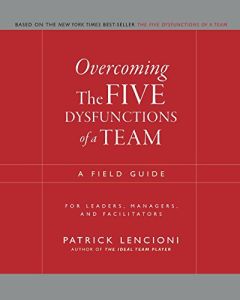
Overcoming the Five Dysfunctions of a Team
Book

Overcoming the Five Dysfunctions of a Team

A Field Guide for Leaders, Managers, and Facilitators

Jossey-Bass, 2005 Mehr

Buy the book


Editorial Rating

8

getAbstract Rating

  • Comprehensive
  • Applicable
  • Well Structured

Recommendation

Patrick Lencioni wrote this as a follow-up to his 2002 “fable,” The Five Dysfunctions of a Team. It applies the earlier book’s concepts, and suggests many exercises, approaches, examples and explanations you can use as you apply those ideas. If you found the first book useful, you’ll want this one, though you can still get a lot of utility from it even if you haven’t read the original. Lencioni recaps his concepts clearly here, including developing trust among team members and keeping teams focused on their goals. The result is broadly applicable. getAbstract believes that readers who want a basic introduction to improving team function will appreciate this book. That said, those looking for more complex or theoretical approaches, or for tools to deal with specific challenges, such as knowledge management among teams, may need a more advanced manual.

Summary

Teams and Teamwork

Developing good, functional teams doesn’t require any special conceptual breakthroughs, but it does call for “courage and persistence.” Commit to making your team function smoothly, and then convince the other members that your dedication is real and they should share it. In the process of developing your team, make sure that you address several common misunderstandings and “five dysfunctions”: distrust, conflict, lack of commitment, lack of accountability and a failure to focus on results.

Start with the basics: Is your group a team? It doesn’t have to be. Many groups think they’re teams when they aren’t, and that misconception can frustrate people and waste time. A team must share goals and work toward them together. This requires some mutual performance evaluation. Team members must be willing to subordinate their personal needs to those of the team. True teams are “relatively small”; they might have as many as 12 people or as few as three. To build a strong and healthy team, address these five crucial issues:

1. “Building Trust”

Many people misuse the term “team” and disagree about the meaning of trust. Trust doesn’t mean being...

About the Author

Patrick Lencioni, founder and president of a management consulting firm, has worked with Fortune 500 senior executives and high-tech startup companies. He is the author of several other books, including The Five Dysfunctions of a Team and Death by Meeting.


Comment on this summary

More on this topic

Related Skills

AI Transformation
Kreativ sein
Anpassungsfähigkeit steigern
Produktiver werden
Eigenes Wohlbefinden stärken
Selbstvertrauen aufbauen
Wirksam kommunizieren
Digitale Transformation
Drive AI Transformation
Enhance Cybersecurity
Innovationskultur fördern
Personalwesen

Innovation

Ethisch führen
Gut leben
Gute Entscheidungen treffen
Change managen
Mitarbeiterbeziehungen managen
Manage Learning and Development
Management
Persönliche Entwicklung
Vertriebsstrategie entwickeln
Diversity, Equity & Inclusion fördern

Vertrieb
Unternehmenskultur beeinflussen
Digitalkompetenz aufbauen
Berufliche Kompetenzen
Herausforderungen überwinden
Annahmen hinterfragen
Inklusive Kultur schaffen
Ziele setzen und erreichen
Build Security Culture
Drive AI Adoption in Teams
Empathie und Mitgefühl zeigen
Virtuell zusammenarbeiten
Selbstzweifel überwinden
Emotionen regulieren
Transparent kommunizieren
Positiv denken
Diskussionen moderieren
Ideenfindung moderieren
Mikroaggressionen vermeiden
Kreativ zusammenarbeiten
Servant Leadership praktizieren
Andere Perspektiven einnehmen
Accountability sicherstellen
Navigate Leadership Challenges
Teamziele setzen
Rollen definieren
Feedback geben
Emotionale Intelligenz entwickeln
Aufgaben delegieren
Teamagilität steigern
Kernwerte definieren
Offene Kommunikation fördern
Führung
Gruppenentscheidungen treffen
Funktionsübergreifend zusammenarbeiten
Durch Change führen
Kommunikation im Team managen
Authentisch sein
Meetings wirksam gestalten
Sich selbst führen
Develop Team Members
Büropolitik meistern
Motivation verstehen
Hybrid oder remote führen
Teams und Abteilungen managen
Zugehörigkeitsgefühl fördern
Inklusiv führen
Experimentieren fördern
Positive Fehlerkultur fördern
Sich selbst verstehen
Soft Skills
Eigenverantwortung fördern
Zusammenarbeit meistern
Selbstwahrnehmung entwickeln
Growth Mindset entwickeln
Andere unterstützen
Fragen stellen
Führungswirkung steuern
Teamleistung verbessern
Team motivieren
Manage People and Talent
Practice Transformational Leadership
Persönlichkeitstypen verstehen
Schwierige Gespräche führen
Verantwortung übernehmen
Psychologische Sicherheit fördern
Konflikte lösen
Demut üben
Vertriebsteams managen
Mit schwierigen Menschen umgehen
Teamgrenzen managen
Soziale Kompetenzen entwickeln
Teamdynamik verstehen
Teamzusammenhalt stärken
Strengthen Team Collaboration
Foster Team Culture
Vertrauen gewinnen
Drive Team Performance
Verletzlichkeit zeigen