
Navigation überspringen
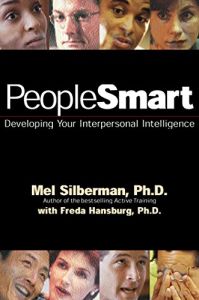
PeopleSmart
Book

PeopleSmart

Developing Your Interpersonal Intelligence

Berrett-Koehler, 2000 Mehr

Buy the book


Editorial Rating

5

getAbstract Rating

  • Well Structured
  • Eloquent

Recommendation

It turns out that when you become savvy about other people, or “people smart,” you become smarter about yourself, as well. That’s the hidden practical message in Mel Silberman and Freda Hansburg’s intelligent new book. They bring their considerable expertise and hands-on experience to bear in these lessons on building interpersonal skills. Simply laid out, yet well-written and concise, the book walks you through the sets of skills you need to master. As you learn to understand and apply them, you gradually sense the impact these skills can have on your ability to lead and excel. getAbstract recommends this book to those who are interested in improving their people skills (and remember, you’re a “people,” too).

Summary

How to be People Smart

To be people smart, you must understand, learn, and practice eight basic, but crucial skills: understanding people, expressing yourself, asserting your needs, using feedback, influencing others, resolving conflict, being a team player, and shifting gears.

One: Understanding People

Trying to understand people is the foundation of interpersonal intelligence. When you rise to the challenge of understanding how other people think, feel, and perceive, you gain true connection and deeper relationships. As you evaluate any situation, try to see through the other person’s eyes. This enables you to understand others better, and to get a better grasp on your own role, as well. The benefits of this are immediate, obvious, and enormous: You’ll communicate more effectively, be able to influence others, and know how to resolve conflicts in a healthy, peaceful way.

You can begin to interpret people’s behaviors by first evaluating their goals. Understand that everyone has three basic goals that relate to the universal desire to feel safe and worthwhile. These goals are control, connection, and competence. Assess each individual’s personal style...

About the Authors

Mel Silberman, Ph.D a psychologist and author of the best-selling Active Training coordinates the Adult and Organizational Development Program at Temple University, where he is a professor. He is president of Active Training, a Princeton, NJ firm that provides business and personal development seminars, including the one on which PeopleSmart is based. Freda Hansburg, Ph.D. is a psychologist in clinical practice, and the director of the Technical Assistance Center, a consultation and training program at the University of Medicine & Dentistry of New Jersey.


Comment on this summary

  • Avatar
  • Avatar
    S. M. 3 years ago
    very informative, one of the best i've read
  • Avatar
    R. S. 9 years ago
    Good read, I was able to come up with realization for the things that should have been done in a nicer way. :)
  • Avatar
    A. L. 9 years ago
    I like this type of self help topics especially buiding on character and values. Thank you Deltek for introducing me to these type of books.

More on this topic

Related Skills

AI Transformation
Selbstgesteuert lernen
Anpassungsfähigkeit steigern
Eigenes Wohlbefinden stärken
Karriere
Develop Team Members
Drive Team Performance
Customer Experience verbessern
Employee Experience verbessern
Executive Leadership
Innovationskultur fördern
Personalwesen
Innovation
Ethisch führen
Leverage AI for Leadership
Gute Entscheidungen treffen
Performance managen
Teams und Abteilungen managen
Management
Marketing
Zusammenarbeit meistern
Mitarbeiterleistung steigern
Karriere planen
Diversity, Equity & Inclusion fördern
Unternehmenskultur beeinflussen
Organisationen verstehen
Berufliche Kompetenzen
Persönliche Entwicklung
Kulturelle Unterschiede verstehen
Gespräche führen
Büropolitik meistern
Mitarbeiterbeziehungen managen
Authentisch sein
Team motivieren
Positive Fehlerkultur fördern
Selbstvertrauen aufbauen
Wirksam kommunizieren
Selbstbeherrschung entwickeln
Mikroaggressionen vermeiden
Führung
Nonverbal kommunizieren
Diskussionen moderieren
Eigene Kompetenzen einschätzen
Kommunikationsstil anpassen
Teamdynamik verstehen
Use AI to Enhance Communication
Empathie und Mitgefühl zeigen
Strategisch kommunizieren
Selbstdisziplin entwickeln
Verletzlichkeit zeigen
Herausforderungen überwinden
Emotionen regulieren
Strengthen Team Collaboration
Kulturelles Bewusstsein entwickeln
Besser denken
Probleme lösen
Aktiv zuhören
Führungswirkung steuern
Understand Organizational Behavior
Foster Team Culture
Emotionale Intelligenz entwickeln
Kundenfeedback umsetzen
Manage People and Talent
Demut üben
Andere unterstützen
Psychologische Sicherheit fördern
Mitarbeitergespräche durchführen
Soft Skills
Menschliches Verhalten verstehen
Coachbar sein
Kernwerte definieren
Sich selbst führen
Soziale Kompetenzen entwickeln
Schwierige Gespräche führen
Emotionen verstehen
Navigate Leadership Challenges
Servant Leadership praktizieren
Öffentlich sprechen
Wirksam überzeugen
Selbstbewusst auftreten
Wandel von unten anstoßen
Soziale Signale erkennen
Persönlichkeitstypen verstehen
Sozialverhalten verstehen
Sich selbst verstehen
Selbstwahrnehmung entwickeln
Kommunikation verstehen
Grenzen setzen
Aus Feedback lernen
Mit schwierigen Menschen umgehen
Andere beeinflussen
Konflikte lösen
Klar kommunizieren
Feedback geben