Перейти к содержанию сайта
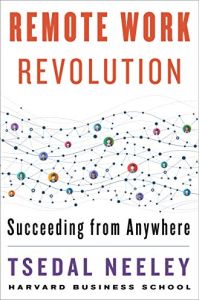
Remote Work Revolution
Book

Remote Work Revolution

Succeeding from Anywhere

HarperBusiness, 2021 подробнее...

Buy the book


Editorial Rating

8

getAbstract Rating

  • Applicable
  • Background
  • Concrete Examples

Recommendation

In early 2020, hundreds of millions of workers worldwide suddenly found themselves working remotely. Leaders scrambled to provide employees and teams with the tools and support they needed to stay connected and succeed. As firms emerged from the pandemic, author Tsedal Neeley reports, executives and workers hoped to retain the advantages of remote work – flexibility, lack of commuting, and higher productivity and engagement. Leaders – especially those new to managing virtual teams – will gain enormously from Neeley’s handy guide and toolkit.

Summary

For decades, progressive firms permitted and encouraged remote work. Today, remote and hybrid work are business as usual.

In the early 1990s, when Cisco began allowing employees to work from anywhere, the company saved almost $200 million in office leases in the first year of the program. A few years later, Sun Microsystems put more than a third of its employees into a voluntary remote worker program that stationed workers closer to their customers worldwide and saved $500 million over the next 10 years.

When the COVID-19 pandemic hit in early 2020, millions of employees found themselves working from home. Some firms experienced increases in productivity and enormous savings, or both. Employees are eager for remote work to continue, and many organizations plan to allow remote work more of the time and for more employees.

To handle the challenges of remote and hybrid work, people need support, coaching and appropriate tools. 

The downsides to remote working can be challenging. Remote workers may feel isolated, and remote teams often grow dysfunctional. Technology may create headaches and disrupt...

About the Author

Tsedal Neeley is the Naylor Fitzhugh Professor of Business Administration at Harvard Business School and the Senior Associate Dean of Faculty and Research.


Comment on this summary

More on this topic

Related Skills

AI Transformation
Emotionale Intelligenz entwickeln
Anpassungsfähigkeit steigern
Produktiver werden
Unternehmen entwickeln
Digitale Transformation
Zukunft der Arbeit
Drive AI Transformation
Projekte managen
Employee Experience verbessern
Execute Digital Operations
Personalwesen
Innovation
Ethisch führen
Strategisch führen
Sich selbst führen
Leverage AI for Leadership
Gut leben
Risiken managen
Management
Persönliche Entwicklung
Diversity, Equity & Inclusion fördern
Unternehmenskultur beeinflussen
Digitalkompetenz aufbauen
Organisationen verstehen
Berufliche Kompetenzen
Fokus stärken
Innovationskultur fördern
Kreativität fördern
Neurodiversität fördern
Kreativ sein
Tech-Impact auf Arbeit
Foster Team Culture
Persönlichkeitstypen verstehen
Inklusiv kommunizieren
Digital kommunizieren
Führungswirkung steuern
Dankbarkeit üben
Unsicherheit überwinden
Führung
Teams und Abteilungen managen
Authentisch sein
Flexible Arbeitszeitmodelle anbieten
Drive AI Adoption in Teams
Zusammenarbeit meistern
Diskussionen moderieren
Virtuell präsentieren
Kreativ zusammenarbeiten
Mitarbeiterbeziehungen managen
Empathie und Mitgefühl zeigen
Teamzusammenhalt stärken
Wirksam kommunizieren
Guide Teams Through AI Transition
In Unternehmenskultur zurechtfinden
Soft Skills
Soziale Kompetenzen entwickeln
Ethnische Miinderheiten inkludieren
Positive Fehlerkultur fördern
Arbeitsplatzergonomie verbessern
Andere unterstützen
Funktionsübergreifend zusammenarbeiten
Drive Team Performance
Experimentieren fördern
Büropolitik meistern
Organisation agil machen
Navigate Leadership Challenges
Diversität fördern
Durch Change führen
Executive Leadership
Digitale Werkzeuge nutzen
Arbeitsabläufe straffen
Change managen
Kulturelles Bewusstsein entwickeln
Use AI to Enhance Communication
Inklusive Kultur schaffen
Andere Perspektiven einnehmen
Work Remotely
Build Digital Culture
Transparent kommunizieren
Ideenfindung moderieren
Scrum anwenden
Nonverbal kommunizieren
Kommunikation verstehen
Enable Digital Organization
Unternehmenskultur gestalten
Offene Kommunikation fördern
Inklusiv führen
Generationenvielfalt fördern
Neue Arbeitsmodelle
Manage People and Talent
Neue Arbeitstechnologien
Teamagilität steigern
Team motivieren
Demut üben
Practice Transformational Leadership
Durch Krisen führen
Krisen managen
Kulturelle Unterschiede verstehen
Servant Leadership praktizieren
Zugehörigkeitsgefühl fördern
Teamdynamik verstehen
Vertrauen gewinnen
Strengthen Team Collaboration
Kernwerte definieren
Verletzlichkeit zeigen
Interkulturell kommunizieren
Virtuell zusammenarbeiten
Hybrid oder remote führen
Psychologische Sicherheit fördern