
Navigation überspringen
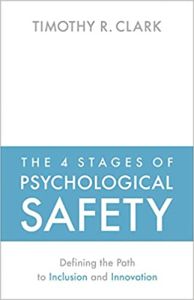
The 4 Stages of Psychological Safety
Book

The 4 Stages of Psychological Safety

Defining the Path to Inclusion and Innovation

Berrett-Koehler, 2020 Mehr

Buy the book


Editorial Rating

9

getAbstract Rating

  • Analytical
  • Innovative
  • Engaging

Recommendation

Research reveals that money can’t compensate for a lack of psychological safety in the workplace – that is, a sense of belonging, and freedom to speak up, learn, and contribute. Your organization gains a competitive advantage when your employees feel comfortable enough to create and innovate. Leadership consultant Timothy Clark outlines four stages through which your company must progress to become inclusive and visionary – inspiring your employees to do their best work.

Summary

Psychological safety enhances team performance and your organization’s ability to remain competitive. It can be achieved in four stages.

To stay relevant in today’s economy, companies need to maintain their competitive advantage. Organizational leaders must promote a forward-thinking culture, one that inspires collaboration and innovation. They must learn how to remove the psychological barriers that inhibit their teams’ performance. Companies must create an environment where workers feel safe to take initiative and create solutions.

Effective leaders understand they must encourage connection and collaboration to spur innovation. Team members must feel respected and have permission to think and grow. Innovation relies on intellectual friction – which occurs when team members can question the status quo, scrutinize existing systems, and develop new, more efficient processes. At the same time, social friction that inhibits collaborative efforts or breeds fear of retribution must be minimized.

Humans require food and shelter to live healthy lives; beyond these basic needs, however, people have a drive to fulfill their psychological...

About the Author

Timothy R. Clark is the founder and CEO of LeaderFactor, a global leadership consulting, training and assessment organization. He is the author of five books and the developer of the EQometer™ emotional intelligence assessment.


Comment on this summary

More on this topic

Related Skills

Karriere voranbringen
Emotionale Intelligenz entwickeln
Anpassungsfähigkeit steigern
Eigenes Wohlbefinden stärken
Karriere
Wirksam kommunizieren
Unternehmen entwickeln
Digitale Transformation
Enable Digital Organization
Enhance Cybersecurity
Entrepreneurship
Foster Team Culture
Personalwesen
Kulturelles Bewusstsein entwickeln
Ethisch führen
Gut leben
Change managen
Manage Learning and Development
Management
Zusammenarbeit meistern
Soziale Kompetenzen entwickeln
Navigate Leadership Challenges
Persönliche Entwicklung
Soft Skills
Nachhaltigkeit
Innovation verstehen
Berufliche Kompetenzen
Führungswirkung steuern
Kernwerte definieren
Mentale Gesundheit verbessern
Neugierig sein
Sich selbst führen
Drive Team Performance
Führung
Empathie und Mitgefühl zeigen
Develop Team Members
Ideenfindung moderieren
Systemische Ungleichheiten verstehen
Social Learning nutzen
Kreativ sein
Kreativität verstehen
Inklusiv führen
Menschen coachen
Growth Mindset entwickeln
Generationenvielfalt fördern
Produktinnovation managen
Innovation organisieren
Ideen entwickeln
Positive Fehlerkultur fördern
Practice Transformational Leadership
Nachhaltig innovieren
Unconcious Bias verstehen
Positiv denken
LGBTQ+-Inklusion fördern
Demut üben
Kreativ zusammenarbeiten
Manage People and Talent
Diversity, Equity & Inclusion fördern
Gender-Inklusion fördern
Diversität fördern
Lerngewohnheit entwickeln
Build Digital Culture
Menschen mit Behinderung inkludieren
Durch Change führen
Mikroaggressionen vermeiden
Mikroaggressionen verstehen
Wandel von unten anstoßen
Servant Leadership praktizieren
Strengthen Team Collaboration
Neurodiversität fördern
Strategisch innovieren
Unternehmenskultur beeinflussen
Build Security Culture
Einsamkeit überwinden
Fragen stellen
Zugehörigkeitsgefühl fördern
Innovative Produkte entwickeln
Ethnische Miinderheiten inkludieren
Inklusiv kommunizieren
Sozioökonomische Vielfalt fördern
Innovationskultur fördern
Open Innovation anwenden
Innovation
Intrapreneurship betreiben
Selbstgesteuert lernen
Ambidextrie nutzen
Divergent denken
Verletzlichkeit zeigen
Eigenverantwortung fördern
Minderheiten als Verbündeter unterstützen
Psychologische Sicherheit fördern
Kreativität fördern
Annahmen hinterfragen
Experimentieren fördern
Neue Ideen vorantreiben
Inklusive Kultur schaffen
Lernkultur schaffen