
Navigation überspringen
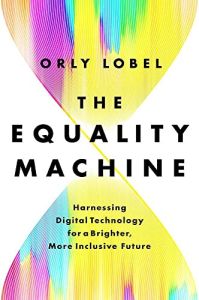
The Equality Machine
Book

The Equality Machine

Harnessing Digital Technology for a Brighter, More Inclusive Future

Public Affairs, 2022 mais...

Buy the book


Editorial Rating

9

getAbstract Rating

  • Concrete Examples
  • Hot Topic
  • Inspiring

Recommendation

Society has become polarized between those who fear new technologies due to their potential to exacerbate existing inequities and those who naively envision a technological utopia without anticipating risks. Law professor Orly Lobel urges humanity to bridge these divides, working together to create an “equality machine” instead. Lobel calls on stakeholders across sectors to harness the power of AI, machine learning, and big data to reduce inequities, bias, and discrimination. Learn about efforts around the world to create a better future in which humanity uses “technology for good.”

Summary

The emergence of intelligent machines triggers a need to uphold values of equity and fairness.

Over the past decade, discourse about technological change has been largely polarized. Silicon Valley “insiders” — predominantly white men — have viewed “disruption” as their key objective, lauding the potential of new technologies to drive economic growth and create efficiencies. Meanwhile, “outsiders” — such as people of color, women, and those from rural areas and the developing world — have issued warning cries about potential new forms of exclusion and inequities. Thus, two dichotomous visions of the future have emerged: Outsiders worry that new technology will create a dystopian “robopocalypse,” while insiders dream of an innovation utopia.

Humanity must take a middle path between naive optimism and fearful pessimism: cultivating awareness of the ways new technologies can perpetuate inequities while simultaneously taking action to improve the fairness of technological systems. Some have tried to improve machine fairness by removing identity markers, like ...

About the Author

Orly Lobel is the director of the Center for Employment and Labor Policy and the Warren Distinguished Professor of Law at the University of San Diego as well as a tech policy consultant to leading organizations. She is the award-winning author of several books and numerous research articles.


Comment on this summary

More on this topic

Related Skills

Talente gewinnen
Unternehmensfinanzen
Besser denken
Digitale Transformation
Discover AI Use Cases
Discover and Understand Digital Technologies
Zukunft der Arbeit
Drive AI Transformation
Enable Digital Organization
Executive Leadership
Personalwesen
Kulturelles Bewusstsein entwickeln
Führung
Leverage AI for Leadership
Leverage AI in Your Daily Tasks
Vergütung managen
Management
Soft Skills
Digitalkompetenz aufbauen
Understand AI
Understand Economics
Berufliche Kompetenzen
Discover AI Use Cases in the Consulting Industry
Leverage AI for Finance
Ungleichheit verstehen
Use AI for Fraud Detection
Discover AI Use Cases in Legal Services
Manage Digital Risk and Ethics
Gender-Inklusion fördern
Use AI for Data Analysis
Vergütung fair gestalten
Discover AI Vendors for HR
Diversity, Equity & Inclusion fördern
Use AI for General Research
Discover AI Use Cases in the Finance Industry
Leverage AI for Management
Tech-Impact auf Ethik
Neue Arbeitstechnologien
Measure AI Business Impact
Use AI for Skills Matching
Drive AI Adoption in Teams
Leverage AI for Compliance
Understand AI Impact on Work
AI Transformation
Discover AI Use Cases in the Technology Industry
Technologie ethisch nutzen
Guide Teams Through AI Transition
Bewerber auswählen
Understand AI Impact on Business and Economy
Use AI for Workforce Planning
Understand AI Risks
Leverage AI for HR
Einstellungsstrategie entwickeln
Denkfehler vermeiden
Unconcious Bias verstehen
Use AI for Credit Scoring
Understand AI Societal Impact
Use AI Ethically as a Leader
Diverse Talente rekrutieren
Use AI for Talent Sourcing
Understand AI Ethical Impact
Use AI for Candidate Screening
KI ethisch nutzen