Navigation überspringen
The Essential Supervisor`s Handbook
Book

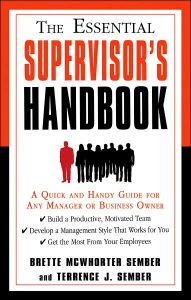
The Essential Supervisor`s Handbook

A Quick And Handy Guide for Any Manager or Business Owner

Career Press, 2007 Mehr

Buy the book


Editorial Rating

7

getAbstract Rating

  • Applicable

Recommendation

Although this handbook is touted as a guide for managers at all levels, it really is most useful for new supervisors. Authors Brette McWhorter Sember and Terrence J. Sember cover familiar territory, but their writing is clear, concise and informative. Seasoned managers may find only a few fresh ideas for running a department or overseeing employees. But getAbstract believes the book’s fundamental approach will instruct new managers and help experienced supervisors refocus on leadership principles that they may have come to neglect over time.

Summary

Quality Control

Good managers are experts at multitasking. They keep their departments running smoothly while also satisfying their supervisor’s demands. A manager’s success, though, ultimately depends on establishing and nurturing relationships. If you are a new supervisor, your organizational skills aren’t nearly as important as your ability to create an upbeat, productive environment for your employees. Everyone has strengths and weaknesses. You may excel at writing quarterly reports but fall short in enforcing deadlines. That’s OK. Work on improving in those fields where you have weaknesses. Don’t shy away from handing tasks to team members who can do them better. The key is identifying and strengthening the qualities that will make you a first-rate manager. Those essential traits include integrity, self-assurance, adaptability, honesty, openness, compassion and reliability.

As a new manager, try to build a strong foundation from the outset. You can’t afford to be emotional. Think carefully before you react to a person or a situation. Be clear about your goals. If addressing a work-related matter doesn’t help you resolve it, let it go for the moment. If you’re ...

About the Authors

Brette McWhorter Sember, a former attorney and mediator, is the author of more than 30 books. Her husband, Terrence J. Sember, has a master’s degree in business management, and has owned and operated two businesses.


Comment on this summary

More on this topic

Related Skills

Karriere voranbringen
Talente gewinnen
Anpassungsfähigkeit steigern
Produktiver werden
Eigenes Wohlbefinden stärken
Karriere
Prospects konvertieren
Develop Team Members
Drive Team Performance
Customer Experience verbessern
Innovationskultur fördern
Personalwesen
Innovation
Ethisch führen
Operative Planung leiten
Sich selbst führen
Gut leben
Unternehmenskommunikation managen
Performance managen
Kundenbeziehungen managen
Teams und Abteilungen managen
Zusammenarbeit meistern
Mitarbeiterleistung steigern
Persönliche Entwicklung
Produktion und Logistik
Vertrieb
Unternehmenskultur beeinflussen
Strengthen Team Collaboration
Berufliche Kompetenzen
Psychologische Sicherheit fördern
Employee Experience verbessern
Büropolitik meistern
Diverse Talente rekrutieren
Diskussionen moderieren
Schreiben im Job
Soziale Signale erkennen
Einstellungsstrategie entwickeln
Servant Leadership praktizieren
Kommunikationsstil anpassen
Interne Kommunikation managen
Emotionale Intelligenz entwickeln
Beschwerden managen
Zeit managen
Soft Skills
Inklusiv kommunizieren
Aufgaben delegieren
Produktionsqualität sicherstellen
Neuzugänge onboarden
Authentisch sein
Mitarbeitergespräche durchführen
Dankbarkeit üben
Foster Team Culture
Führung
Resilienter werden
Emotionen regulieren
Interkulturell kommunizieren
Rapport mit Prospects aufbauen
Management
Disziplinarmaßnahmen umsetzen
Mentee sein
Digital kommunizieren
Transparent kommunizieren
Vertrauen gewinnen
Herausforderungen annehmen
Qualitätskontrolle sicherstellen
Gut in den Job starten
Projekte managen
Von unten führen
Grenzen setzen
Klar kommunizieren
Mentor sein
Selbstbewusst auftreten
Navigate Leadership Challenges
Kommunikation verstehen
Team motivieren
Practice Transformational Leadership
Verletzlichkeit zeigen
Nonverbal kommunizieren
Business-Etikette beherrschen
Manage People and Talent
Demut üben
Kernwerte definieren
Schwierige Gespräche führen
Mitarbeiterbeziehungen managen
Bewerber auswählen
Meetings wirksam gestalten
Wirksam kommunizieren
Empathie und Mitgefühl zeigen
Soziale Kompetenzen entwickeln
Einstellungsentscheidungen finalisieren
Reklamationen managen
Gegen sexuelle Belästigung vorgehen
Mitarbeiter entlassen