
Navigation überspringen
The Leader's Guide to Unconscious Bias
Book

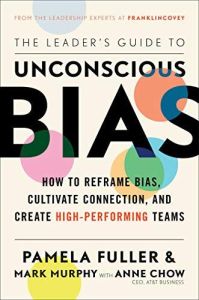
The Leader's Guide to Unconscious Bias

How to Reframe Bias, Cultivate Connection, and Create High-Performing Teams

Simon & Schuster, 2020 Mehr

Buy the book


Editorial Rating

9

getAbstract Rating

  • Applicable
  • Well Structured
  • Concrete Examples

Recommendation

Imagine a help-wanted advertisement specifying that candidates must be right-handed, brown-haired and more than six feet tall. According to authors Pamela Fuller, Anne Chow and Mark Murphy, preferences like these actually do play a significant role in your judgments. Because biases are unconscious, you won’t realize you’re making hiring decisions based on assumptions that may be irrelevant, unfair or untrue. The authors explain how to become aware of your biases and then outline strategies for circumventing them.

Summary

Unconscious bias in the workplace is a performance issue.

Discussions about bias in business often focus on issues such as fairness and the role of quotas and regulations. These important topics can divert attention from the deleterious effects that bias often has on a company’s performance. If you don’t identify and examine your biases, you’re more likely to base decisions on unconscious assumptions that may be unjust, false and unrelated to your company’s needs. Workers on the receiving end of bias can become unwilling or unable to contribute at their highest level.

By practicing self-awareness, you can recognize your most deep-seated, subconscious assumptions. When you identify your biases, you can overrule them, especially when they get in the way of rational analysis. 

Everyone has biases.

The human brain evolved to embrace biases as survival mechanisms. The brain receives an enormous load of information. To deal with the gargantuan task of processing this input, it devised shortcuts, such as putting people, things and events into categories, so you don’t have to analyze every...

About the Authors

Pamela Fuller is FrankinCovey’s “chief thought leader on inclusion and bias.” Anne Chow is the CEO of AT&T Business. Mark Murphy is a FranklinCovey senior consultant.


Comment on this summary

  • Avatar
  • Avatar
    R. W. 3 years ago
    We have to be aware of the way we think and make assumptions. Being alerted is the first step.
  • Avatar
    B. C. 4 years ago
    Thoughtful work addresses the reality that biases, like many other things, have both an up and downside, AND both need to be examined in order to produce the most effective outcomes.

More on this topic

Related Skills

Karriere voranbringen
AI Transformation
Kreativ sein
Anpassungsfähigkeit steigern
Eigenes Wohlbefinden stärken
Selbstvertrauen aufbauen
Karriere
Besser denken
Drive Team Performance
Executive Leadership
Innovationskultur fördern
Innovation
Ethisch führen
Leverage AI for Leadership
Leverage AI in Your Daily Tasks
Gut leben
Change managen
Management
Zusammenarbeit meistern
Persönliche Entwicklung
Strengthen Team Collaboration
Understand Economics
Berufliche Kompetenzen
KI ethisch nutzen
Beschwerden managen
Soft Skills
Andere Perspektiven einnehmen
Manage People and Talent
Mikroaggressionen vermeiden
Kulturelles Bewusstsein entwickeln
Gut altern
Ungleichheit verstehen
Mitarbeiterbeziehungen managen
Foster Team Culture
Talentmanagement betreiben
Talente strategisch einsetzen
Starke Beziehungen aufbauen
Divergent denken
Durch Change führen
Gender-Inklusion fördern
Emotionale Intelligenz entwickeln
Selbstwahrnehmung entwickeln
Emotionen regulieren
Selbstzweifel überwinden
Ideenfindung moderieren
Mentale Gesundheit verbessern
Navigate Leadership Challenges
Diskriminierung verstehen
Sich selbst führen
Herausforderungen annehmen
Interne Mobilität fördern
Sich selbst verstehen
Bewerbungsgespräche führen
Teamzusammenhalt stärken
Mobbing am Arbeitsplatz bewältigen
Talente gewinnen
Führungswirkung steuern
Employee Experience verbessern
Büropolitik meistern
Practice Transformational Leadership
Denken verstehen
Als Frau Karriere machen
Diversität fördern
Growth Mindset entwickeln
Authentisch sein
Einstellungsstrategie entwickeln
Personalwesen
Führung
Achtsamkeit üben
Neurodiversität fördern
Systemische Ungleichheiten verstehen
Herausforderungen überwinden
Inklusive Kultur schaffen
Use AI Ethically as a Leader
Employee Resource Groups nutzen
Demut üben
Diversity, Equity & Inclusion fördern

Annahmen hinterfragen
Einsamkeit überwinden
Generationenvielfalt fördern
Ethnische Miinderheiten inkludieren
Empathie und Mitgefühl zeigen
Mikroaggressionen verstehen
Diverse Talente rekrutieren
Soziale Kompetenzen entwickeln
Minderheiten als Verbündeter unterstützen
Psychologische Sicherheit fördern
Servant Leadership praktizieren
Verletzlichkeit zeigen
Inklusiv führen
Denkfehler vermeiden
Zugehörigkeitsgefühl fördern
Unconcious Bias verstehen