

Navigation überspringen
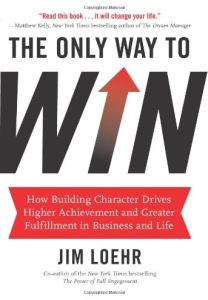
The Only Way to Win
Book

The Only Way to Win

How Building Character Drives Higher Achievement and Greater Fulfillment in Business and Life

Hyperion, 2012 Mehr

Buy the book


Editorial Rating

8

getAbstract Rating

  • Applicable
  • Eye Opening
  • Overview

Recommendation

Do you ever wonder whether it’s possible to be a person or company of honor and still succeed in today’s world? If your fellow athletes take steroids and you don’t, will you make the team? If you tell the truth but your competitors lie, will you go out of business? After decades of working with dozens of top athletes and executives, coach Jim Loehr argues persuasively that success stems from achievement based on your values and purpose. He teaches that no matter how enormous your gains, if you lie or cheat to attain them – or even if you achieve them honestly but for the wrong reasons – you will fail. Loehr doesn’t preach; rather, he compellingly – if a bit repetitively – asks you to define what you stand for and then to implement the standards you value as you compete, rather than pursuing only extrinsic rewards. getAbstract recommends this substantive manual to those who seek meaning from their work, to leaders trying to build sustainable cultures, and to parents striving to raise children with good values.

Summary

Can Nice Guys Finish First?

Imagine that you lived and breathed tennis from age two. You were self-centered and mistrustful, but you worked nonstop to become a professional by age 16. You were a fierce, take-no-prisoners competitor with little respect for your rivals or tennis tradition. Over the next decade, you set new records, won three grand slams, became No. 1 in the world and won an Olympic gold medal. Now...how do you feel? Andre Agassi achieved all of this by age 26 and yet felt only profound hollowness and disappointment. He attributes his drug use, lies, cover-ups and failed first marriage to his lack of purpose.

Even if you’re the best in the world, the rewards alone – wealth, fame, power, influence or material possessions – won’t bring you happiness or satisfy your fundamental needs. Fortunately Agassi “had the courage to reinvent himself.” He reversed what might have been an all-too-familiar story of celebrity self-destruction. In 1998, he began a meteoric comeback: He finished 1999 as the top player in the world, again, and won five more Grand Slam titles before retiring in 2006. Agassi eclipsed his previous accomplishments after deciding to become a ...

About the Author

Performance psychologist Jim Loehr is a sports and business coach who has written 15 books including The Power of Story.


Comment on this summary

  • Avatar
  • Avatar
    S. V. 6 years ago
    Good
  • Avatar
    K. M. 10 years ago
    Unbelievably incredible 
  • Avatar
    P. K. 1 decade ago
    This one pulled my strings with using a few words like "success stems from achievements based upon your values and purpose". All it took to get my mojo vibrate.

More on this topic

Related Skills

Emotionale Intelligenz entwickeln
Selbstgesteuert lernen
Anpassungsfähigkeit steigern
Produktiver werden
Selbstvertrauen aufbauen
Businessplan entwickeln
Entrepreneurship
Innovationskultur fördern
Personalwesen
Innovation
Ethisch führen
Gut leben
Unternehmenskommunikation managen
Manage Learning and Development
Management
Marketing
Soziale Kompetenzen entwickeln
Strategisch planen
Diversity, Equity & Inclusion fördern
Soft Skills
Berufliche Kompetenzen
Eigenes Wohlbefinden stärken
Eigene Stärken einsetzen
Growth Mindset entwickeln
Persönliche Entwicklung
Positiv denken
Ziele setzen und erreichen
Selbstwahrnehmung entwickeln
Authentisch sein
Führungswirkung steuern
Eigenverantwortung fördern
Mitarbeiterwohlbefinden stärken
Purpose, Vision und Mission definieren
Sich selbst führen
Herausforderungen überwinden
Drive Team Performance
Führungskräfte entwickeln
Executive Leadership
Executive Coaching umsetzen
Mitarbeiterentwicklung unterstützen
Employee Experience verbessern
Unternehmensziele setzen
Manage People and Talent
Unternehmens-Purpose kommunizieren
Selbstbeherrschung entwickeln
Vertrauen gewinnen
Develop Team Members
Sich selbst verstehen
Team motivieren
Unternehmenskultur verstehen
Zugehörigkeitsgefühl fördern
Gewohnheiten entwickeln
Coachingprogramme umsetzen
Teamzusammenhalt stärken
Employee Resource Groups nutzen
Lerngewohnheit entwickeln
Foster Team Culture
Unternehmenskultur beeinflussen
Verletzlichkeit zeigen
Führung
Leben aktiv gestalten
Selbstdisziplin entwickeln
Practice Transformational Leadership
Lernkultur schaffen
Psychologische Sicherheit fördern
Menschen coachen
Mentor sein
Eigenen Purpose finden
Sinn finden
Servant Leadership praktizieren