

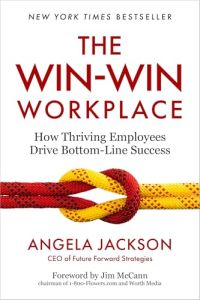
Book
The Win-Win Workplace
How Thriving Employees Drive Bottom-Line Success


1×
Melden Sie sich an, um die Audiozusammenfassung anzuhören.



Zusammenfassung verfügbar: weltweit
Klicken Sie mit der rechten Maustaste auf den Code, um das Bild zu kopieren.
Hinweis: Bei ASP-Portalen ist der Link hinter dem Code portalspezifisch!
Recommendation
During Angela Jackson’s rise from working-class roots to becoming a head marketing executive, she never questioned her employers’ zero-sum approach to workforce management. But when she crashed her car while rushing to a business meeting, she began to rethink that status quo. In this helpful guide, Jackson draws on research into over 1,000 companies to explain how organizations can shift to a “Win-Win” workplace model that benefits everyone: By promoting employee well-being, inclusion, and skill development, companies can improve retention, engagement, productivity, and profits.
Summary
About the Author
Angela Jackson is the founder of consulting firm Future Forward Strategies and a Harvard University lecturer. Her work champions both workers’ well-being and companies’ financial success.
Learners who read this summary also read
Related Skills

Wirksam kommunizieren

Steigern Sie die Teamleistung

Innovationskultur fördern

Fördern Sie die Teamkultur

Personalwesen

Innovation

Ethisch führen

Führung

Menschen und Talente managen

Soziale Kompetenzen entwickeln

Talente strategisch einsetzen

Soft Skills

Psychologische Sicherheit fördern

Talentmanagement betreiben

DEI-Erfolg messen

Servant Leadership praktizieren

Vertrauen gewinnen

Diversität fördern

Transparent kommunizieren

Ethnische Miinderheiten inkludieren

Inklusive Kultur schaffen

Eigenverantwortung fördern

Interne Mobilität fördern

Diversity, Equity & Inclusion fördern

Comment on this summary