

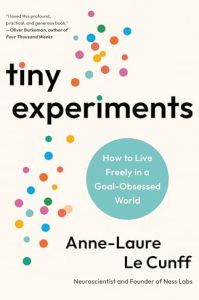
Book
Tiny Experiments
How to Live Freely in a Goal-Obsessed World


1×
Melden Sie sich an, um die Audiozusammenfassung anzuhören.



Zusammenfassung verfügbar: weltweit
Klicken Sie mit der rechten Maustaste auf den Code, um das Bild zu kopieren.
Hinweis: Bei ASP-Portalen ist der Link hinter dem Code portalspezifisch!
Recommendation
It turns out all those SMART goals you’re setting might, in fact, be blocking you from achieving your full potential, according to neuroscientist Anne-Laure Le Cunff. Le Cunff offers insights into the limitations of linear goals and suggests mindset shifts about the nature of success and goals. She suggests taking a meandering, unconventional, authentic career path, letting your curiosity lead the way. Le Cunff's concept of “tiny experiments” can help you embark on a journey of lifelong learning.
Summary
About the Author
Anne-Laure Le Cunff is a neuroscientist at King’s College London, where she studies the neurological basis of lifelong learning and curiosity. She writes the Ness Labs newsletter, helping readers to develop an experimental mindset.




Comment on this summary