
تخطي التنقل
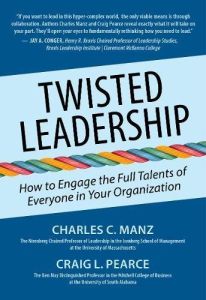
Twisted Leadership
Book

Twisted Leadership

How to Engage the Full Talents of Everyone in Your Organization

Maven House Press, 2017 المزيد...

Buy the book


Editorial Rating

8

getAbstract Rating

  • Well Structured
  • Overview
  • Concrete Examples

Recommendation

In many organizations, leadership has become a snarled-up mess. Prescriptions for improving leadership often rely on outdated common wisdom and the paradigm of layers of centralized autocrats. To overcome this “leadership disease,” say business professors Charles C. Manz and Craig L. Pearce, your company should move beyond conventional tactics and embrace “twisted leadership.” This strategy regards leadership as a “complex social process” that unites “self-leadership, SuperLeadership, shared leadership and socially responsible leadership.” Manz and Pearce advocate flexible managerial assignments and shared power. Although the authors indulge in jargon, their book is reader-friendly. It includes helpful charts, diagrams and illustrations as well as workbook pages at the end of each chapter for writing about the lessons you’ve learned. getAbstract recommends this not-so-twisted approach to executives seeking a fresh look at the issues inherent in leadership.

Summary

Leadership in a Tangle

Traditional hierarchical, centralized leadership creates organizational quagmires. Most suggestions for improving or replacing it come from so-called thought leaders who lack sufficient grounding in the discipline of leadership. Often, senior executives believe that becoming leaders makes them instantly smarter than their colleagues. Because of their position, they believe their ideas and intentions should take precedence over everyone else’s.

Over time, employees come to see these executives’ true character as bosses rather than as leaders. At that point, these executives – the embodiment of autocratic “leadership disease” – often move on to afflict new organizations. The typical business school curriculum helps these patterns recur. Professors teach their students how much influence those in authority wield over those below them. Many academics support “agency theory,” a paradigm suggesting that most people abuse whatever privileges they enjoy. As a result, people in authority feel they must keep a tight rein on their subordinates.

Other leadership theories – “transactional, transformational, visionary” and “charismatic...

About the Authors

Charles C. Manz, PhD, is the Nirenberg Chaired Professor of Leadership at the Isenberg School of Management at the University of Massachusetts. Craig L. Pearce, PhD, is the Ben May Distinguished Professor at the Mitchell College of Business at the University of South Alabama.   


Comment on this summary

More on this topic

Related Skills

Wirksam kommunizieren
Businessplan entwickeln
Innovative Produkte entwickeln
Develop Team Members
Zukunft der Arbeit
Entrepreneurship
Innovationskultur fördern
Personalwesen
Strategisch innovieren
Innovation
Ethisch führen
Strategisch führen
Gut leben
Gute Entscheidungen treffen
Change managen
Unternehmenskommunikation managen
Management
Marketing
Soziale Kompetenzen entwickeln
Vertriebsstrategie entwickeln
Strategisch planen
Diversity, Equity & Inclusion fördern
Vertrieb
Unternehmenskultur beeinflussen
Soft Skills
Organisationen verstehen
Berufliche Kompetenzen
Führungskräfte entwickeln
Transparent kommunizieren
Wandel von unten anstoßen
Persönliche Entwicklung
Ideenfindung moderieren
Menschen coachen
Sinn finden
Durch Change führen
Zusammenarbeit meistern
Gruppenentscheidungen treffen
Eigenverantwortung fördern
Selbstgesteuert lernen
Offene Kommunikation fördern
Servant Leadership praktizieren
Führungswirkung steuern
Strengthen Team Collaboration
Teamziele setzen
Manage People and Talent
Product Vision definieren
Neue Führungsansätze
Inklusiv führen
Practice Transformational Leadership
Strategisch kommunizieren
Executive Leadership
Psychologische Sicherheit fördern
Unternehmensstrategie kommunizieren
Vertriebsteams managen
Führungsansätze verstehen
Navigate Leadership Challenges
Purpose, Vision und Mission definieren
Verletzlichkeit zeigen
Führung
Unternehmenskultur verstehen
Zugehörigkeitsgefühl fördern
Drive Team Performance
Teamzusammenhalt stärken
Team motivieren
Unternehmens-Purpose kommunizieren
Sich selbst führen
Foster Team Culture
Gemeinsame Vision definieren