Navigation überspringen
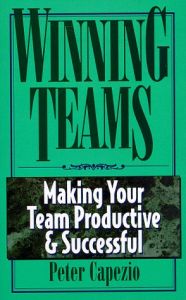
Winning Teams
Book

Winning Teams

Making Your Team Productive & Successful

Career Press, 1998 Mehr

Buy the book


Editorial Rating

5

getAbstract Rating

  • Overview
  • For Beginners

Recommendation

If you’re one of the holdouts still managing your employees in what consultants would scornfully describe as a "hierarchical" style, you fall squarely into the target audience for Winning Teams A sparse 105 pages are filled with general pointers about the benefits that your business can derive from teams, the strategies you should use to make your teams successful and pitfalls you should avoid. What the book lacks, however, are real-life examples. A few short case studies of teams in action would have added to the book’s credibility (not to mention its page count). Despite this deficiency, getAbstract recommends Winning Teams which achieves its purpose by introducing the command-and-control generation to the concept of teams and providing a bevy of tips on motivating people, inspiring cooperation and building trust.

Summary

Team Time

During the 1980s, businesses began to downsize, leaving survivors in a workplace of fewer resources and less hierarchy. Since then, employees have learned to thrive in a challenging environment that features flat organizational structures, unlimited cross-training opportunities and teams.

Teams are beneficial for several reasons. They redistribute workload and help companies get more work done with fewer resources. Teams also help individuals learn new skills and take on increased responsibilities, including replacing other team members in other jobs when needed. Teams break down organizational barriers and give individuals more accountability and responsibility. And although individuals may not realize it, teams help them increase their communications, problem-solving and decision-making skills.

While the shift from hierarchy to team-based organization can be difficult for your company, it’s even more of a challenge - and an opportunity - for your employees. Individuals should be encouraged to start analyzing the way things are done at your company and thinking about ways to improve processes. They should also, if they haven’t already, start identifying...

About the Author

Peter Capezio is the author of several books relating to business and management, including Powerful Planning Skills: Envisioning the Future and Making it Happen and Secrets of Breakthrough Leadership



Comment on this summary

More on this topic

Related Skills

Karriere voranbringen
AI Transformation
Kreativ sein
Anpassungsfähigkeit steigern
Karriere
Wirksam kommunizieren
Unternehmen entwickeln
Digitale Transformation
Drive AI Transformation
Execute Digital Operations
Executive Leadership
Innovationskultur fördern
Personalwesen
Innovation
Ethisch führen
Sich selbst führen
Führung
Performance managen
Management
Mitarbeiterleistung steigern
Persönliche Entwicklung
Vertriebsstrategie entwickeln
Diversity, Equity & Inclusion fördern
Vertrieb
Unternehmenskultur beeinflussen
Berufliche Kompetenzen
Divergent denken
Inklusiv führen
Veränderungen annehmen
Talente strategisch einsetzen
Eigenverantwortung fördern
Meetings wirksam gestalten
Positive Fehlerkultur fördern
Emotionale Intelligenz entwickeln
Ideenfindung moderieren
Hybrid oder remote führen
Sozialverhalten verstehen
Mitarbeitergespräche durchführen
Change managen
Kulturelle Unterschiede verstehen
Mit schwierigen Menschen umgehen
Psychologische Sicherheit fördern
Transparent kommunizieren
Kommunikation im Team managen
Aus Fehlern lernen
Zusammenarbeit meistern
Work Remotely
Führungswirkung steuern
Teamdynamik verstehen
Accountability sicherstellen
Foster Team Culture
Produktiver werden
Team motivieren
Zugehörigkeitsgefühl fördern
Aufgaben delegieren
Mentee sein
Drive AI Adoption in Teams
Arbeitsabläufe straffen
Servant Leadership praktizieren
Empathie und Mitgefühl zeigen
Teamzusammenhalt stärken
Kernwerte definieren
Organisationen verstehen
Growth Mindset entwickeln
Feedback geben
Vertriebsteams managen
Teams und Abteilungen managen
Kulturelles Bewusstsein entwickeln
Selbstwahrnehmung entwickeln
Interkulturell kommunizieren
Durch Change führen
Verletzlichkeit zeigen
Unternehmenskultur verstehen
Develop Team Members
Kommunikation verstehen
Teamgrenzen managen
Drive Team Performance
Büropolitik meistern
Andere unterstützen
Navigate Leadership Challenges
Demut üben
Zukunft der Arbeit
Organisation agil machen
Strengthen Team Collaboration
Diskussionen moderieren
Soziale Kompetenzen entwickeln
Andere Perspektiven einnehmen
Soft Skills
Teamleistung verbessern
Manage People and Talent
Persönlichkeitstypen verstehen
Teamagilität steigern