Navigation überspringen
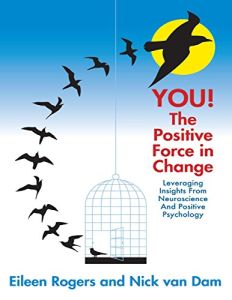
You! The Positive Force In Change
Book

You! The Positive Force In Change

Leveraging Insights from Neuroscience and Positive Psychology

LULU Publishing, 2015 Mehr

Buy the book


Editorial Rating

8

getAbstract Rating

  • Innovative
  • Applicable

Recommendation

The human brain is wired to resist change. Leadership experts Eileen Rogers and Nick van Dam cite its reaction to change, the “fear factor,” as a root cause of organizational and personal failure. They advocate using a positive, evidence-based approach to management as an empathetic alternative to old-style authoritarianism. This strategy can help managers allay the fear of change that locks people in place and prevents them from considering important issues logically. The process of neuroplasticity helps the brain form the new connections people need to deal with novel situations, but it works best amid “mindful” calmness. A negative state of mind is contagious and breeds inflexibility, but positivity can help leaders and their employees handle change. Although the book refers to many touchstone findings in brief, and moves quickly on, the need to lead with optimism and emotional inclusion emerges as its main message. getAbstract suggests the authors’ insights and methods to progressive managers making the transition to a more consultative, “emotionally intelligent” approach to leading change.

Summary

Leadership for Meaning and Purpose

Leaders can harness insights from neuroscience and psychology to broaden the meaning of work and to make it more fulfilling for their employees. Leaders need flexibility, positivity and understanding to prevent demotivation from blighting their workforce. If they discuss change openly, positively and inclusively, leaders can prevent fear and disruption. They should channel their “moments of leadership” both for their firm’s good and for social good. Businesses must act differently in the 21st century; leading-edge management now includes such concepts as “not just for profit” and “ethical capitalism.”

Modern cognitive science is quickly taking apart old “command and control” approaches to management. Leaders tend to be either “dissonant” or “resonant,” according to organizational theorist Richard Boyatzis. Old-style rigid leadership is dissonant and top-down; modern consultative, empathetic leadership is resonant. Emotional intelligence is central to resonant leadership. Good leaders recognize that the hierarchical work structures of the 20th century are unsustainable. In light of modern insights about what really motivates people...

About the Authors

Eileen Rogers is founder and CEO of the LeadershipSigma consultancy. Nick van Dam is McKinsey & Company’s global chief learning officer.


Comment on this summary

  • Avatar
  • Avatar
    C. L. 2 years ago
    good content and a truly interesting approach
  • Avatar
    W. W. 2 years ago
    Great stuff, relate with current dynamic changes
  • Avatar
    J. A. 2 years ago
    good stuff

More on this topic

Related Skills

Karriere voranbringen
AI Transformation
Anpassungsfähigkeit steigern
Selbstvertrauen aufbauen
Karriere
Wirksam kommunizieren
Innovative Produkte entwickeln
Develop Team Members
Unternehmen entwickeln
Digitale Transformation
Zukunft der Arbeit
Drive Team Performance
Entrepreneurship
Execute Digital Operations
Personalwesen
Strategisch innovieren
Ethisch führen
Manage Learning and Development
Management
Zusammenarbeit meistern
Persönliche Entwicklung
Innovation verstehen
Organisationen verstehen
Berufliche Kompetenzen
Employee Experience verbessern
Strategisch führen
Soziale Kompetenzen entwickeln
Work-Life-Balance finden
Leverage AI for Management
Motivation verstehen
Positiv denken
Verletzlichkeit zeigen
Herausforderungen überwinden
Selbstdisziplin entwickeln
Selbstbeherrschung entwickeln
Grenzen setzen
Besser denken
Psychologische Sicherheit fördern
Sich selbst verstehen
Soft Skills
Unsicherheit überwinden
Eigenen Purpose finden
Neugierig sein
Sinn finden
Intrapreneurship betreiben
Use AI for Coaching and Development
Resilienter werden
Design Thinking anwenden
Selbstwahrnehmung entwickeln
Neue Führungsansätze
Servant Leadership praktizieren
Fragen stellen
Vertrauen gewinnen
Positive Fehlerkultur fördern
Strengthen Team Collaboration
Foster Team Culture
Guide Teams Through AI Transition
Führungsansätze verstehen
Navigate Leadership Challenges
Organisation agil machen
Growth Mindset entwickeln
Kreativität fördern
Experimentieren fördern
Eigene Stärken einsetzen
Gut leben
Leben aktiv gestalten
Andere beeinflussen
Change verstehen
Offene Kommunikation fördern
Sich selbst führen
Divergent denken
Menschen coachen
Kreativ zusammenarbeiten
Wandel von unten anstoßen
Emotionale Intelligenz entwickeln
Annahmen hinterfragen
Leverage AI for Leadership
Neue Ideen vorantreiben
Durch Change führen
Kreativ sein
Practice Transformational Leadership
Ambidextrie nutzen
Führungswirkung steuern
Unternehmenskultur beeinflussen
Produktiver werden
Executive Leadership
Veränderungen annehmen
Eigene Stärken erkennen
Führung
Manage People and Talent
Innovationskultur fördern
Change managen
Fokus stärken
Ideenfindung moderieren
Stress managen
Innovation
Emotionen regulieren
Eigenes Wohlbefinden stärken
Mentale Gesundheit verbessern
Achtsamkeit üben