
Joshua Bearman
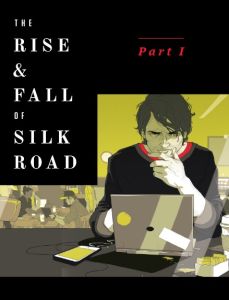
The Rise and Fall of Silk Road
How a 29-year-old idealist built a global drug bazaar and became a murderous kingpin.
Wired, 2015
What's inside?
How did a libertarian idealist become the power behind America’s largest online drug marketplace?


Summary availability: Worldwide
Recommendation
In early 2015, a jury found Ross Ulbricht guilty of creating and running the drug-selling e-commerce website Silk Road. But how exactly did Ulbricht come to create Silk Road, and how, with all the encryption and secrecy standing in the way of discovery, did law enforcement ultimately bring Ulbricht to justice? In this long article, Wired reporter Joshuah Bearman weaves a detailed and gripping narrative of the various individuals – including Ulbricht, Silk Road employee Curtis Green, Drug Enforcement Administration agent Carl Force and FBI agent Chris Tarbell – and the encryption technology which played a part in the Silk Road saga. In detailing the rise of Silk Road and the evolution of its founder from political experimenter to brutal businessman, Bearman also raises larger questions about the nature of identity and the corrupting influence of power. getAbstract recommends this article to everyone interested in the intersections among digital technologies, politics, law, philosophy and identity.
Take-Aways
- Ross Ulbricht’s first encounter with bitcoin cryptocurrency sparked the idea for Silk Road, an anonymous ecommerce website specializing in “illicit trade, mostly drugs.”
- He based Silk Road’s ideology upon libertarian politics and Golden Rule ethics.
- Specialized Tor encryption software facilitated Silk Road’s secrecy.
- In 2012, under the pretext of being a drug cartel, DEA agent Carl Force began contacting Ulbricht, known on Silk Road as “Dread Pirate Roberts” (DPR).
- In 2013, FBI agent Chris Tarbell and his team began searching for DPR’s server.
- When Silk Road customer service rep Curtis Green was caught in a drug sting, DPR contacted Force’s alter ego and asked if he could kill Green.
- In 2013 Tarbell traced Silk Road’s server’s real IP address to a data center in Iceland.
- Tarbell ID’d “Frosty” on the master computer Silk Road servers talked to, tracing the name to a message board post and ultimately to Ulbricht.
- After confirming DPR’s online activity matched Ulbricht’s, the FBI arrested him, confiscated his computer and seized bitcoins from Silk Road’s accounts.
- A jury ultimately found Ulbricht guilty of seven charges, though not guilty of murder.
Summary
From Libertarian Ideals to Silk Road
The seeds of the philosophy which Ross Ulbricht would one day cite as inspiration for his clandestine e-commerce website, Silk Road, were planted during his time as a master’s student at Penn State. Ulbricht’s field was science, but he developed a strong interest in economics. In particular, Ulbricht found himself swayed by the theories of libertarian Ludwig von Mises, who argued that individuals “must have economic freedom to be politically or morally free.” After finishing his studies and embarking on a number of failed business endeavors, Ulbricht first encountered bitcoin. This digital cryptocurrency not linked to any central bank helped spark the idea of a “dark web” e-commerce site which would allow anonymous sellers to engage in “illicit trade, mostly drugs.” In January 2011, this concept acquired virtual form: Ulbricht launched Silk Road.
The Birth of the “Dread Pirate Roberts”
By late 2011, in part thanks to a feature by Gawker, Silk Road was a massive success. Ulbricht found himself growing increasingly overwhelmed by the demands of running the site – in terms of both managing the coding and security and of dealing with the need to lie to friends and romantic partners about his activities. He began hiring people to help handle technical issues, but nevertheless remained quite involved in the site’s daily goings-on – particularly in terms of reinforcing Silk Road’s libertarian politics and Golden Rule ethics. Ulbricht founded Silk Road on the notion of personal freedom, but he also laid down a “strict code of conduct” for the site, which boiled down to a version of the Golden Rule: “Treat others as you would wish to be treated, and don’t do anything to hurt or scam someone else.” Ulbricht soon realized his disembodied admin role needed a true persona – something which represented the essence of Silk Road. Thus, in February 2012, Ulbricht announced his new name: Dread Pirate Roberts (DPR, a reference to the film The Princess Bride). Speaking as DPR, Ulbricht elaborated on the libertarian philosophy underlying Silk Road and how the site functioned as “a direct challenge…to the very structure of power.”
Carl Force Heads Undercover and Chris Tarbell Peels the Onion
US Drug Enforcement Administration (DEA) agent Carl Mark Force first heard about Silk Road almost a year after its founding. Force found himself intrigued by the seemingly untouchable nature of the hidden site’s key players, particularly its central “mastermind,” Dread Pirate Roberts. In early 2012, Force joined a US Homeland Security task force working on the Silk Road case. Force learned the ins and outs of the site, which, in eBay fashion, included “profiles, listings and transaction reviews,” as well as tips for how to mail drugs most effectively. In April 2012, Force sent a message to DPR proposing that the mystery man sell Silk Road to the drug cartel alter ego with the screen name “Nob” that Force created for the case. DPR’s response came quickly: He was open to the proposal.
“Combining an anonymous interface with traceless payments in the digital currency bitcoin, [Silk Road] allowed thousands of drug dealers and nearly one million eager worldwide customers to find each other – and their drugs of choice – in the familiar realm of e-commerce.”
DPR played with the idea of selling Silk Road to Nob during the course of several weeks. But as he confessed to Nob, the issue with selling went beyond mere price: “It’s a revolution,” DPR wrote, “and is becoming my life’s work.” Force responded with alternate proposals to keep DPR chatting. Over time, the two formed a friendship of sorts. Force found himself liking, even identifying with DPR. Like DPR, Force understood the draw and the power of “taking on a new identity.” Indeed, earlier in his career, Force’s “double life” as an undercover agent nearly proved his undoing. Force knew a new identity might begin as a lie for others, but it can easily become a lie you tell yourself. For his part, FBI agent Chris Tarbell became interested in the Silk Road case by way of a larger challenge: Tarbell wanted to challenge Tor, an encryption software that makes sites like Silk Road possible by concealing users’ and servers’ locations by encrypting data in layers, like an onion. Tarbell opened an FBI case in early 2013 and began working with bitcoin specialist Ilwhan Yum and cyber expert Tom Kiernan to track down the power behind Silk Road. The only way to locate DPR was to find his server. But which of the “1.5 billion computers in the world” belonged to the man behind the pirate mask?
Two Big Breaks
In late 2012, Ulbricht moved to San Francisco. On Silk Road, DPR continued to polish his “leader and libertarian evangelist” persona to Silk Road’s users. He called the activity occurring on the site a “revolution.” For its part, the Silk Road community drew parallels between DPR and the Argentine Marxist revolutionary Che Guevara. As Silk Road continued to expand, Ulbricht expanded his workforce. He hired Silk Road user “Chronicpain” (Curtis Green) to handle certain admin duties, including “customer service and resetting passwords.” Green accepted the job with enthusiasm, but found working for DPR challenging: One minute, DPR acted “affectionate and magnanimous”, and the next, he was “decidedly unsympathetic.” Still Green trusted DPR. He even sent DPR a copy of his driver’s license when asked. Then, one afternoon, a knock on Green’s door changed everything. As part of the Silk Road task force, Force, acting as Nob, sent a shipment of cocaine to Green through the mail and then arrested him. Green was the task force’s first “tangible lead,” and once Force began browsing Green’s computer, he realized Green served as a key player in the Silk Road organization.
“The [Silk Road] site was modeled, sensibly, on Amazon and eBay. And that’s what it looked like: a well-organized community marketplace, complete with profiles, listings and transaction reviews.”
Meanwhile, back in their New York office, Tarbell and his team worked on the Silk Road case fruitlessly for months, until one day Tarbell and Kiernan found a thread on Reddit warning DPR that “Silk Road’s IP address was ‘leaking’ – visible to other computers.” Tarbell began probing Silk Road, putting in “usernames with bad passwords,” watching “network traffic” and testing IP addresses. It was after copy-pasting one of these IPs that it happened: Tarbell stumbled upon “a misconfiguration…that revealed the real IP address of Silk Road.” Tarbell and his team traced it to the Thor Data Center in Reykjavik. The authorities in Iceland were able to pull a “mirror” of the Silk Road site from the center – a physical hard drive with a “duplicate set” of the contents of the Silk Road site. Analyzing this content revealed to Tarbell’s team the exact extent of Silk Road’s success: The site earned DPR more “more than $7 million” annually. The drive also revealed logs of “all the other computers” which had communicated with the server in the last six months. Tarbell and his team began mapping the places where admins had logged in to the Silk Road virtual private network (VPN). The last known login IP address’s physical location was Café Luna, Sacramento Street, San Francisco.
The First “Murder”
Unfortunately, Green’s arrest didn’t go unnoticed by DPR, nor did the $350,000 in bitcoins which abruptly disappeared from a number of Silk Road accounts. DPR messaged Nob in a panic asking for his help. Could he pay Nob, DPR wondered, to have Green beaten? Force agreed to the plan, and set up a faked scene of torture. Later that same day, however, Nob got another message from DPR: “Can you change the order to execute rather than torture?” Though surprised by the request, Force once again agreed, and, once again created fake footage – this time showing Green “dead” of asphyxiation.
Tracking DPR
After returning from Iceland, FBI agent Tarbell’s co-worker, Kiernan, began “re-creating the entire Silk Road system.” The duplicate allowed Tarbell and his team to view the website “as DPR” and to learn the site and business functions. In addition to comments in the coding and private messages, the team discovered “the main bitcoin server showing all vendor transactions.” Looking through DPR’s chat logs revealed the extent to which “DPR was different things to different people.” The logs also revealed something darker: Green wasn’t the only person DPR had ordered to be killed. Tarbell traced correspondence between DPR and a user named “Redandwhite” about killing a blackmailer called “FriendlyChemist.” Redandwhite offered to complete the hit for $150,000, and later confirmed the deed was done. Later, DPR OK’d another hit on another blackmailer ID’d by Redandwhite, along with the blackmailer’s housemates. The “Frosty” ID was another key piece of information identified by Tarbell: This ID had appeared in connection with the drive in Iceland, but its significance wasn’t initially understood. Yum and Kiernan soon discovered, however, that “Silk Road servers had a login system that created one trusted computer for all the other machines, whose encryption keys all ended with frosty@frosty.” In other words, there was one master computer – code-named Frosty – with which Silk Road servers communicated. Find Frosty, and you’ll find DPR.
“Silk Road represented the new frontier of crime, a digital-era Wild West. As with the original frontier, Washington wanted to fence it in – and whoever brought law to the lawless would be a hero.”
Meanwhile, Tarbell’s next break in the Silk Road case arrived courtesy of a conference call with Homeland Security investigator Jared Der-Yeghiayan and IRS agent Gary Alford. Der-Yeghiayan had been tracking drug parcels – an investigation which led him to Silk Road. Once on the site, Der-Yeghiayan gained the cooperation of a DPR admin named “Cirrus.” Der-Yeghiayan took over Cirrus’s account and got as close to DPR as possible. For his part, Alford had a lead on the IP location in San Francisco that Tarbell and his team identified previously: a mention of Silk Road in a forum by a user called “Altoid” just days after the site’s launch. Another post by Altoid on Stack Overflow (a programmers community) asked if anyone could help him “connect to a Tor hidden service using curl in php.” Altoid’s email was listed as RossUlbricht@gmail.com. And moments after his initial post, Altoid changed his username to Frosty.
“In a criminal context, as with Silk Road, Tor made classic law enforcement – knocking on doors, interviewing witnesses, making deals – nearly useless. Sure, you might start to piece together the network or get closer to DPR, but you’d still have only usernames.”
When Der-Yeghiayan searched the federal database for “Ross Ulbricht,” the earlier Homeland Security report appeared, which featured Ulbricht’s “last known address…half a block away from Café Luna…where an administrator had logged in to the Silk Road VPN.” Tarbell examined the information about Ulbricht available online and discovered “a digital portrait with an incredible likeness to Dread Pirate Roberts.” Moreover, Kiernan found the exact code Ulbricht posted on Stack Overflow on the Silk Road server. The FBI began monitoring Ulbricht’s online activity to see how it matched with DPR’s. The activity aligned perfectly. Tarbell began planning Ulbricht’s arrest. It would be a complex maneuver: “seizing the site’s bitcoins undetected, taking control of Silk Road and placing FBI people abroad” – all without Ulbricht becoming wise and taking flight.
Arrest and Conviction
Tarbell and his team were ready to move on Ulbricht, but the San Francisco FBI office had jurisdiction. The San Francisco FBI wanted to do “a dramatic raid,” but Tarbell worried that a raid would give Ulbricht time to erase or encrypt the evidence on his computer. Tarbell wanted “complete surprise.” He requested and was granted a short delay on the raid to try to catch Ulbricht “in the act” at one of the coffee shops he frequented. At 2:45 p.m. on October 2, 2013, Tarbell and his team spotted Ulbricht leaving his home and followed him to a public library. Once in the library, Der-Yeghiayan “watched Ross log on as DPR” while other agents moved, unobtrusively, close to where Ulbricht sat. At 3:14 p.m., two agents caused a distraction and, in the moment when Ulbricht turned away from his computer, another agent grabbed the open laptop. Agents handcuffed Ulbricht while Kiernan officially confirmed what the team already knew: “The machine ID was Frosty. Ross was logged in to Silk Road as an administrator. Additionally, Kiernan found other evidence: a complete inventory of Silk Road’s servers, the website’s accounting information and Ulbricht’s diaries. With Ulbricht in custody, the rest of the plan unfolded: The FBI seized 144,000 bitcoins worth well more than $20 million, as well as the Silk Road enterprise itself.
“Like so many revolutionaries before him, the idealist became an ideologue, willing to kill for his beloved vision. At one point, DPR corrected Inigo that this action was not revenge; it was justice – a new justice, according to the law of the Silk Road.”
In court a few months later, Ulbricht pleaded not guilty to the FBI’s charges against him. Interestingly, the one charge the government did not, ultimately, levy against Ulbricht was that of murder. While Ulbricht “believed he was executing people,” the evidence showed no actual killings ever took place. The supposed hits were just a means of extracting cash from DPR. During the trial, Ulbricht admitted to founding Silk Road, but he claimed he’d sold the business long ago. But this idea didn’t stand a chance against the mountain of hard evidence presented to the jury, who found Ulbricht “guilty on all seven counts.”
The Aftermath
It’s tempting to view Ulbricht and Silk Road in black-and-white terms, but as the testimonies of those who knew Ulbricht reveal, “Ross and DPR can (and did) coexist.” Furthermore, Silk Road itself wasn’t an entirely misguided enterprise: Its ideals and original Golden Rule ethics were, in their way, something worth appreciating. Still, when any system becomes the tool of one person to wield in any way desired, violence is the inevitable outcome. And sometimes even the individual is truly unaware of having “switched sides” between the virtual and physical worlds – a point illustrated, ironically, by Carl Force, who was himself later arrested for “running an elaborate series of rackets and thefts on Silk Road.” Like Ulbricht, Force allowed an online persona to become his reality, and also like Ulbricht, Force couldn’t escape the “consequences of the real world.”
About the Author
Joshuah Bearman writes for Rolling Stone, Harper’s, Wired, The New York Times Magazine, The Believer and McSweeney’s and contributes to This American Life.
This document is restricted to personal use only.
My Highlights
Did you like this summary?
Read the articleThis summary has been shared with you by getAbstract.
We find, rate and summarize relevant knowledge to help people make better decisions in business and in their private lives.
Already a customer? Log in here.

Comment on this summary
Bravo! Keep up the great work!