Skip navigation
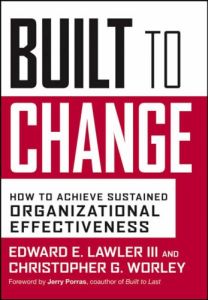
Built to Change
Book

Built to Change

How to Achieve Sustained Organizational Effectiveness

Jossey-Bass, 2006 more...

Buy the book


Editorial Rating

8

getAbstract Rating

  • Innovative

Recommendation

This is a bold, fascinating and occasionally dangerous book, which getAbstract recommends to those who want to plan carefully and honestly for the future. Why "carefully" and "honestly?" Because authors Edward E. Lawler III and Christopher G. Worley are savvy enough to identify the kind of organization best suited for a business environment shaped by continuous change - and bold enough to prescribe the actions leaders must take to survive in this environment. These actions require care and honesty because they differ so fundamentally from many past business practices. For example, the idea of continually re-planning your market position sounds straightforward. However, to then eliminate all employees who have done great work, but whose skill base does not match the firm’s new portfolio, is risky and requires great faith in your vision. As the authors repeatedly note, the future is difficult to predict, and impossible to predict completely. What’s more, for individual managers to examine their organizations, see that they no longer fit and voluntarily step aside will require rigorous honesty and responsibility. They would need to have planned their careers and finances well enough that self-interest does not blind them. Many of this book’s ideas have a similar nature. They seem good and right, but applying them successfully will require great discipline.

Summary

Change and Its Challenges

In the contemporary world, to be excellent, you have to change, change continually and be able to change quickly. It isn’t enough just to endure. Your company can survive, but not operate at the highest level. Because external circumstances have shifted so much in recent decades, you may have seen many organizations try to change - and fail. Most organizations are not designed to change, but to maintain existing routines. Guiding change is hard for executives. Even as you try to predict and plan for the future, you are also under pressure to maintain current operations and achievements.

Your organization already may have changed once or twice successfully, but it probably didn’t get any better at the process of changing. That’s because organizations don’t focus on change as the norm that it has become. Instead, they change, and then stop changing, and later are faced with having to change again. They try to find and freeze a new status quo by institutionalizing their best practices. Instead, they must be built to change ("b2change"). This means switching from accenting specific best practices - no matter how genuinely good they may be - and...

About the Authors

Consultant Edward E. Lawler III teaches in USC’s Marshall School of Business and is the author of Treat People Right. He founded the university’s Center for Effective Organization, where Christopher G. Worley is a research scientist. Worley also wrote Integrated Systemic Change.



Comment on this summary

More on this topic

Related Skills

Advance Your Career
AI Transformation
Attract and Recruit Talent
Career
Communicate Effectively
Develop the Organization
Develop Your Thinking Skills
Digital Transformation
Enable Digital Organization
Enhance Employee Experience
Entrepreneurship
Execute Digital Operations
Foster Team Culture
Human Resources
Lead Operational Planning
Leverage AI for Business Strategy
Leverage AI for Leadership
Leverage AI for Management
Leverage AI in Your Daily Tasks
Manage Remuneration
Manage Teams and Departments
Marketing
Master Collaboration
Navigate Leadership Challenges
Personal Growth
Promote Diversity, Equity, and Inclusion
Soft Skills
Strengthen Team Collaboration
Understand Innovation
Workplace Skills
Build an Inclusive Culture
Leverage Employee Resource Groups
Manage Product Innovation
Use AI for Decision Support
Champion New Ideas
Develop Innovative Products
Innovate Strategically
Drive Change Without Authority
Implement Agility
Innovation
Offer Flexible Work Arrangements
Practice Transformational Leadership
Drive Employee Engagement
Master Marketing Strategy
Plan Strategically
Mitigate Cognitive Biases
Innovate Business Models
Leadership
Manage People and Talent
Build Digital Culture
Place Talent Strategically
Drive Team Performance
Manage Your Leadership Impact
Support Internal Mobility
Create a Hiring Strategy
Cultivate Flexibility
Lead Yourself
Communicate Corporate Strategy
Foster Ownership in Others
Lead Inclusively
Engage in Job Crafting
Become More Adaptable
Enhance Team Agility
Set and Track KPIs
Leverage Ambidexterity
Make Good Decisions
Design Incentive Structures
Communicate Strategically
Communicate Transparently
Shape Organizational Culture
Cultivate a Growth Mindset
Drive Continuous Improvement
Lead Strategically
Drive Organizational Performance
Management
Understand Organizations
Embrace Change
Lead through Change
Understand Organizational Change
Restructure Your Organization
Translate Strategy into Action
Take Group Decisions
Make Data-Driven Decisions
Manage Change
Executive Leadership