
跳过导航
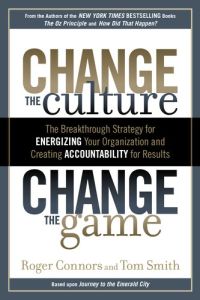
Change the Culture, Change the Game
Book

Change the Culture, Change the Game

The Breakthrough Strategy for Energizing Your Organization and Creating Accountability for Results

Portfolio, 2011 更多详情

Buy the book


Editorial Rating

8

getAbstract Rating

  • Innovative
  • Applicable

Recommendation

In this new, revised version of their 2002 book, Journeys to the Emerald City, management consultants Roger Connors and Tom Smith offer wisdom, anecdotes and facts to help you modify your organizational culture for positive business results. The authors discuss change, culture, and people by providing three-step programs, five-principle approaches, three-level matrices, and a pyramid. The authors employ multiple models because they address elements of the workplace that are as intangible as they are important. As Connors and Smith are fond of saying, “Either you will manage the culture, or it will manage you.” This is proven true even though formulas and jargon occasionally muffle their sound methods and useful message. getAbstract recommends this book to CEOs, executives, human resources professionals, parents and anyone running a team who wants better results.

Summary

“Creating a Culture of Accountability”

As a leader, you must be alert to “organizational culture,” which is comprised of workers’ thoughts and actions. Ignoring culture is risky, because failing to shape your culture keeps your team from achieving improved results. You form culture by paying attention to your workforce’s “experiences, beliefs and actions.” Being attuned to these aspects means taking care of results. Once you identify the outcomes you want, you must determine how the current state of your company’s culture can lead to those outcomes. Remember that such a transformative process is neither a one-shot action nor something you can delegate.

In the most desirable organizational culture, people exhibit “Above the Line” accountability. They approach problems with the process: “See It, Own It, Solve It and Do It.” “Below the Line” executives avoid responsibility when things go wrong and don’t feel answerable for making them go right. They are skilled at assigning blame. Organizations thrive when they have plenty of above-the-line employees.

Where to Begin: Results

To hold your team members accountable for new, improved results, be clear about ...

About the Authors

Management consultants Roger Connors and Tom Smith co-wrote Journeys to the Emerald City, The Oz Principle and How Did That Happen?


Comment on this summary

More on this topic

Related Skills

Advance Your Career
AI Transformation
Be Creative
Be Emotionally Intelligent
Become More Adaptable
Career
Communicate Effectively
Develop Innovative Products
Develop Team Members
Digital Transformation
Drive AI Transformation
Enable Digital Organization
Enhance Customer Experience
Enhance Cybersecurity
Entrepreneurship
Human Resources
Lead Ethically
Lead Operational Planning
Lead Strategically
Lead Yourself
Live Well
Make Good Decisions
Manage Corporate Communications
Manage People and Talent
Manage Teams and Departments
Management
Marketing
Master Interpersonal Skills
Navigate Leadership Challenges
Personal Growth
Place Talent Strategically
Plan and Strategize Your Sales
Promote Diversity, Equity, and Inclusion
Sales
Soft Skills
Strengthen Team Collaboration
Understand Innovation
Understand Organizations
Workplace Skills
Ask Questions
Develop Self-Awareness
Have Effective Meetings
Enhance Employee Experience
Promote Customer Centricity
Provide Feedback
Communicate Across Cultures
Lead through Change
Encourage Experimentation
Foster Collaboration
Innovation
Leverage Employee Resource Groups
Master Collaboration
Leadership
Take Group Decisions
Challenge Assumptions
Organize for AI
Support Internal Mobility
Engage in Intrapreneurship
Motivate Your Team
Increase Your Cultural Awareness
Influence Others
Dare to be Vulnerable
Practice Humility
Find Meaning
Communicate Corporate Purpose
Understand Yourself
Drive Team Performance
Champion New Ideas
Manage Up
Collaborate Across Functions
Manage Internal Communication
Cultivate a Growth Mindset
Onboard New Hires
Understand Organizational Change
Define Core Values
Translate Strategy into Action
Lead Inclusively
Facilitate Group Ideation
Integrate Customer Feedback
Build Digital Culture
Foster a Culture of Innovation
Set Team Goals
Practice Transformational Leadership
Manage Change
Manage Your Leadership Impact
Promote Failure-tolerance
Build Psychological Safety
Executive Leadership
Drive Organizational Performance
Understand Organizational Culture
Build a Shared Vision
Take Personal Accountability
Communicate Strategically
Foster Team Culture
Practice Servant Leadership
Build an Inclusive Culture
Drive Change Without Authority
Manage Sales Teams
Succeed in a New Job
Foster Open Communication
Navigate Workplace Culture
Build Security Culture
Facilitate Discussions
Shape Organizational Culture
Foster Ownership in Others
Ensure Accountability in Teams