
Navigation überspringen
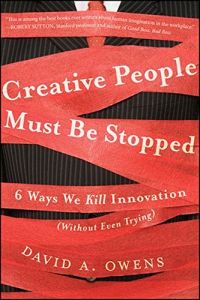
Creative People Must Be Stopped
Book

Creative People Must Be Stopped

6 Ways We Kill Innovation (Without Even Trying)

Jossey-Bass, 2011 Mehr

Buy the book


Editorial Rating

9

getAbstract Rating

  • Innovative
  • Applicable

Recommendation

Vanderbilt Graduate School of Management professor David A. Owens offers a novel model for understanding innovation. He argues that most innovators focus on overcoming obstacles only in their familiar areas: Engineers target technical challenges, while marketers zero in on price points. This myopia leads to flops like the Segway Personal Transporter, a technical triumph that initially failed commercially because it clashed with a societal value: People thought its riders looked silly. Owens says a successful innovation must overcome challenges, or “constraints,” in six areas: “individual, group, organizational, industry, societal and technological.” He offers thorough guidance on fostering creativity and overcoming the hurdles in each phase of a project, explains the details with tables and diagrams, and provides a quiz you can take to see how well you contend with each constraint. getAbstract recommends his advice on setting creativity free to entrepreneurs, managers, strategic planners, engineers, marketers and innovators of all kinds.

Summary

Constraining Creativity

Business leaders unwittingly sabotage innovation because they remain unaware of the “constraints” that can block successful implementation. They may focus on only one or two constraints – such as the need to generate original ideas – but overlook less obvious yet significant constraints, such as the cultural values and societal traditions. Six major “innovation constraints” impede creativity. Successful innovations overcome the challenges of each one:

1. “Individual Constraints”

The first challenge is to cultivate an individual’s creative abilities. This requires understanding creativity. It’s not a special attribute limited only to certain personality types. Creativity is a way of thinking – it’s different from daily, habitual thought processes, and it’s available to everyone.

To strike that spark, address these areas of individual cognition:

  • “Perception” – Ordinarily, your brain acts as a perception filter, screening out large segments of information each day. Without such a filter, information would overwhelm you. But, as you filter it, you might overlook possibly useful data. If you use the right techniques...

About the Author

David A. Owens teaches at Vanderbilt’s Graduate School of Management where he directs the Executive Development Institution. He’s consulted for the Smithsonian, Nissan and NASA.


Comment on this summary

More on this topic

Related Skills

Advance Your Career
AI Transformation
Become More Adaptable
Career
Communicate Effectively
Develop the Organization
Drive Team Performance
Entrepreneurship
Executive Leadership
Human Resources
Lead Yourself
Leverage AI for Product Development
Leverage AI in Your Daily Tasks
Make Good Decisions
Manage People and Talent
Master Collaboration
Master Interpersonal Skills
Personal Growth
Promote Diversity, Equity, and Inclusion
Shape Organizational Culture
Soft Skills
Sustainability
Understand Innovation
Understand Organizations
Workplace Skills
Ask Questions
Champion New Ideas
Have Effective Meetings
Use AI for Generating Ideas
Apply Design Thinking
Leadership
Understand Yourself
Facilitate Group Ideation
Mitigate Cognitive Biases
Collaborate Across Functions
Encourage Experimentation
Dare to be Vulnerable
Innovate Strategically
Promote Generational Inclusion
Understand Leadership Approaches
Foster Team Culture
Leverage Ambidexterity
Organize Innovation
Lead Inclusively
Cultivate Curiosity
Manage Product Innovation
Promote Creativity
Promote Failure-tolerance
Drive Sustainable Innovation
Foster Collaboration
Foster a Culture of Innovation
Engage in Intrapreneurship
Collaborate Creatively
Challenge Assumptions
Drive Change Without Authority
Overcome Challenges
Facilitate Discussions
Practice Transformational Leadership
Drive Project Management
Management
Strengthen Team Collaboration
Generate Ideas
Understand Creativity
Embrace Divergent Thinking
Take Group Decisions
Build Psychological Safety
Develop Innovative Products
Be Creative
Develop Your Thinking Skills
Innovation