
Join getAbstract to access the summary!
Join getAbstract to access the summary!
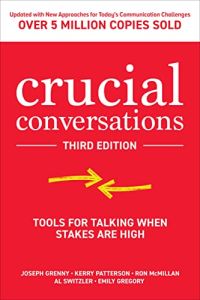
Joseph Grenny, Kerry Patterson, Ron McMillan, Al Switzler and Emily Gregory
Crucial Conversations
Tools for Talking When Stakes Are High
McGraw-Hill, 2021
What's inside?
Protect your most-valued relationships by learning to navigate difficult conversations with skill and grace.


Summary availability: Worldwide
Recommendation
If you struggle to manage difficult conversations, don’t despair: Anyone can learn to improve their communication skills and achieve better outcomes, say Joseph Grenny, Kerry Patterson, Ron McMillan, Al Switzler, and Emily Gregory. Their essential guidebook to navigating high-stakes, emotionally-charged interactions balances illustrative anecdotes with practical information. Learn how to handle what the authors call “Crucial Conversations” with grace, and develop the skills you need to cultivate meaningful dialogue and foster stronger relationships.
Summary
About the Authors
Joseph Grenny, Ron McMillan, and Al Switzler are social scientists for business performance and organizational change. Kerry Patterson is a professor of econometrics at the University of Reading. Emily Gregory is a writer and business consultant.








Comment on this summary