
Skip navigation
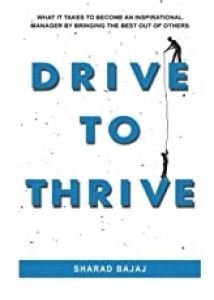
Drive to Thrive
Book

Drive to Thrive

What It Takes To Become An Inspirational Manager By Bringing The Best Out Of Others

Sharad Bajaj, 2020 more...

Buy the book


Editorial Rating

8

getAbstract Rating

  • Applicable
  • Overview
  • Concrete Examples

Recommendation

Due to the pandemic, many employees now work remotely, leaving managers to figure out how to supervise employees they seldom see and may rarely talk to one-on-one. As part of his guidance for aspiring and new managers, Sharad Bajaj, Amazon’s head of engineering, explains how managers can communicate with remote team members, how to surmount common hurdles in remote managementand how to create a psychologically safe work environment.

Summary

Managers need multiple abilities and skills.

Managers provide guidelines, direct their teams to be productive and meet their organization’s short-term and long-term goals. They coordinate, plan, organize and run teams in departments as varied as human resources, finance, production and sales.

Team members see their managers as people with heavy responsibilities and notable power, and that is a correct assessment. Employees, teams, higher-up executives and their organizations all depend on skilled managers.

Successful managers need knowledge and expertise. They must be organized, empathetic and able to communicate well, negotiate successfully and make sound decisions. They must manage office relationships, set priorities, and direct, monitor and assess team activities. Managers need strong emotional intelligence so they can understand what’s going on with their team members – and adjust their management style and actions accordingly. They also must establish a positive, safe working environment, all while handling their own stress and remaining productive.

Managers must help people ...

About the Author

Sharad Bajaj is head of engineering at Amazon and a former Microsoft group engineering manager.


Comment on this summary

  • Avatar
  • Avatar
    M. W. 4 years ago
    Challenge the aspect that a work-life balance is a fantasy. Some days the weight shifts to work, likewise a manager worth their salt can disconnect & trust the team they manage - this needs to happen so (1) your people thrive, and (2) so your mind can rest, recuperate and re-energise... The rest of this seems rather obvious.
  • Avatar
    H. I. 4 years ago
    The "commentary" section does not cover accurately the majority of the content of the abstract.

More on this topic

Related Skills

AI Transformation
Be Creative
Be Emotionally Intelligent
Become More Adaptable
Communicate Effectively
Digital Transformation
Enhance Cybersecurity
Enhance Employee Experience
Human Resources
Innovation
Lead Ethically
Lead Operational Planning
Lead Strategically
Leverage AI for Leadership
Manage Learning and Development
Manage Risk
Master Interpersonal Skills
Personal Growth
Plan and Strategize Your Sales
Promote Diversity, Equity, and Inclusion
Sales
Shape Organizational Culture
Soft Skills
Strengthen Your Digital Literacy
Understand Organizations
Workplace Skills
Develop Self-Awareness
Leadership
Manage Your Emotions
Communicate Corporate Strategy
Practice Humility
Leverage AI for Management
Guide Teams Through AI Transition
Practice Servant Leadership
Set Team Goals
Become More Productive
Coach People
Communicate Transparently
Lead Yourself
Manage Up
Manage Your Time
Support Others
Build Psychological Safety
Support Team Members’ Careers
Manage Sales Teams
Manage Your Leadership Impact
Develop Team Members
Translate Strategy into Action
Build a Shared Vision
Navigate Uncertainty
Lead Inclusively
Delegate Effectively
Drive Project Management
Build and Maintain Well-Being
Lead through Change
Set Boundaries
Understand Motivation
Master Collaboration
Strengthen Team Collaboration
Live Well
Find Meaning
Improve Your Mental Health
Manage Change
Foster Safety Culture
Collaborate Across Functions
Cultivate Positivity
Manage Teams and Departments
Facilitate Discussions
Understand Leadership Approaches
Foster Team Culture
Navigate Leadership Challenges
Foster a Culture of Innovation
Foster Ownership in Others
Promote a Learning Culture
Maintain Work-Life Balance
Foster Open Communication
Support Employees’ Well-being
Executive Leadership
Collaborate Virtually
Build Team Cohesion
Mentor Employees
Manage People and Talent
Practice Mindfulness
Facilitate Group Ideation
Drive Team Performance
Management
Motivate Your Team
Practice Transformational Leadership
Offer Flexible Work Arrangements
Create a Sense of Belonging
Cultivate a Growth Mindset
Promote Failure-tolerance
Dare to be Vulnerable
Build Security Culture
Lead Remote or Hybrid Teams
Encourage Experimentation
Work Remotely