
Skip navigation
Emotional Intelligence for Managing Results in a Diverse World
Book

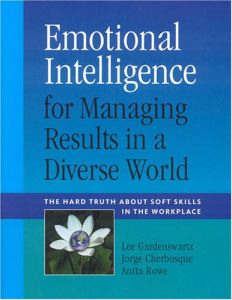
Emotional Intelligence for Managing Results in a Diverse World

The Hard Truth about Soft Skills in the Workplace

Davies-Black Publishing, 2008 more...

Buy the book


Editorial Rating

7

getAbstract Rating

  • Applicable

Recommendation

Feelings and emotions affect how people perform their jobs, of course, and shape the tenor of their workplaces. The impact and applicability of emotional intelligence (EI) at work is well established. If you’re ready for a more focused treatment, Lee Gardenswartz, Jorge Cherbosque and Anita Rowe offer this manual about the use of EI in working with and managing all kinds of people. They submit that dealing with human differences triggers a variety of emotions, many of which are counterproductive. They provide a four-part “Emotional Intelligence and Diversity Model” to help managers handle their emotions – and their diverse employees – effectively. The book includes an assortment of exercises, charts and quizzes to help raise your emotional intelligence. getAbstract finds that this quite specific guide is very useful for managers, particularly less experienced ones, whose workplaces present diversity challenges.

Summary

“Feelings, Nothing More Than Feelings...”

Your feelings are an essential part of who you are. That doesn’t change at work, where feelings affect performance. In fact, your emotions supply the fuel that drives your energy, enthusiasm and inspiration. However, emotions also can be a source of anger and frustration. If not managed properly, they can cause problems in your workplace.

Those who cope best with their emotions have well-developed emotional intelligence (EI), “the ability to understand and deal with feelings, both your own and those of others, in a healthy and constructive way.”

Feelings are your body’s way of telling you that something significant is happening. Suppressing them has negative consequences. Unexpressed feelings may cause dysfunctional behaviors, including anxiety, depression or substance abuse. Unfortunately, societal expectations condition many people from early childhood to disregard their feelings. Just think of common phrases like “chill out,” “big boys don’t cry” or “keep a stiff upper lip.” Unacknowledged emotions can still influence behavior; to be able to manage your feelings, you first have to recognize them.

Emotional Intelligence...

About the Authors

Lee Gardenswartz, Ph.D., is a diversity trainer and a principal in a management consulting company. Anita Rowe, Ph.D., is a diversity consultant and partner in the Emotional Intelligence and Diversity Institute. She and Gardenswartz also published Managing Diversity and the Global Diversity Desk Reference. Jorge Cherbosque, Ph.D., teaches at the Anderson School of Management at UCLA and is co-director of the staff Counseling and Consulting Center.


Comment on this summary

More on this topic

Related Skills

Build Confidence
Drive Team Performance
Enhance Employee Experience
Foster a Culture of Innovation
Foster Team Culture
Human Resources
Innovation
Lead Ethically
Live Well
Make Good Decisions
Manage Performance
Management
Promote Diversity, Equity, and Inclusion
Strengthen Your Digital Literacy
Understand Organizations
Workplace Skills
Understand Organizational Behavior
Understand Social Behavior
Show Empathy and Compassion
Develop Your Thinking Skills
Excel at Conversations
Promote Ethnic Inclusion
Promote Generational Inclusion
Understand Team Dynamics
Build Your Resilience
Collaborate Creatively
Communicate Effectively
Executive Leadership
Manage Change
Solve Problems
Understand Microaggressions
Manage People and Talent
Promote Neuro-Inclusion
Be Creative
Foster Collaboration
Shape Organizational Culture
Discover Cultural Trends
Take Personal Accountability
Cultivate Positivity
Deal with Difficult People
Influence Others
Overcome Impostor Syndrome
Promote Creativity
Address Microaggressions
Become a Self-Driven Learner
Personal Growth
Build Your Presence
Understand Human Behavior
Live Intentionally
Manage Stress
Manage Your Leadership Impact
Navigate Leadership Challenges
Practice Mindfulness
Understand Unconscious Bias
Facilitate Group Ideation
Overcome Self-Doubt
Leadership
Improve Your Mental Health
Navigate Uncertainty
Understand Personality Types
Collaborate Virtually
Facilitate Discussions
Increase Your Cultural Awareness
Take Other Perspectives
Become More Adaptable
Mitigate Cognitive Biases
Champion Diversity
Be Coachable
Master Collaboration
Navigate Difficult Conversations
Navigate Office Politics
Overcome Challenges
Recognize Social Cues
Set Boundaries
Cultivate Self-Discipline
Lead through Change
Adapt Communication Style
Dare to be Vulnerable
Practice Servant Leadership
Be Authentic
Cultivate a Growth Mindset
Find Meaning
Practice Transformational Leadership
Build Psychological Safety
Build and Maintain Well-Being
Practice Humility
Strengthen Team Collaboration
Understand Yourself
Understand Communication
Discover Global Perspectives
Lead Yourself
Understand Emotions
Develop Self-Mastery
Soft Skills
Understand Organizational Culture
Collaborate Across Functions
Be Emotionally Intelligent
Manage Your Emotions
Develop Self-Awareness
Navigate Workplace Culture
Master Interpersonal Skills
Communicate Across Cultures
Understand Cultural Differences