Join getAbstract to access the summary!

Executive Presence

Join getAbstract to access the summary!
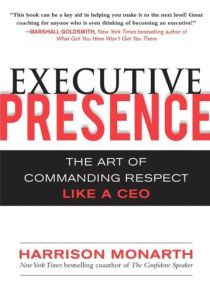
Executive Presence

The Art of Commanding Respect Like a CEO

McGraw-Hill,

15 min read
10 take-aways
Text available

What's inside?

Gain the power and influence of the people in the C-suite by radiating an “executive presence.”

Editorial Rating

7

getAbstract Rating

  • Applicable

Recommendation

Why is the lion king of the jungle? The reasons, says business consultant and executive coach Harrison Monarth, are his “impressive mane” and “even more impressive roar.” Though other creatures may be smarter or even bigger, the lion has a special blend of true power and “an image and related behavior” that convey that power. In today’s business jungle, image matters, too. If you want to rise to the top of your firm, whether you are a lion or a lioness, you must craft and maintain an “executive presence” by combining superior communication skills with the ability to “read” people accurately and influence their perceptions. Explaining these techniques and more, Monarth’s ambitious work is dense with information and strives to cover a broad range of topics, some complex enough to warrant their own books. getAbstract recommends Monarth’s comprehensive advice to professionals who want to win the lion’s share of influence and power at their firms.

Summary

Always Selling

In the business world, talent alone won’t guarantee your success. Indeed, “not only what you know but how you manage perception” determines how high you will rise. To gain influence in your firm, build and maintain an “executive presence,” a personal image that inspires respect.

You might not think of yourself as a salesperson, but you are one. Whenever you attempt to persuade someone to see your point of view, you are selling. People can’t help but “pitch” their ideas, hopes, wants and needs to those around them. The pitch is at the heart of all “human interaction.” Ultimately, the success of your pitch depends on how your audience perceives you, not on your message, intent or any other factor.

What influences how someone interprets your message? People receive input through the five senses: sight, hearing, smell, touch and taste. To a degree, you can control what your audience members perceive through their senses, in that you can dress yourself a certain way, ensure that you smell nice, moderate your voice, and so forth. However, once people absorb information, they filter it through five corresponding categories of perception. According to ...

About the Author

Harrison Monarth is co-author of The Confident Speaker and founder and president of the GuruMaker School of Professional Speaking, an international consulting firm.


Comment on this summary

More on this topic

Related Skills

Advance Your Career
Attract and Recruit Talent
Build and Maintain Well-Being
Career
Enhance Employee Experience
Entrepreneurship
Foster a Culture of Innovation
Foster Team Culture
Generate and Qualify Leads
Human Resources
Increase Your Cultural Awareness
Innovation
Lead Ethically
Lead Strategically
Manage Corporate Communications
Manage Performance
Management
Marketing
Master Collaboration
Master Content Marketing
Master Marketing Strategy
Personal Growth
Promote Diversity, Equity, and Inclusion
Search for a Job
Secure Funding
Strengthen Team Collaboration
Workplace Skills
Understand Team Dynamics
Communicate Strategically
Executive Leadership
Build Psychological Safety
Adapt Communication Style
Executive Leadership Case Studies
Engage in Intrapreneurship
Manage Your Personal Reputation
Manage People and Talent
Navigate Difficult Conversations
Present to Prospects
Understand Organizations
Communicate Clearly
Understand Emotions
Navigate Office Politics
Practice Servant Leadership
Recognize Social Cues
Understand Microaggressions
Master Business Etiquette
Soft Skills
Manage Up
Sales
Communicate with Stakeholders
Pitch Your Business Idea
Understand Personality Types
Excel at Conversations
Lead Yourself
Be Authentic
Manage Your Leadership Impact
Convert Prospects
Manage Your Emotions
Leadership
Build Your Employer Brand
Develop Your Personal Brand
Be Emotionally Intelligent
Communicate Across Cultures
Build Prospect Rapport
Show Empathy and Compassion
Understand Yourself
Master Branding
Understand Human Behavior
Communicate Effectively
Listen Well
Develop Self-Awareness
Drive Change Without Authority
Communicate Corporate Purpose
Communicate Corporate Strategy
Manage Employee Relations
Address Microaggressions
Facilitate Discussions
Influence Others
Set Boundaries
Persuade Effectively
Master Public Speaking
Build Your Presence
Navigate Leadership Challenges
Understand Social Behavior
Understand Communication
Communicate Non-Verbally
Tell Compelling Stories
Deal with Difficult People
Master Interpersonal Skills
Resolve Conflicts