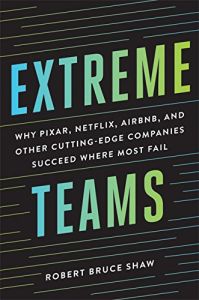
Management consultant Robert Bruce Shaw examines successful teams at seven “cutting-edge” companies – Airbnb, Alibaba, Netflix, Patagonia, Pixar, Whole Foods and Zappos – and identifies behaviors and mind-sets that set them apart. He reports that they share a mission-driven approach to their work, don’t shy from conflict when it leads to better results and value “cultural fit” over experience. Shaw’s practical guidebook brims with useful anecdotes and insights into how the best teams function. getAbstract recommends his overview to leaders who want to drive improved business results by helping their teams improve.
What the Best Teams Do
Across a wide range of industries, corporate leaders who want to enhance collaboration organize their workforce into teams. But teams alone won’t give your business a competitive edge. Many companies fail to embrace fundamental principles that help teams operate at their best or they don’t give their teams the support they need in the first place.
Airbnb, Alibaba, Netflix, Patagonia, Pixar, Whole Foods and Zappos exemplify the use of effective teams to drive innovation. These firms expect their teams to meet a high standard in both “results and relationships.” Some other companies talk about “balancing” those two priorities, but that misses the point: Your teams should excel at both. Netflix, for example, doesn’t fire only poor performers; it fires employees who are merely average. Zappos, the online retailer, believes so heavily in good relationships that it expects managers to spend more than 20% of their time outside the office at social events with their team members.
Before organizing your workforce into teams, consider whether you need teams in the first place. Having individuals work independently is a better choice for carrying ...


















Comment on this summary
A great way to wrap up the five days of exploratory book reading. From Airbnb, Alibaba, Netflix, Patagonia, Pixar, Whole Foods and Zappos exemplifying the use of effective teams to drive innovation. There was a recent comment in Nigeria that a cable service provider had lost over 100,000 subscribers to Netflix. Reading Roberts concept was the confirmatory test that such number could not have been exaggerated. Keyword “Extreme” means you must go beyond ordinary to execute the five practices by Robert and creatively uphold the 6 cultural attributes to win at all times. This book comes highly and greatly recommended and I will share the title with my colleagues to learn from in the coming week. Thank you for this five days journey into real learning.