

Skip navigation
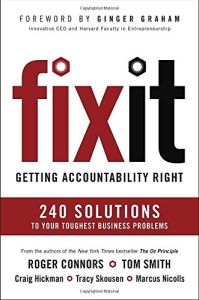
Fix It
Book

Fix It

Getting Accountability Right

Portfolio, 2016 more...

Buy the book


Editorial Rating

7

getAbstract Rating

  • Applicable

Recommendation

Despite leaders’ efforts to engage employees, an “accountability gap” threatens organizational productivity and growth. Management experts Roger Connors and Tom Smith help you determine whether you, your team or your organization face an accountability gap and offer answers enabling you to “fix it” by building “16 Accountability Traits,” such as using feedback, learning from experience, owning problems and keeping your word. Analyzing a three-year study involving more than 40,000 poll responses, this practical sequel to the authors’ 1994 bestseller, The Oz Principle, offers hundreds of ideas based on real-life situations to help you close accountability gaps for yourself, your team and your firm. Though the text is rife with too-cute terms and lots of consultant jargon, getAbstract recommends this useful manual to leaders, managers or employees who seek to do what they say and encourage others to do the same.

Summary

Living “Above the Line”

Widespread disengagement, complacency and a general lack of responsibility and ownership in the workplace are reaching crisis levels. Developing “Accountability” is the first, fastest path to solving this crisis. Don’t institute the kind of accountability that assigns blame and creates a climate of fear. Instead, inculcate the type of accountability in which people lead, own problems and take action to solve them. This “Above the Line” behavior leads to solid results. Most people live and operate “Below the Line” most of the time. They do the minimum, grow complacent, make excuses, blame other people and wait for someone to tell them what to do. When companies fail to address accountability, people point fingers and place blame. To create an accountability culture that leads to greater trust, higher engagement and better outcomes, start by understanding what traits constitute accountability and how to embed it in your firm.

“The 16 Accountability Traits”

Successful people, teams, and organizations practice 16 identifiable accountability traits. More than 40,000 professionals contributed to polls spanning a three-year period to report...

About the Authors

Co-authors of the 1994 bestseller The Oz Principle, accountability experts Roger Connors and Tom Smith run the Partners in Leadership consultancy.


Comment on this summary

More on this topic

Related Skills

Advance Your Career
AI Transformation
Be Emotionally Intelligent
Become More Adaptable
Build and Maintain Well-Being
Career
Develop a Business Plan
Develop Innovative Products
Develop Team Members
Digital Transformation
Drive AI Transformation
Enable Digital Organization
Enhance Customer Experience
Enhance Cybersecurity
Entrepreneurship
Human Resources
Lead Ethically
Lead Operational Planning
Lead Strategically
Live Well
Make Good Decisions
Manage Corporate Communications
Manage Learning and Development
Marketing
Navigate Leadership Challenges
Plan and Strategize Your Sales
Promote Diversity, Equity, and Inclusion
Sales
Workplace Skills
Build an Inclusive Culture
Collaborate Across Functions
Manage Employee Relations
Shape Organizational Culture
Coach People
Drive Project Management
Manage Change
Understand Organizations
Understand Team Dynamics
Build Security Culture
Develop Grit
Engage in Intrapreneurship
Organize for AI
Champion Diversity
Encourage Experimentation
Pursue Excellence
Lead Inclusively
Manage Team Communication
Handle Grievances
Communicate Inclusively
Leverage Employee Resource Groups
Foster Team Culture
Promote Creativity
Pursue Lifelong Learning
Build Your Resilience
Set Business Goals
Become an Ally to Minority Team Members
Build Digital Culture
Communicate with Stakeholders
Promote Failure-tolerance
Create a Sense of Belonging
Lead Yourself
Listen Well
Optimize Workforce Performance
Personal Growth
Manage People and Talent
Lead Remote or Hybrid Teams
Become a Self-Driven Learner
Management
Promote Customer Centricity
Facilitate Group Ideation
Show Empathy and Compassion
Overcome Challenges
Build Psychological Safety
Take Personal Accountability
Work Remotely
Be Authentic
Define Roles
Understand Motivation
Streamline Your Workflow
Find Meaning
Be Coachable
Communicate Across Cultures
Manage Performance
Master Interpersonal Skills
Motivate Your Team
Strengthen Team Collaboration
Build Team Cohesion
Have Effective Meetings
Facilitate Discussions
Promote Generational Inclusion
Manage Your Leadership Impact
Become More Productive
Motivate Yourself
Navigate Office Politics
Translate Strategy into Action
Ask Questions
Communicate Effectively
Set and Track KPIs
Support Others
Apply Open Innovation
Challenge Assumptions
Foster Ownership in Others
Master Collaboration
Define Core Values
Increase Your Cultural Awareness
Manage Up
Solve Problems
Embrace Challenges
Enhance Employee Experience
Become a Mentee
Dare to be Vulnerable
Executive Leadership
Navigate Difficult Conversations
Improve Team Performance
Learn from Feedback
Build a Shared Vision
Soft Skills
Provide Feedback
Cultivate a Growth Mindset
Embrace Divergent Thinking
Communicate Strategically
Set Performance Standards
Understand Human Behavior
Be Creative
Cultivate Curiosity
Manage Teams and Departments
Gain People's Trust
Communicate Corporate Strategy
Foster a Culture of Innovation
Innovation
Collaborate Creatively
Drive Organizational Performance
Practice Transformational Leadership
Set and Achieve Goals
Ensure Accountability in Teams
Communicate Corporate Purpose
Develop Self-Awareness
Understand Yourself
Leadership
Adopt a Learning Habit
Practice Servant Leadership
Learn from Experience
Practice Humility
Drive Employee Engagement
Drive Team Performance
Manage Team Boundaries
Manage Sales Teams
Integrate Customer Feedback
Take Other Perspectives
Set Team Goals
Foster Collaboration
Communicate Transparently
Foster Open Communication
Embrace Intelligent Failure