Skip navigation
Go Put Your Strengths to Work
Book

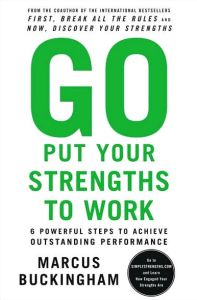
Go Put Your Strengths to Work

6 Powerful Steps to Achieve Outstanding Performance

Free Press, 2007 more...

Buy the book


Editorial Rating

7

getAbstract Rating

  • Innovative
  • Applicable
  • Eye Opening

Recommendation

Marcus Buckingham is passionate about helping you identify your unique strengths and unleash their power. As you read and work your way through the program in this book, you will become convinced that growing through your strengths is the ticket to your future happiness, effectiveness and success. He refutes the approach of improvement by fixing mistakes as a dead end that cannot help you discover how you can be exceptional. The book constantly refers you to its associated Web site for materials that will help you work through the exercises. Buckingham wants you to act rather than just read a theoretical tract. Nothing presented in this book will help you without action and implementation. However, if you take up the challenge, you will become empowered as you take charge of your work through your strengths. getAbstract recommends this book because it contains just a few simple ideas that could change your life.

Summary

Strengths and Mistakes

People make mistakes. The real question is whether you would do better by learning from those mistakes or by focusing on building your strengths instead. Do athletes perform better by filling their minds with images of winning or images of losing? Research says it is the former. Are your workdays filled with tasks that let your strengths flow? Does your work engage your very strongest abilities? Or do you spend your days managing your mistakes?

Recent research has explored two approaches toward business success, “Appreciative Inquiry” and “Positive Organizational Change.” Both have the same fundamental principle: Managing mistakes can help you limit the range of negative outcomes you might incur, but will not contribute to great success. However, if you study what works in your organization and build on it, you can expand your “positive deviance” – that is, the good side of being out of sync with the ordinary. You may consider deviance a negative factor, but it isn’t. It simply indicates that which is out of the norm.

You know that great feeling of accomplishment you get when you have used your best efforts to do a great piece of work? ...

About the Author

Marcus Buckingham is the author and co-author of several best-selling books including First, Break All the Rules; Now, Discover Your Strengths and The One Thing You Need to Know.



Comment on this summary

  • Avatar
  • Avatar
    A. T. 6 years ago
    Interesting
  • Avatar
    V. P. 1 decade ago
    It was a good summary on how best to think about priority of work, who owns the work, and whether or not the work distributed to the team should be re-distributed based on individual team members strengths
  • Avatar
    N. S. 1 decade ago
    Nice Book!!

More on this topic

Related Skills

Advance Your Career
Be Emotionally Intelligent
Become a Self-Driven Learner
Become More Adaptable
Career
Foster a Culture of Innovation
Generate and Qualify Leads
Human Resources
Innovation
Lead Ethically
Leadership
Live Well
Manage Change
Management
Master Collaboration
Master Interpersonal Skills
Navigate Leadership Challenges
Plan and Strategize Your Sales
Promote Diversity, Equity, and Inclusion
Sales
Search for a Job
Shape Organizational Culture
Workplace Skills
Build and Maintain Well-Being
Motivate Yourself
Practice Mindfulness
Build Confidence
Develop Your Personal Brand
Facilitate Discussions
Manage People and Talent
Create a Sense of Belonging
Develop Team Members
Maintain Work-Life Balance
Support Team Members’ Careers
Avoid Procrastination
Lead Inclusively
Develop Your Thinking Skills
Soft Skills
Foster Collaboration
Improve Your Mental Health
Find Your Purpose
Support Others
Embrace Challenges
Manage Your Leadership Impact
Take Personal Accountability
Manage Sales Teams
Manage Up
Strengthen Team Collaboration
Influence Others
Manage Team Boundaries
Practice Servant Leadership
Dare to be Vulnerable
Plan Your Career
Build Useful Habits
Motivate Your Team
Personal Growth
Practice Transformational Leadership
Lead through Change
Develop Grit
Drive Team Performance
Adopt a Learning Habit
Become More Productive
Develop Self-Mastery
Identify Your Development Needs
Cultivate Self-Discipline
Build Psychological Safety
Find Meaning
Enhance Team Agility
Overcome Challenges
Place Talent Strategically
Promote Failure-tolerance
Develop Self-Awareness
Understand Yourself
Build Your Resilience
Cultivate Positivity
Build Team Cohesion
Embrace Intelligent Failure
Drive Change Without Authority
Foster Team Culture
Assess Your Skillset
Lead Yourself
Engage in Job Crafting
Cultivate a Growth Mindset
Identify Your Strengths
Leverage Your Strengths