
Navigation überspringen
High-Impact Tools for Teams
Book

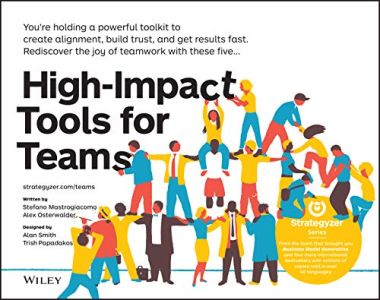
High-Impact Tools for Teams

A powerful toolkit to create alignment, build trust and get results fast. Rediscover the joy of teamwork... (The Strategyzer Series)

Wiley, 2021 Mehr

Buy the book


Editorial Rating

8

getAbstract Rating

  • Applicable
  • Eye Opening
  • Eloquent

Recommendation

When work teams can’t meet reasonable performance expectations, the problem often turns out to be that the members can't work together in honest, trusting collaboration. As authors Stefano Mastrogiacomo and Alex Osterwalder and designers Alan Smith and Trish Papadakos explain, teams are productive when their members feel psychologically safe and work cooperatively toward a common goal. To facilitate productivity, make sure your work-related activities align, so everyone knows who does what. This practical guide full of often amusing sketches and charts will help anyone who runs a firm, leads a project or works in a team.

Summary

Teams can’t perform well when their objectives are misaligned or their working atmosphere is emotionally unsafe.

Working in teams can be productive and happy or stressful and fatiguing. When work isn’t going well, team members spend half their time in meetings talking at cross-purposes. They have trouble juggling budgets and priorities. The stress and alienation make people unproductive and unhappy.

Teams perform poorly when their work tasks aren’t aligned, and they lack clearly articulated, shared goals. Symptoms of team misalignment include ambiguous division of assignments, shifting priorities and team members who work in unnecessary isolation.

Teams become unproductive when the atmosphere is emotionally or psychologically toxic. Such an atmosphere features a lack of trust, excessive competition and alienated employees. When people don’t enjoy working with their teammates, they underperform.

Productive team alignment has four principal features.

To achieve appropriate alignment, teams need a “Team Alignment Map” which accomplishes these four principal objectives.

  1. It clearly articulates the team...

About the Authors

Lead author and management consultant Stefano Mastrogiacomo, a faculty member at the University of Lausanne, Switzerland, designed the Team Alignment Map, the Team Contract and the Fact Finder. Thinkers50 Strategy Award winner Alex Osterwalder also wrote – among other titles – Value Proposition Design and The Invincible Company, both co-authored by Yves Pigneur. Osterwalder invented the Business Model Canvas, the Value Proposition Canvas and the Business Portfolio Map. Creative lead Alan Smith, a designer and entrepreneur, co-founded Strategyzer, where designer Trish Papadakos collaborates.



Comment on this summary

More on this topic

Related Skills

AI Transformation
Be Creative
Become More Productive
Build and Maintain Well-Being
Develop a Business Plan
Develop Your Thinking Skills
Entrepreneurship
Executive Leadership
Foster a Culture of Innovation
Human Resources
Innovation
Lead Strategically
Lead Yourself
Leadership
Leverage AI for Leadership
Live Well
Make Good Decisions
Manage Corporate Communications
Manage Employee Relations
Management
Marketing
Navigate Leadership Challenges
Personal Growth
Plan and Strategize Your Sales
Promote Diversity, Equity, and Inclusion
Sales
Shape Organizational Culture
Workplace Skills
Use AI to Enhance Communication
Motivate Your Team
Place Talent Strategically
Delegate Effectively
Communicate Corporate Purpose
Communicate Strategically
Deal with Difficult People
Gain People's Trust
Navigate Difficult Conversations
Understand Team Dynamics
Improve Team Performance
Understand Emotions
Manage Change
Manage Teams and Departments
Plan and Execute Projects
Set Team Goals
Be Authentic
Lead Remote or Hybrid Teams
Set Boundaries
Translate Strategy into Action
Drive Project Management
Manage Your Emotions
Lead Inclusively
Set and Achieve Goals
Promote Failure-tolerance
Support Others
Manage People and Talent
Soft Skills
Take Group Decisions
Drive Team Performance
Resolve Conflicts
Encourage Experimentation
Foster Open Communication
Facilitate Discussions
Enhance Team Agility
Challenge Assumptions
Develop Self-Awareness
Set Business Goals
Mitigate Cognitive Biases
Master Interpersonal Skills
Strengthen Team Collaboration
Foster Team Culture
Lead through Change
Communicate Effectively
Ensure Accountability in Teams
Show Empathy and Compassion
Think Critically
Communicate Clearly
Communicate Corporate Strategy
Develop Team Members
Manage Team Boundaries
Communicate Transparently
Lead Operational Planning
Manage Sales Teams
Build Team Cohesion
Ask Questions
Manage Your Leadership Impact
Define Roles
Master Collaboration
Build a Shared Vision
Be Emotionally Intelligent
Practice Humility
Dare to be Vulnerable
Create a Sense of Belonging
Practice Gratitude
Understand Communication
Manage Team Communication
Build Psychological Safety