
Join getAbstract to access the summary!
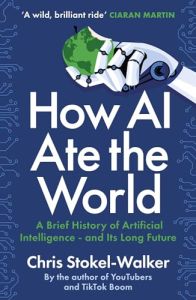
Join getAbstract to access the summary!
Chris Stokel-Walker
How AI Ate the World
A Brief History of Artificial Intelligence — And Its Long Future
Canbury Press, 2024
What's inside?
A world where machines can learn and make decisions isn’t limited to science fiction anymore.


Summary availability: Worldwide
Recommendation
Philosophers and science fiction writers have long imagined machines that could think and communicate like humans. In the 1950s, brilliant thinkers laid the theoretical foundations for artificial intelligence or AI. As computers became more and more powerful, AI became a practical possibility, though, for decades, its development moved forward in stops and starts. Today, machine learning and generative AI have allowed people to incorporate AI into a vast array of fields, including health care, finance, entertainment, and people’s personal lives, raising myriad ethical and political concerns.
Summary
About the Author
Chris Stokel-Walker is a British journalist. He is the author of YouTubers: How YouTube Shook Up TV and Created a New Generation of Stars and TikTok Boom: China’s Dynamite App and the Superpower Race for Social Media.
By the same author
Learners who read this summary also read
What Does the AI Revolution Mean for Our Future?
How will AI impact our immediate and near future? Can the technology be controlled, and does it have agency? Watch DeepMind co-founder Mustafa Suleyman and Yuval Noah Harari debate these questions, with The Economist editor-in-chief Zanny Minton-Beddoes.



Comment on this summary