


Skip navigation
Investing in People
Book

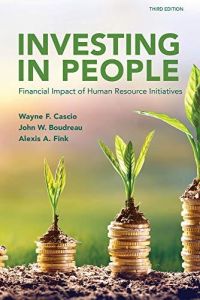
Investing in People

Financial Impact of Human Resource Initiatives

SHRM, 2019 more...

Buy the book


Editorial Rating

8

getAbstract Rating

  • Innovative
  • Applicable

Recommendation

Human resources managers work hard to create value for their companies. Still, many firms treat HR as a cost center and outsource a number of its processes, such as benefits management, payroll and recruiting. Wayne Cascio and John Boudreau argue that HR managers need to stop trying to sell their functions based on service delivery. Instead, they say, HR should use decision management tools and analytical models to measure and report on its impact as a fiscal and strategic resource. The authors discuss ways to evaluate and manage major areas of HR practice, including absenteeism, hiring, staffing, benefits, work-life balance, training and employee attitude. They also show you how to apply mathematical models by working through real life case studies. Readers could approach this book as a practical guide rather than an academic or statistical treatise. While handling the math might be a bit challenging, HR professionals will gain a great deal by becoming more familiar with these evaluation tools.

Summary

Measuring and analyzing human resources (HR) activities is useful only if the information helps managers make talent-related decisions that improve the firm.

People keep saying, “You can’t manage what you don’t measure,” because it is true. Some human resource managers measure the wrong processes simply because those activities are easy to assess. To pick productive programs to measure, first identify the outcomes you want as an HR manager. Then determine which activities lead to those results, so you know what to measure to get the data you need to manage those business engines.

Measuring HR activities and creating reports is useful only if it enables you to make decisions that strengthen and improve your organization. The most crucial HR decisions involve hiring, retaining, developing, encouraging and promoting the best talent available for any given position.

HR should use the analytical tools of decision science to measure the quality of its choices and to assess its fiscal impact on the company.

Most HR measurements track performance, such as how much people learned in training or how their peers rate their work. But that is not all you need...

About the Authors

Wayne F. Cascio teaches at the University of Colorado, Denver and wrote Costing Human Resources, which is considered a classic in its field. John W. Boudreau teaches business at USC, and is recognized as an authority on human capital and competitive advantage.



Comment on this summary

More on this topic

Related Skills

AI Transformation
Be Emotionally Intelligent
Control Financial Performance
Corporate Finances
Develop the Organization
Develop Your Thinking Skills
Digital Transformation
Discover Economy
Healthcare Industry
Drive AI Transformation
Drive Investments and M&A
Enable Digital Organization
Execute Digital Operations
Executive Leadership
Implement ESG Strategies
Increase Your Cultural Awareness
Innovation
Lead Operational Planning
Lead Strategically
Lead Yourself
Leadership
Leverage AI for Business Strategy
Leverage AI for Leadership
Leverage AI in Your Daily Tasks
Manage Capital
Manage Change
Manage Employee Relations
Manage Supply Chain Operations
Manage Teams and Departments
Market Insights by Industry
Personal Growth
Plan Strategically
Production and Logistics
Promote Diversity, Equity, and Inclusion
Shape Organizational Culture
Soft Skills
Sustainability
Understand AI
Understand Economics
Understand Innovation
Workplace Skills
Understand Business Case for ESG
Future of Work
Understand AI Impact on Work
Use AI for Talent Sourcing
New Work Models
Leverage AI for HR
Use AI for Learning & Development
Manage Your Leadership Impact
Think Scientifically
Use AI for Performance Tracking
Human Resources
Leverage AI for Management
Manage Investment Portfolio
Measure L&D Impact
Leverage Outsourcing and Offshoring
Build and Maintain Well-Being
Use AI for Decision Support
Evaluate Employees
Understand Human Behavior
Understand Yourself
Use AI for Learning and Upskilling
Understand Cognition
Identify Skills Gaps
Leverage HR Technology
Drive Continuous Improvement
Track DEI progress
Use AI for Workforce Planning
Optimize Workforce Performance
Healthcare Best Practices
Drive Organizational Performance
Ensure HR Compliance
Reskill and Upskill Employees
Create a Hiring Strategy
Manage Performance
Management
Understand Organizational Culture
Understand Statistics
Manage People and Talent
Master Financial Metrics
HR Case Studies
Conduct Employee Surveys
Develop Financial Literacy
Discover Cultural Trends
Retain Employees
Evaluate Candidates
Emerging Work Technologies
Support Employees’ Well-being
Manage Talent
Labor Market Trends
Understand Organizational Behavior
Make Good Decisions
Think Analytically
Set Fair Pay
Microeconomics
Inequality
Enhance Employee Experience
Understand Organizational Change
Choose AI Priorities
Develop Team Members
Allocate Resources
Attract and Recruit Talent
Evaluate Investment Projects
Manage Learning and Development
Analyze and Control Costs
Understand Organizations
Manage Remuneration
Measure AI Business Impact
Make Data-Driven Decisions
Place Talent Strategically
Understand Human Resources Economics