
Skip navigation
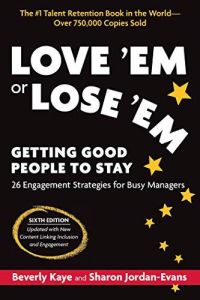
Love ’Em or Lose ’Em
Book

Love ’Em or Lose ’Em

Getting Good People to Stay

Berrett-Koehler, 2021 more...

Buy the book


Editorial Rating

8

getAbstract Rating

  • Applicable
  • Well Structured
  • Overview

Recommendation

People are an organization’s most valuable asset – and whether they stay or go depends, to a large extent, on how their managers treat them. In this clever and candid guidebook, career development expert Beverly Kaye and executive coach Sharon Jordan-Evans offer valuable advice for managers who would like to keep good people in their employ. The book offers actionable tips – ranging from the professional to the personal – for ways that you can help make the workplace more enjoyable for your employees, while improving your own management skills in the process.

Summary

As a manager, much of the responsibility for retaining talented employees lies with you.

Many managers and supervisors think that good people stay in particular jobs because of money, perks or benefits – areas that are out of most managers’ control. But, in reality, good people stay in jobs because of circumstances that are, for the most part, within the control of their managers.

Surveys show that managers have a major effect on employee engagement and that they are among the main reasons why people choose to move on – even if the pay at their current company is great and there are plenty of career development opportunities. People will continue to work for you if you treat them with respect and warmth, listen to them, give them interesting and challenging work, afford them some flexibility and make them feel valued. Don’t guess what will keep your employees happy – ask them. One way to do this is to conduct regular meetings with your staff to talk about what will make them stay with you and your organization.

Providing employees with opportunities to develop and grow is a powerful incentive.

Talented employees want to...

About the Authors

Beverly Kaye is an author and global expert in the areas of career development and employee engagement and retention. Sharon Jordan-Evans is an executive coach and the president of the Jordan Evans Group, a leadership consulting business.


Comment on this summary

More on this topic

Related Skills

Become a Self-Driven Learner
Career
Communicate Effectively
Drive Team Performance
Executive Leadership
Human Resources
Innovation
Lead Ethically
Manage Learning and Development
Manage Performance
Management
Master Collaboration
Navigate Leadership Challenges
Place Talent Strategically
Promote Diversity, Equity, and Inclusion

Strengthen Team Collaboration
Understand Organizations
Be Emotionally Intelligent
Become a Mentee
Engage in Job Crafting
Facilitate Group Ideation
Find Meaning
Become More Productive
Promote Gender Inclusion
Build Strong Relationships
Foster Team Culture
Manage Your Leadership Impact
Lead Inclusively
Navigate Office Politics
Practice Gratitude
Provide Feedback
Build Useful Habits
Dare to be Vulnerable
Manage Your Personal Reputation
Workplace Skills
Work Remotely
Understand Yourself
Gain People's Trust
Enhance Employee Experience
Advance Your Career
Take Personal Accountability
Personal Growth
Develop Team Members
Shape Organizational Culture
Understand Motivation
Manage Talent
Build Psychological Safety
Lead Yourself
Support Employees’ Mental Health
Foster Ownership in Others
Practice Servant Leadership
Take Other Perspectives
Age Well
Adapt Communication Style
Lead Remote or Hybrid Teams
Get Physically Fit
Coach People
Manage People and Talent
Master Interpersonal Skills
Promote Ethnic Inclusion
Build Team Cohesion
Drive Employee Engagement
Foster a Culture of Innovation
Leadership
Maintain Work-Life Balance
Show Empathy and Compassion
Promote Generational Inclusion
Champion Diversity
Soft Skills
Understand Human Behavior
Retain Employees
Support Employees’ Well-being
Be Authentic
Practice Humility
Pursue Lifelong Learning
Understand Personality Types
Promote Neuro-Inclusion
Motivate Your Team
Practice Transformational Leadership
Overcome Loneliness
Improve Your Mental Health
Set Boundaries
Build and Maintain Well-Being
Mentor Employees
Promote a Learning Culture
Leverage Employee Resource Groups
Offer Flexible Work Arrangements
Navigate Workplace Culture
Live Well
Enhance Physical Workspace Design
Create Career Pathways
Manage Employee Relations
Understand Organizational Culture
Communicate Across Cultures
Support Internal Mobility
Support Team Members’ Careers
Understand Cultural Differences
Create a Sense of Belonging
Increase Your Cultural Awareness
Foster Open Communication
Communicate Transparently