
Skip navigation
No More Pointless Meetings
Book

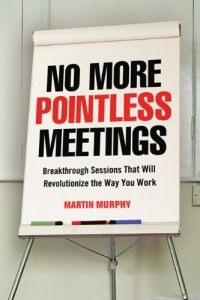
No More Pointless Meetings

Breakthrough Sessions That Will Revolutionize the Way You Work

AMACOM, 2013 more...

Buy the book


Editorial Rating

7

getAbstract Rating

  • Applicable

Recommendation

In conference rooms around the globe, a daily ritual takes place: the meeting – the primary workhorse for getting things done in every business and organization. Yet traditional meetings can suck energy out of the room, creative juices out of the participants and time right off the clock. Management consultant Martin Murphy offers an alternative to mind-numbing meetings: “workflow management sessions.” As he brags on page one: “I can walk into any conference room cold and lead it in a manner that gets more done in a shorter period of time than anyone in the room has ever experienced.” If this provokes your interest, getAbstract suggests giving Murphy’s system a try to see how much is applicable to your firm, or, at least, having a meeting to discuss it.

Summary

From Meetings to “Workflow Management”

Most firms handle their day-to-day business during meetings. Traditional meetings can be time consuming and unproductive. Digital conferencing doesn’t reduce the number of unproductive meetings; it just puts them on new platforms. As the complexity of business increases and response time decreases, firms must make meetings efficient and productive.

Manager Versus Facilitator

Transforming the traditional structure of meetings into workflow management sessions achieves definitive results. The common threads in each session are the use of a facilitator to run the gatherings and the directive to separate content and process. Content, in this context, refers to the focus or purpose of the meeting. Process is the meeting’s logistics – place, seating layout, tone, energy level, and the numbers and types of attendees.

The primary reason traditional meetings are unproductive is that the person officiating is usually the highest-ranking manager present. He or she directs the meeting and participates in discussions. However, meetings actually are more efficient when junior members run them. Participating in content conversations...

About the Author

Management consultant Martin Murphy founded and leads QuantumMeetings.


Comment on this summary

  • Avatar
  • Avatar
    K. S. 9 years ago
    #30DaysofSummaries I found this quite helpful, and am looking to implement these in our meetings moving forward to see how much of it really works, and how receptive are people. I notice a lot of meetings have no direction, or digress very easily
  • Avatar
    J. W. 9 years ago
    #30DaysOfSummaries I think it is an operative instruction, and will help people carry efficient meetings.
  • Avatar
    A. A. 9 years ago
    I think meetings need to be seen as a tool used by teams to achieve a common objective; and, teams go through the stages of synergizing - forming, storming, norming, performing etc.; and then there are several uncontrollable external stimuli that continuously affect the team dynamics; all of which eventually decides the amount of work that gets accomplished in any given meeting.

    Is it a leader then or the team?

    Should/Could one walk out of a meeting that is not getting enough done, or quickly understand their role and participate accordingly?

More on this topic

Related Skills

AI Transformation
Become a Self-Driven Learner
Career
Develop the Organization
Digital Transformation
Entrepreneurship
Human Resources
Leadership
Leverage AI for Leadership
Leverage AI for Product Development
Leverage AI in Your Daily Tasks
Make Good Decisions
Manage Employee Relations
Manage Learning and Development
Navigate Leadership Challenges
Personal Growth
Promote Diversity, Equity, and Inclusion
Sales
Soft Skills
Strengthen Your Digital Literacy
Advance Your Career
Drive Change Without Authority
Lead Operational Planning
Communicate with Stakeholders
Drive Product Development
Enhance Employee Experience
Implement Agility
Understand Innovation
Work Remotely
Drive Project Management
Enhance Physical Workspace Design
Foster Team Culture
Guide Teams Through AI Transition
Offer Flexible Work Arrangements
Navigate Difficult Conversations
Understand Creativity
Understand Learning
Generate Ideas
Manage Project Risks
Set and Achieve Goals
Embrace Change
Promote Creativity
Become a Mentee
Resolve Conflicts
Ask Questions
Cultivate Flexibility
Innovate Strategically
Become More Adaptable
Plan and Strategize Your Sales
Manage Teams and Departments
Communicate Effectively
Implement Executive Coaching
Promote Generational Inclusion
Management
Drive Continuous Improvement
Excel at Conversations
Facilitate Discussions
Challenge Assumptions
Collaborate Creatively
Master Digital Tools
Ensure Accountability in Teams
Master Collaboration
Communicate Corporate Strategy
Manage Product Innovation
Organize Innovation
Collaborate Across Functions
Collaborate Virtually
Implement Coaching Programs
Enable Digital Organization
Create Learning Experiences
Digitize Business Processes
Production and Logistics
Communicate Digitally
Develop Team Members
Executive Leadership
Lead Strategically
Workplace Skills
Understand Team Dynamics
Execute Digital Operations
Build Psychological Safety
Drive Organizational Performance
Manage Organizational Knowledge
Manage Your Time
Champion New Ideas
Become More Productive
Manage Change
Use AI for Meetings
Apply Design Thinking
Drive Team Performance
Take Group Decisions
Facilitate Group Ideation
Communicate Strategically
Manage People and Talent
Engage in Intrapreneurship
Plan Strategically
Use AI for Generating Ideas
Streamline Your Workflow
Foster a Culture of Innovation
Develop Innovative Products
Strengthen Team Collaboration
Solve Problems
Be Creative
Leverage Ambidexterity
Have Effective Meetings
Translate Strategy into Action
Innovation