
Skip navigation
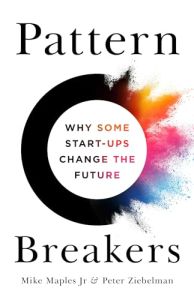
Pattern Breakers
Book

Pattern Breakers

Why Some Start-Ups Change the Future

Public Affairs, 2024 more...

Buy the book


Editorial Rating

9

getAbstract Rating

  • Applicable
  • Insider's Take
  • Inspiring

Recommendation

People once hesitated to get into a stranger’s personal vehicle or open their homes to unknown travelers. The rise of Uber, Lyft, and Airbnb turned these norms on their heads. Breakthrough start-ups bring about cultural shifts by thinking, feeling, and acting radically differently and inspiring others to join them, venture capitalist Mike Maples Jr. and Stanford Business School lecturer Peter Ziebelman explain. The pair argue that you must shift your focus away from the present to build a business that changes the world. Embrace “inflection theory,” and look into the future to see what others cannot.

Summary

Best practices won’t help start-ups create pattern-breaking ideas.

Most start-ups develop ideas for products and services by analyzing the markets for underserved customers. However, that best practice favors the status quo and forfeits a start-up’s main advantage — developing breakthroughs that change the world.

Instead of relying on best practices, start-ups hoping to produce groundbreaking innovations should embrace “inflection theory.” This theory holds that inflections — events with the potential to change people’s thoughts, feelings, and actions — and insights — non-obvious realizations that connect to inflections — lead to pattern-breaking ideas for products or services that alter what people can and will do. Consider, for example, Uber and Lyft. Both leveraged the 2011 introduction of embedded GPS in iPhones — an inflection — to connect the location of riders and drivers — an insight — through a peer-to-peer ridesharing app — an idea — that upended status quo taxi and limousine services.

Once developed, pattern-breaking start-ups spread their ideas by creating movements that inspire radical change. These movements unite people in a shared belief in moving...

About the Authors

Mike Maples Jr. is a venture capitalist and co-founder of Floodgate, a seed-stage fund that invested in X/Twitter, Twitch, Okta, and others early on. Peter Ziebelman is on the faculty at Stanford’s Graduate School of Business and co-founder of Palo Alto Venture Partners.



Comment on this summary

More on this topic