Перейти к содержанию сайта
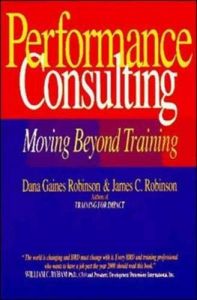
Performance Consulting
Book

Performance Consulting

Moving Beyond Training

Berrett-Koehler, 1995 подробнее...

Buy the book


Editorial Rating

7

getAbstract Rating

  • Comprehensive
  • Analytical
  • Innovative

Recommendation

To meet increasingly demanding organizational goals, human resource departments must shift from traditional training methods (i.e. what employees learn) to performance consulting (i.e. what employees must do to achieve those goals). Authors Dana Gaines Robinson and James C. Robinson, who consult in this field, present this intriguing assertion in a rather abstract and wordy book. Thus, this is a better volume for serious study than for casual perusal. The book gives you in-depth research and information on the complicated process of transforming your training operation to performance consulting. The book contains numerous graphs, guides and checklists, as well as a helpful resource section listing Human Resources associations and workshops. getAbstract recommends this book to those involved in human resources, particularly training specialists, training coordinators, instructional systems designers, consultants, and career and organizational developers, as well as managers and media specialists.

Summary

The Role of Performance Consultant

A traditional trainer often focuses on program design, its implementation or some other aspect of the learning process. This is fine as far as it goes, but it is no longer enough to meet increasingly demanding organizational needs and goals. A performance consultant fills a different role than a traditional trainer, focusing on what people do, not what they learn. A performance consultant still needs the same set of skills as a trainer, but must have other skills as well. To be a performance consultant, you must also have:

  1. Knowledge of the business where you consult: Read the company’s annual report and documents. Discuss its performance in relation to its goals and identify the challenges in obtaining these goals. Learn about the competition and become familiar with the company’s lingo and culture. Read relevant trade journals, volunteer for related task forces or special projects, and find key players who can show you how the business works.
  2. Knowledge of technology in human performance: You must know the professional methods of analysis, improvement and maintenance of work place performance. You ...

About the Authors

Dana Gaines Robinson and James C. Robinson have operated their own consulting company, Partners in Change, Inc., since 1981. They speak about performance technology at training conferences around the world.


Comment on this summary

More on this topic

Related Skills

Advance Your Career
Be Emotionally Intelligent
Become a Self-Driven Learner
Become More Productive
Career
Communicate Effectively
Convert Prospects
Digital Transformation
Consulting Industry
Legal Services
Enable Digital Organization
Entrepreneurship
Innovation
Lead Strategically
Lead Yourself
Leadership
Live Well
Make Good Decisions
Market Insights by Industry
Master Collaboration
Personal Growth
Place Talent Strategically
Plan Your Career
Sales
Soft Skills
Understand Innovation
Workplace Skills
Implement Coaching Programs
Collaborate Across Functions
Develop Innovative Products
Executive Leadership
Human Resources
Manage Change
Optimize Workforce Performance
Understand Organizations
Create Learning Experiences
Engage in Job Crafting
Understand Motivation
Drive Change Without Authority
Drive Organizational Performance
Improve Team Performance
Manage People and Talent
Management
Shape Organizational Culture
Streamline Your Workflow
Consulting Challenges
Drive Team Performance
Understand Yourself
Assess Your Skillset
Have Effective Meetings
Manage Talent
Legal Services Best Practices
Enhance Employee Experience
Close Sales Successfully
Develop Team Members
Consulting Best Practices
Set Performance Standards
Restructure Your Organization
Understand Human Behavior
Manage Performance
Measure L&D Impact
Lead Operational Planning
Develop the Organization
Manage Teams and Departments
Reskill and Upskill Employees
Manage Learning and Development
Solve Problems
Identify Skills Gaps
Understand Learning
Implement Training Programs
Conduct Performance Reviews
Communicate Strategically
Translate Strategy into Action
Understand Organizational Change
Conduct Employee Surveys
Evaluate Employees