

Skip navigation
Performance Conversations
Book

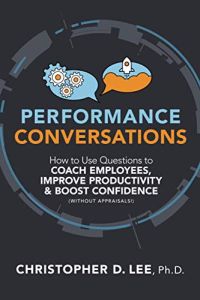
Performance Conversations

How to Use Questions to Coach Employees, Improve Productivity, and Boost Confidence (Without Appraisals!)

SHRM, 2020 more...

Buy the book


Editorial Rating

8

getAbstract Rating

  • Applicable
  • Concrete Examples
  • For Beginners

Recommendation

The traditional performance review has few remaining adherents. According to longtime chief human resources officer Christopher D. Lee, organizations should replace such reviews with regular, one-to-one feedback sessions between frontline managers and their reports. Lee explains why these conversations are critical to employee engagement, retention and company performance. Moreover, he writes, managers must learn to act as coaches rather than bosses, which means asking the right questions to learn what’s working, what’s not and how to help employees grow.

Summary

Managers should have six-to-twelve, 30-minute performance conversations with employees every year. 

Employees and managers – millennials in particular – despise traditional performance reviews and will leave organizations that insist on using them. This remnant of 20th-century management has no place in the fast-paced, work-from-anywhere world of modern business.

Rather than wait a year, or even six months, to review a person’s performance and then assign a pointless rating, managers should adopt the “Performance Conversations” approach. These conversations address performance (as the name implies) from a coaching perspective. They emphasize servant leadership – managers working in partnership with their reports to achieve performance goals.

Good manager coaches express concern for both the employee and his or her performance. Short (30-minute), regular (6-12 times per year), well-planned, structured and scheduled meetings between team members and manager-coaches develop closer relationships and greater trust. In these semi-formal sessions, managers make their reports feel appreciated and supported, ...

About the Author

William & Mary University’s chief human resources officer Dr. Christopher D. Lee has spent the better part of the past three decades as a Chief Human Resources Officer. He also teaches HR at the University of Richmond.


Comment on this summary

  • Avatar
  • Avatar
    D. W. 3 years ago
    So many managers could find this information helpful...."managers must learn to act as coaches rather than bosses"
  • Avatar
    T. H. 3 years ago
    I love the simplicity of the questions that then lead to great conversation
  • Avatar
    s. a. 4 years ago
    It's very useful for all managers.

More on this topic

Related Skills

AI Transformation
Be Emotionally Intelligent
Become a Self-Driven Learner
Become More Adaptable
Career
Foster a Culture of Innovation
Human Resources
Innovation
Lead Ethically
Leverage AI for Leadership
Manage Learning and Development
Manage Teams and Departments
Management
Master Collaboration
Optimize Workforce Performance
Plan and Strategize Your Sales
Promote Diversity, Equity, and Inclusion
Sales
Shape Organizational Culture
Strengthen Team Collaboration
Workplace Skills
Lead Yourself
Manage Employee Relations
Motivate Your Team
Implement Executive Coaching
Advance Your Career
Develop Team Members
Manage Sales Teams
Take Personal Accountability
Communicate Effectively
Communicate Transparently
Develop Self-Awareness
Master Interpersonal Skills
Promote Failure-tolerance
Use AI for Coaching and Development
Conduct Employee Surveys
Dare to be Vulnerable
Be Coachable
Learn from Feedback
Navigate Office Politics
Foster Ownership in Others
Soft Skills
Manage Your Leadership Impact
Build Psychological Safety
Set Performance Standards
Manage Up
Understand Yourself
Facilitate Group Ideation
Practice Humility
Provide Feedback
Support Others
Personal Growth
Become a Mentee
Ensure Accountability in Teams
Foster Team Culture
Support Team Members’ Careers
Cultivate a Growth Mindset
Navigate Difficult Conversations
Have Effective Meetings
Manage People and Talent
Implement Coaching Programs
Conduct Performance Reviews
Practice Transformational Leadership
Cultivate Curiosity
Excel at Conversations
Facilitate Discussions
Leadership
Enhance Employee Experience
Manage Performance
Foster Open Communication
Improve Team Performance
Drive Team Performance
Mentor Employees
Coach People
Practice Servant Leadership
Ask Questions