
Skip navigation
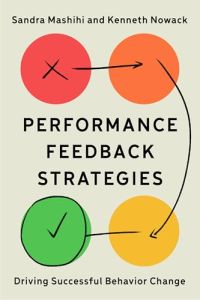
Performance Feedback Strategies
Book

Performance Feedback Strategies

Driving Successful Behavior Change

ATD (Association for Talent Development), 2025 more...

Buy the book


Editorial Rating

8

getAbstract Rating

  • Applicable
  • Overview
  • Concrete Examples

Recommendation

Well-crafted feedback helps leaders to drive team member growth and performance. In this insightful guide, Sandra Mashihi and Kenneth Nowack provide a coaching model grounded in neuroscience and real-world leadership practice. They show how personalized, properly-delivered feedback can transform employee behavior, motivation, and engagement. Mashihi and Nowack’s practical tools and examples make the process of providing performance feedback feel less daunting and help leaders understand how to communicate in ways that build stronger, better-connected teams.

Summary

Feedback fosters growth and positive behavioral change.

Many people overestimate their skills compared to others. This overconfidence hinders growth and leadership development, particularly among less competent individuals. For example, when asked to rate their team-building skills relative to peers, leaders often place themselves above average, even when their performance suggests otherwise. Given that self-perception is unreliable, leaders must develop self-awareness by identifying their blind spots.

Feedback is a powerful tool for increasing self-awareness, but many underutilize feedback or misinterpret it. The gap between how you see yourself (identity) and others’ experience of you (reputation) can limit your performance and impede work relationships. When delivered thoughtfully, feedback helps align these two perspectives. Feedback works best when it illuminates blind spots in ways that encourage self-reflection and openness rather than defensiveness or dismissal.

Offer feedback that is clear, actionable, and timed appropriately. Most employees prefer corrective feedback over generic praise, especially when it’s forward-looking and tied to growth. Explaining...

About the Authors

Sandra Mashihi, PhD is an organizational psychologist and leadership coach. Kenneth Nowack, PhD, is a licensed psychologist and the co-founder and senior research officer of Envisia Learning. 


Comment on this summary

More on this topic

Related Skills

Advance Your Career
Be Emotionally Intelligent
Become More Adaptable
Build and Maintain Well-Being
Career
Communicate Effectively
Develop Your Thinking Skills
Foster a Culture of Innovation
Foster Team Culture
Human Resources
Innovation
Lead Ethically
Live Well
Manage Learning and Development
Manage Performance
Manage Teams and Departments
Management
Master Collaboration
Optimize Workforce Performance
Personal Growth
Promote Diversity, Equity, and Inclusion
Shape Organizational Culture
Strengthen Team Collaboration
Workplace Skills
Navigate Difficult Conversations
Facilitate Discussions
Become a Self-Driven Learner
Promote Failure-tolerance
Deal with Difficult People
Enhance Employee Experience
Understand Communication
Develop Team Members
Leverage Employee Resource Groups
Build Confidence
Become a Mentee
Motivate Your Team
Support Others
Navigate Office Politics
Leadership
Take Other Perspectives
Develop Self-Mastery
Mitigate Cognitive Biases
Ask Questions
Drive Employee Engagement
Drive Team Performance
Find Meaning
Manage Change
Understand Motivation
Dare to be Vulnerable
Show Empathy and Compassion
Conduct Performance Reviews
Master Interpersonal Skills
Improve Team Performance
Practice Transformational Leadership
Soft Skills
Practice Servant Leadership
Foster Open Communication
Lead Yourself
Cultivate a Growth Mindset
Manage Your Emotions
Build Useful Habits
Cultivate Self-Discipline
Build Psychological Safety
Be Coachable
Practice Humility
Understand Yourself
Manage Your Leadership Impact
Learn from Feedback
Provide Feedback
Develop Self-Awareness