Skip navigation
Scenarios
Book

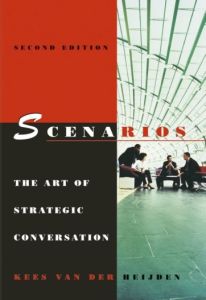
Scenarios

The Art of Strategic Conversation

Wiley, 2005
First Edition: 1996 more...

Buy the book


Editorial Rating

9

getAbstract Rating

  • Innovative
  • Applicable

Recommendation

Many business books provide just enough information to whet executives’ appetites for more advice accompanied by high consulting fees. Author Kees van der Heijden has written an exception. His comprehensive volume puts scenario building in historical context, explains its relationship to forecasting and tells you how to introduce scenario planning to your organization. Once you understand your corporate identity and your fundamental "Business Idea," he says, you can establish and enact informative scenarios that will prepare your company for several different versions of what lies ahead. In that way, scenario planning generates better decision making. getAbstract strongly recommends this book to top managers, strategists and planners, especially those who sense they’re making decisions on the fly without having a structure for thinking deeply about future implications.

Summary

Win-Win Scenarios

The scenario planning that international corporations use today originated in war games. After WWII, the Rand Corporation began using scenarios to anticipate how various world events could influence its decisions. Rand futurist Herman Kahn adopted the term "scenario" to refer to detailed hypothetical planning. The author of The Year 2000, a seminal 1967 book about scenarios, Kahn borrowed the word from Hollywood, where it denoted a detailed, proposed script outline. A scenario thus implies options, not concrete projections.

In the late 1960s, companies began to use scenario planning to prepare for major events affecting their business. After several mid-1960s planning failures, Shell Oil developed an interest in scenarios. Shell employees followed Kahn’s philosophy that the most important step is distinguishing predictable factors ("predetermined events") from uncertain factors that are beyond prediction. Kahn said the "predetermineds" would play out in all scenarios in the same predictable way, while uncertainties would play out in different ways in varied scenarios. These combinations set up multiple futures, so firms can plan for different ...

About the Author

Kees van der Heijden teaches management at the Netherlands Business School, Nijenrode University, and Templeton College, University of Oxford. He is a co-founder of the Global Business Network and previously ran scenario planning at Royal Dutch/Shell.



Comment on this summary

More on this topic

Related Skills

Advance Your Career
Become More Adaptable
Career
Communicate Effectively
Corporate Finances
Develop Financial Literacy
Develop the Organization
Develop Your Thinking Skills
Discover Economy
Human Resources
Make Good Decisions
Manage Change
Manage Financial Risks
Manage People and Talent
Manage Risk
Manage Teams and Departments
Personal Growth
Secure Funding
Soft Skills
Strengthen Team Collaboration
Understand Innovation
Workplace Skills
Master Systems Thinking
Challenge Assumptions
Develop a Business Plan
Champion New Ideas
Executive Leadership
Understand Organizational Change
Economic Policy Impacts
Plan and Strategize for Growth
Leverage Ambidexterity
Plan Financial Performance
Future of Work
Generate Ideas
Navigate Uncertainty
Plan Strategically
Understand Organizations
Cultivate Curiosity
Leadership
Be Creative
Innovation
Master Forecasting
Create Financial Projections
Management
Pitch Your Business Idea
Engage in Intrapreneurship
Develop Innovative Products
Facilitate Group Ideation
Lead Strategically
Translate Strategy into Action
Ask Questions
Define Purpose, Vision, and Mission
Develop Financial Plans
Innovate Strategically
Start-up Case Studies
Build Your Startup
Select Ideas
Communicate Corporate Strategy
Communicate Strategically
Master Budgeting
Think Strategically
Understand Business Models
Decide Under Uncertainty
Innovate Business Models
Succeed as an Entrepreneur
Drive Business Development
Lead Operational Planning
Set Business Goals
Entrepreneurship
Use Scenario Planning