Saltar la navegación
Smart Leaders, Smarter Teams
Book

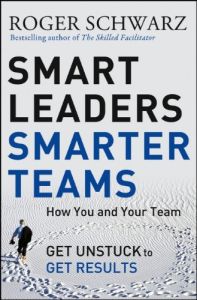
Smart Leaders, Smarter Teams

How You and Your Team Get Unstuck to Get Results

Jossey-Bass, 2013 más...

Buy the book


Editorial Rating

7

getAbstract Rating

  • Applicable

Recommendation

Most leaders claim to consult with their teams and say they want everyone’s input. In reality, most leaders act like tin-pot dictators – assuming that people who don’t agree with them are always wrong. Organizational psychologist Roger Schwarz explains why some executives adopt this self-destructive, unilateral – and often oblivious – management style. He proposes a “mutual-learning mind-set” that helps leaders become as open-minded as they claim to be for better results all around. Some of the author’s recommendations are laughably impractical, like urging team members to explain out loud why they’ve just used negative body language, like rolling their eyes. However, that doesn’t detract from the insightful advice at the core of the book. Schwarz demonstrates a rare understanding of the negative aspects of leadership, how people can recognize those aspects in themselves and how they can change their behavior for the better. getAbstract recommends this book to team leaders and team members.

Summary

Restrictive Behavior

Corporate leadership teams often find themselves stuck in restrictive behavior patterns and unable to achieve the results they want. Often, the team as a group doesn’t seem as intelligent or effective as its individual members. To “get unstuck,” challenge your basic assumptions about leadership and embrace a few simple, effective teamwork tactics.

Forget the traditional idea that each team should have a single leader. While universally accepted, this principle proves flawed in action. Belief in one leader produces the “unilateral-control mind-set,” the I’m-in-charge attitude that 98% of all leaders adopt. On the surface, unilateral control seems logical. It says that in any room, one leader – generally the person with the most authority – makes the team’s decisions, directs the meetings, focuses the group’s attention and evaluates team member performance.

Staffers usually assume that leaders are “all-seeing, all-knowing and all-doing,” as if the leader becomes a boat’s “designer, captain, navigator and engineer,” while the rest of the team rows. This prevents team members from holding each other accountable. If there is only one leader, then...

About the Author

Organizational psychologist Roger Schwarz is president of Roger Schwarz & Associates, a leadership team facilitation consultancy, and author of The Skilled Facilitator.


Comment on this summary

More on this topic

Related Skills

AI Transformation
Be Creative
Be Emotionally Intelligent
Become More Adaptable
Develop the Organization
Digital Transformation
Enable Digital Organization
Foster a Culture of Innovation
Human Resources
Innovate Strategically
Innovation
Lead Ethically
Make Good Decisions
Manage Change
Manage Learning and Development
Management
Personal Growth
Plan and Strategize Your Sales
Sales
Shape Organizational Culture
Strengthen Your Digital Literacy
Understand Organizations
Workplace Skills
Communicate Transparently
Leverage Ambidexterity
Manage Teams and Departments
Develop Self-Awareness
Leverage Social Learning
Manage Sales Teams
Build Digital Culture
Collaborate Creatively
Develop Your Thinking Skills
Master Collaboration
Build Team Cohesion
Delegate Effectively
Cultivate Self-Discipline
Promote Failure-tolerance
Build a Shared Vision
Ask Questions
Collaborate Across Functions
Create a Sense of Belonging
Develop Self-Mastery
Promote a Learning Culture
Take Group Decisions
Take Personal Accountability
Leverage AI for Management
Present Virtually
Adopt a Learning Habit
Leverage AI for Leadership
Communicate Across Cultures
Communicate Effectively
Have Effective Meetings
Manage People and Talent
Cultivate a Growth Mindset
Embrace Divergent Thinking
Practice Transformational Leadership
Foster Open Communication
Navigate Office Politics
Soft Skills
Drive Change Without Authority
Enhance Team Agility
Master Interpersonal Skills
Lead Inclusively
Lead Remote or Hybrid Teams
Lead Strategically
Improve Team Performance
Foster Team Culture
Foster Collaboration
Practice Servant Leadership
Challenge Assumptions
Support Others
Cultivate Curiosity
Set Team Goals
Understand Leadership Approaches
Lead Yourself
Leadership
Foster Ownership in Others
Understand Team Dynamics
Understand Yourself
Lead through Change
Be Coachable
Executive Leadership
Facilitate Discussions
Become a Self-Driven Learner
Develop Team Members
Strengthen Team Collaboration
Facilitate Group Ideation
Navigate Leadership Challenges
Drive Team Performance
Build Psychological Safety
Manage Team Boundaries
Motivate Your Team
Work Remotely
Manage Your Leadership Impact
Dare to be Vulnerable
Practice Humility
Take Other Perspectives
Collaborate Virtually