
Skip navigation
Sun Tzu for Execution
Book

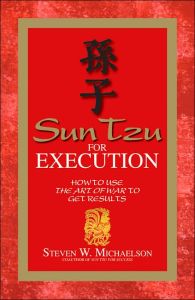
Sun Tzu for Execution

How to Use the Art of War to Get Results

Adams Media, 2007 more...

Buy the book


Editorial Rating

7

getAbstract Rating

  • Applicable

Recommendation

Steven W. Michaelson has written an interesting but somewhat odd book. Its first section consists of a translation of Sun Tzu’s classic Chinese text on military strategy, The Art of War. The second section, which takes up most of the volume, focuses on how to apply Sun Tzu’s ideas to business. Nearly all the chapters open with a quotation from Sun Tzu, but Michaelson also refers to other military and business leaders. You could benefit from his comments on how to implement your business strategy without ever referring to the translation. That said, the principles Michaelson extracts are sound, and he shares with Sun Tzu the ability to provide clear, broad concepts to guide business strategists in a variety of situations. getAbstract recommends this book to executives who want to improve their ability to think strategically and who find it useful to boil down the process of strategizing to a few fundamental rules.

Summary

Applying The Art of War to Business

While Sun Tzu is famous as a military strategist, his skill at executing strategies is what makes him really important. Even the best strategy is worthless if you don’t act upon it. Sun Tzu had five core principles that guided his success at execution: “simplicity,” “create alignment,” “people always,” “flexibility” and “towering strengths.”

“Simplicity”

Most “great business successes” arise from simple, well-executed ideas. Take Dell, for example: It makes computers to order. Or Southwest Airlines: It provides cheap flights. With their one-track minds, these small companies defeated larger competitors. Thus, stay focused, keep costs low, and make sure all employees understand and act upon your one or two great ideas.

Just as great generals must time their attacks perfectly to have the greatest impact, so you must time your business moves. When your competition makes a mistake or is otherwise weak, attack. If you gain the upper hand, exploit it right away. “You can only do a few things well.” Make sure you know what they are, and do the things you do best, first.

In interactions with both employees and customers...

About the Author

Steven W. Michaelson is president of an online retailing company and is the co-author of several books about applying Sun Tzu’s military principles to business.


Comment on this summary

More on this topic

Related Skills

Be Creative
Build Confidence
Career
Communicate Effectively
Convert Prospects
Develop a Business Plan
Develop Team Members
Develop the Organization
Digital Transformation
Drive Digital Marketing
Enable Digital Organization
Enhance Cybersecurity
Execute Digital Operations
Generate and Qualify Leads
Human Resources
Lead Ethically
Lead Operational Planning
Live Well
Manage Change
Manage Corporate Communications
Manage Learning and Development
Manage Teams and Departments
Management
Marketing
Master B2B Sales
Master Interpersonal Skills
Master Marketing Strategy
Navigate Leadership Challenges
Personal Growth
Plan and Strategize Your Sales
Plan Strategically
Promote Diversity, Equity, and Inclusion
Sales
Search for a Job
Soft Skills
Understand Organizations
Workplace Skills
Develop Innovative Products
Lead Yourself
Encourage Experimentation
Innovate Strategically
Manage Employee Relations
Define Purpose, Vision, and Mission
Build Prospect Rapport
Foster Collaboration
Lead Inclusively
Lead Strategically
Leverage Ambidexterity
Succeed as an Entrepreneur
Build Security Culture
Facilitate Group Ideation
Retain Employees
Communicate Corporate Purpose
Manage Your Leadership Impact
Foster Team Culture
Communicate Corporate Strategy
Apply Lean Startup
Strengthen Team Collaboration
Build an Inclusive Culture
Develop Your Personal Brand
Practice Humility
Build Digital Culture
Practice Servant Leadership
Practice Transformational Leadership
Innovate Business Models
Master Collaboration
Start-up Case Studies
Executive Leadership
Innovation
Manage Sales Teams
Support Employees’ Well-being
Cultivate Flexibility
Motivate Your Team
Mentor Employees
Ensure Business Continuity
Leadership
Understand Motivation
Foster a Culture of Innovation
Manage People and Talent
Coach People
Embrace Change
Foster Ownership in Others
Be Authentic
Lead through Change
Build a Shared Vision
Build Your Startup
Define Core Values
Influence Others
Communicate Value
Drive Employee Engagement
Implement Agility
Dare to be Vulnerable
Navigate Uncertainty
Promote a Learning Culture
Persuade Effectively
Generate Demand
Become More Adaptable
Leverage Employee Resource Groups
Leverage Your Strengths
Find Meaning
Master Content Marketing
Drive Team Performance
Cultivate a Growth Mindset
Entrepreneurship
Create a Sense of Belonging
Build Team Cohesion
Gain People's Trust
Master Branding
Enhance Employee Experience
Promote Customer Centricity
Shape Organizational Culture
Translate Strategy into Action
Develop Corporate Messaging
Build Psychological Safety
Master Positioning
Communicate Strategically
Tell Compelling Stories