Skip navigation
The 10 Laws of Trust
Book

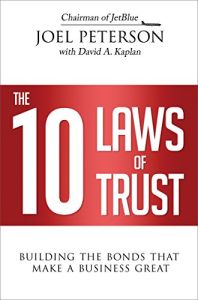
The 10 Laws of Trust

Building the Bonds That Make a Business Great

AMACOM, 2016 more...

Buy the book


Editorial Rating

8

getAbstract Rating

  • Applicable

Recommendation

In an interdependent world, progress requires trust. If you can’t trust others, you cannot work toward shared goals. This is true for families, couples, team members and the nations of the world. JetBlue chairman Joel Peterson, writing with David A. Kaplan, details “10 laws of trust.” He explains what trust means, how to promote it inside organizations and how to restore trust when it’s damaged. Peterson addresses the “Valentine’s Day Massacre” of interrupted service that JetBlue suffered in 2007 – and how the company healed the resulting breach of trust with its customers – but he doesn’t explore any more recent difficulties that the airline has experienced. Nonetheless, getAbstract recommends his concise, readable, ethical guide to all who must trust others or earn trust. And that’s everybody.

Summary

Trust Equals Faith

Trust is a basic requirement for all human activity. Trust connotes optimism. To demonstrate trust, you must show faith in someone or something else. That requires ceding control of an aspect of your life to another person, institution or organization. Trust implies voluntary vulnerability. Trust means taking risks, often before you have proof of reciprocity.

Trust implies “enlightened self-interest.” Trust is the social lubricant that eliminates friction. Trust is reciprocal: If you trust people, they usually trust you in return. When trust disappears, interactions break down. With one act of deceit, trust can vanish, often forever.

In most cases, trusting others turns out to be a good bet. Trust enables productive teamwork and cooperation. Protocols, procedures and compliance manuals are of little value in the absence of trust, and suspicions, paranoia and cynicism abound. Trust is vital in today’s peer-to-peer economy, with people increasingly sharing such resources as “cars, boats and apartments.”

Trust doesn’t just happen. It depends on active initiation. People must earn trust. Employees in “high-trust” organizations work together...

About the Author

Joel Peterson, chairman of JetBlue, is a consulting professor at the Stanford Graduate School of Business. New York Times best-selling author David A. Kaplan teaches journalism and law at New York University.


Comment on this summary

More on this topic

Related Skills

AI Transformation
Be Emotionally Intelligent
Communicate Effectively
Convert Prospects
Develop a Business Plan
Develop Innovative Products
Develop Team Members
Drive Team Performance
Entrepreneurship
Human Resources
Leverage AI for Leadership
Manage Corporate Communications
Manage Performance
Manage Teams and Departments
Management
Master Collaboration
Navigate Leadership Challenges
Optimize Workforce Performance
Personal Growth
Plan Strategically
Sales
Shape Organizational Culture
Strengthen Team Collaboration
Workplace Skills
Define Core Values
Communicate Corporate Purpose
Foster Team Culture
Manage Your Leadership Impact
Take Other Perspectives
Understand Ethics
Deal with Difficult People
Manage Employee Relations
Build Psychological Safety
Soft Skills
Resolve Conflicts
Set Team Goals
Foster Open Communication
Motivate Your Team
Promote Generational Inclusion
Master Interpersonal Skills
Use AI Ethically as a Leader
Be Creative
Set Performance Standards
Promote Failure-tolerance
Show Empathy and Compassion
Create a Sense of Belonging
Facilitate Discussions
Manage Your Personal Reputation
Lead Yourself
Ask Questions
Delegate Effectively
Leadership
Build an Inclusive Culture
Champion New Ideas
Lead Inclusively
Promote Creativity
Influence Others
Navigate Difficult Conversations
Navigate Office Politics
Practice Transformational Leadership
Define Purpose, Vision, and Mission
Dare to be Vulnerable
Collaborate Creatively
Challenge Assumptions
Master Negotiation
Foster Ownership in Others
Executive Leadership
Gain People's Trust
Act Ethically
Take Personal Accountability
Foster a Culture of Innovation
Innovation
Encourage Experimentation
Facilitate Group Ideation
Practice Humility
Practice Servant Leadership
Embrace Divergent Thinking
Build a Shared Vision
Lead Ethically
Ensure Accountability in Teams
Communicate Transparently
Be Authentic