Skip navigation
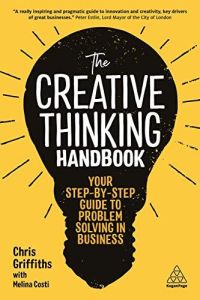
The Creative Thinking Handbook
Book

The Creative Thinking Handbook

Your Step-by-Step Guide to Problem Solving in Business

Kogan Page, 2019 more...

Buy the book


Editorial Rating

9

getAbstract Rating

  • Applicable
  • Concrete Examples
  • Engaging

Recommendation

Business leaders recognize the creativity gap in their organizations: While roughly 82% of companies connect creativity with strong business results, only 11% agree that their organizations implement creative thinking as a core element in their business practices. Author Chris Griffiths explores the absence of creativity in company work habits. He presents a series of useful tools to generate, analyze and implement ideas and to make creativity a core element of an organization’s mission.

Summary

Businesses need to integrate creative thinking into their workplace cultures.

Through applied creativity, business owners can move their businesses from “getting by” to “moving forward.” Managers must foster openness to new ideas and implement innovations deliberately. Yet many businesses don’t cultivate an environment that’s conducive to creative thinking.

Business leaders’ future success will rely not on what they know or what worked in the past, but on what they can create. Today’s innovative companies – Starbucks, Amazon, Apple, Microsoft, and the like – position themselves to innovate regularly and to use creative problem-solving. Using one-off brainstorming sessions is insufficient; instead, implement a company-wide mind-set for creativity.

Teams must commit to removing common thinking errors that constrain creativity.

Bad decisions often result from errors in thinking rather than errors in information. When employees view information without checking their underlying biases and assumptions, it affects their ability to keep their minds open to new ideas and to see clear paths...

About the Author

Best-selling author Chris Griffiths is the founder and CEO of OpenGenius, which offers training, software and tools to help companies implement creative thinking strategies.


Comment on this summary

More on this topic

Related Skills

Advance Your Career
Attract and Recruit Talent
Become More Adaptable
Career
Communicate Effectively
Develop a Business Plan
Develop Team Members
Develop the Organization
Digital Transformation
Drive AI Transformation
Enable Digital Organization
Execute Digital Operations
Executive Leadership
Human Resources
Lead Ethically
Lead Strategically
Lead Yourself
Leverage AI for Product Development
Leverage AI in Your Daily Tasks
Live Well
Manage Change
Manage Learning and Development
Manage People and Talent
Management
Master Collaboration
Master Interpersonal Skills
Navigate Leadership Challenges
Personal Growth
Soft Skills
Understand Innovation
Understand Organizations
Workplace Skills
Cultivate Positivity
Lead Inclusively
Leverage AI for Management
Foster Collaboration
Leverage AI for Leadership
Ask Questions
Master Logical Reasoning
Think Strategically
Drive Product Development
Implement Agility
Apply Design Thinking
Organize for AI
Finalize Hiring Decisions
Dare to be Vulnerable
Use AI for Feature Prioritization
AI Transformation
Drive Team Performance
Restructure Your Organization
Practice Servant Leadership
Lead through Change
Organize Innovation
Understand Yourself
Use AI with Company Knowledge
Overcome Challenges
Innovate Strategically
Promote a Learning Culture
Understand Organizational Change
Foster Team Culture
Cultivate a Growth Mindset
Start-up Case Studies
Drive Organizational Performance
Apply Lean Startup
Drive Change Without Authority
Innovate Business Models
Build Psychological Safety
Develop Innovative Products
Entrepreneurship
Select Ideas
Foster Ownership in Others
Strengthen Team Collaboration
Cultivate Curiosity
Manage Product Innovation
Understand Cognition
Coach People
Drive Continuous Improvement
Build Digital Culture
Think Critically
Encourage Experimentation
Use AI for Generating Ideas
Decide Under Uncertainty
Make Good Decisions
Develop Your Thinking Skills
Leadership
Take Group Decisions
Shape Organizational Culture
Challenge Assumptions
Think Analytically
Leverage Ambidexterity
Facilitate Group Ideation
Engage in Intrapreneurship
Apply Open Innovation
Choose AI Priorities
Embrace Divergent Thinking
Solve Problems
Champion New Ideas
Practice Transformational Leadership
Generate Ideas
Collaborate Creatively
Promote Creativity
Mitigate Cognitive Biases
Understand Creativity
Foster a Culture of Innovation
Innovation
Be Creative