

We’ve reviewed this title for you as we currently cannot offer a summary. We hope this expert review provides valuable insights in the meantime.



Summary availability: Worldwide
Right-click on the code to copy the image.
Note: On an ASP portal, the link behind the code is portal specific!
Mind your body.
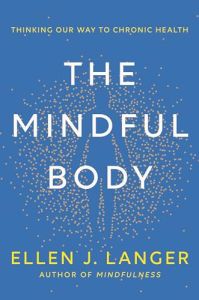
René Descartes famously argued that mind and body are separate — a view that has shaped Western medicine for centuries. Ellen J. Langer, a professor of psychology at Harvard University, challenges this mind-body divide, showing how your mindset directly influences your health. While negative labels and rigid diagnoses can limit your potential, a mindful awareness restores choice, flexibility, and control. Langer offers a profound yet practical invitation: to question, notice, and think differently about our health. Her argument, that the mind and body are inseparable participants in well-being, feels both revolutionary and commonsense. If you have ever been dismissed by a diagnosis or disillusioned by “it’s-always-been-done-this-way” medicine, her work offers hope and empowerment. Langer shines a necessary light on what’s missing in health care: mindfulness, curiosity, and the courage to see that healing begins not with the label, but with how you choose to interpret it.

Comment on this review