




Right-click on the code to copy the image.
Note: On an ASP portal, the link behind the code is portal specific!
Recommendation
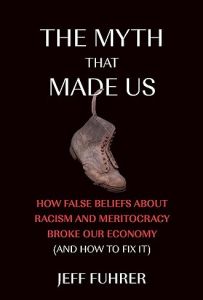
Economist Jeff Fuhrer looks at American society and sees an economy constructed atop a fairy tale. According to what Fuhrer calls “The Myth,” the rich get rich through relentless toil and constant sacrifice, while the poor stay poor because they’re unwilling to do what it takes to better themselves. Fuhrer meticulously unpacks these assumptions, and he prescribes undoing US inequality through a variety of progressive policies, such as raising the minimum wage and investing heavily in education and child care. But Fuhrer’s policy suggestions seem unlikely to find traction in a nation in which so many still subscribe to The Myth.
Summary
About the Author
Jeff Fuhrer is a nonresident fellow at the Brookings Institution and a foundation fellow at the Eastern Bank Foundation. He was previously executive vice president and director of research at the Federal Reserve Bank of Boston.

Comment on this summary