Skip navigation
The New Age of Innovation
Book

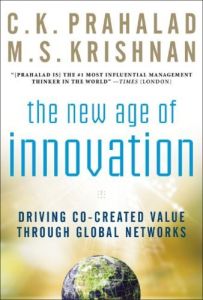
The New Age of Innovation

Driving Co-created Value Through Global Networks

McGraw-Hill, 2008 more...

Buy the book


Editorial Rating

7

getAbstract Rating

  • Comprehensive
  • Analytical
  • Applicable

Recommendation

Unlike many books on new economies or global changes, this work cites examples from around the world. C. K. Prahalad and M. S. Krishnan provide illustrative case studies from firms in India, Canada, the United States, Europe and elsewhere. They examine the various interactions among these firms and locales, grounding their theoretical discussions in reality. To add even more clarity, they also include many drawings and charts; unfortunately, these tend to force a simplistic Cartesian graphing system onto complex changes. Likewise, their abbreviations are more memorable than clear. Overall, though, these are minor glitches in an innovative and useful study. The authors’ analyses of how firms are interacting internationally, and redesigning themselves and the nature of business in the process, are both interesting and valuable. Its discussions of broad trends are unusually well-informed. getAbstract recommends this book to executives and others committed to keeping up with change, especially on a large, even global, scale.

Summary

From Mass Production to Customization

A “fundamental transformation of business” is under way, sweeping through the entire economy. What’s more, over the next decade and a half, this change will become institutionalized. It will simply be the norm – how companies operate. Two interwoven principles govern this change:

  1. “N = 1” – The focus is shifting from the mass production that defined the industrial age to customization. Businesses now create economic value by serving individual needs. In the new economy, you must create a “unique, personalized experience” for each and every customer.
  2. “R = G” – Resources are going global. Consumer demands are spreading and diversifying so much that no one organization can meet them all. Instead, a network of organizations around the world will participate in delivering resources, giving rise to a “global ecosystem.”

How It Works

For a demonstration of these trends and how they work together, consider education. For many years, public education has been akin to mass production. Students grouped together in classes learned the same subjects at the same pace. Contrast...

About the Authors

C. K. Prahalad and M. S. Krishnan teach at the Ross School of Business at the University of Michigan. Prahalad is author of The Fortune at the Bottom of the Pyramid.


Comment on this summary

More on this topic

Related Skills

Be Creative
Become More Adaptable
Become More Productive
Develop the Organization
Media and Entertainment Industry
Technology Industry
Enhance Employee Experience
Execute Digital Operations
Human Resources
Increase Your Cultural Awareness
Lead Operational Planning
Lead Strategically
Leverage AI in Your Daily Tasks
Manage Teams and Departments
Market Insights by Industry
Master Collaboration
Navigate Leadership Challenges
Personal Growth
Promote Diversity, Equity, and Inclusion
Soft Skills
Understand Innovation
Understand Organizations
Workplace Skills
Strengthen Team Collaboration
Discover Global Perspectives
Embrace Change
Foster Collaboration
Use AI with Company Knowledge
Leadership
Manage People and Talent
Collaborate Across Functions
Entrepreneurship
Understand Organizational Change
Leverage Ambidexterity
Tech Impact on Ethics
Leverage Employee Resource Groups
Organize Innovation
Practice Transformational Leadership
Implement Digital Infrastructure
Integrate Enterprise Systems
Implement Agility
Offer Flexible Work Arrangements
AI Transformation
Encourage Experimentation
Manage Change
Restructure Your Organization
Drive Organizational Performance
Management
Discover and Understand Digital Technologies
Optimize IT Operations
Production and Logistics
Drive Team Performance
Media and Entertainment Challenges
Tech Industry Best Practices
Streamline Your Workflow
Organize for AI
Build Digital Business Models
Translate Strategy into Action
Tech Impact on Work
Develop Innovative Products
Lead through Change
Drive AI Transformation
New Work Models
Innovate Strategically
Enable Digital Organization
Digital Transformation
Innovation
Future of Work
Foster a Culture of Innovation
Executive Leadership
Shape Organizational Culture
Build Digital Culture
Strategize Digital Transformation
Innovate Business Models