Skip navigation
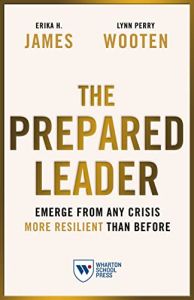
The Prepared Leader
Book

The Prepared Leader

Emerge from Any Crisis More Resilient Than Before

Wharton School Press, 2022 more...

Buy the book


Editorial Rating

8

getAbstract Rating

  • Innovative
  • Applicable
  • Concrete Examples

Recommendation

Erika H. James, dean of the Wharton School, and Lynn Perry Wooten, president of Simmons University, focus on the COVID pandemic, a disruptive crisis on a global scale that challenged corporate, social and political leaders in unprecedented ways. Better management of the situation could have meant less suffering, however. Crises are inevitable, so leaders must prepare. The authors, who speak from experience rooted in academia, held history-making roles guiding their institutions during the pandemic. Now, they offer a reference manual for leaders whose futures may well depend on preparation.

Summary

Crises build over time and, if not predictable, may be foreseeable.

In March 2020, the World Health Organization officially declared COVID-19 a pandemic. The upheaval accompanying the virus was evident in public demonstrations, international strains, economic tensions, the “Great Resignation,” and populist and protectionist pressures. The pandemic took an economic toll on businesses and households, closed schools and eroded human capital. The World Bank and the Brookings Institution put a dollar value on the lives lost and economic disruption, but the tally in long term, less examined costs remains unclear.

By March 2020, the time for prevention had passed; only emergency reactions were possible. It did not have to be that way. Epidemiologists had warned of future pandemics as early as the 1980s. In the early 2000s, when SARS traumatized Asia, quarantines, masks, temperature tests, virtual classrooms and hoarding became standard operating procedure in Asian nations. In 2015, Ebola erupted in West Africa causing worldwide fear as one out of two patients died. 

The world’s response was a “cycle of panic, neglect, panic...

About the Authors

Erika H. James is the first woman and first person of color to serve as dean of the Wharton School. Lynn Perry Wooten is the ninth president of Simmons University and its first African American president. Wooten also co-wrote with Susan MacKenty Brady and Janet Foutty the Wall Street Journal bestseller Arrive and Thrive: 7 Impactful Practices for Women Navigating Leadership.


Comment on this summary

  • Avatar
  • Avatar
    M. W. 3 years ago
    Lessons here are applicable whatever role you hold, whether in the private sector, public office, community, or social. Thank you for writing it down.

More on this topic

Related Skills

AI Transformation
Build and Maintain Well-Being
Communicate Effectively
Corporate Finances
Develop the Organization
Develop Your Thinking Skills
Digital Transformation
Drive Team Performance
Enhance Cybersecurity
Execute Digital Operations
Human Resources
Increase Your Cultural Awareness
Innovation
Leverage AI for Leadership
Make Good Decisions
Manage Climate Risks
Manage Corporate Communications
Manage Financial Risks
Manage Risk
Management
Marketing
Personal Growth
Plan Strategically
Promote Diversity, Equity, and Inclusion
Sustainability
Understand AI
Understand Innovation
Understand Organizations
Workplace Skills
Navigate Difficult Conversations
Improve Your Mental Health
Understand Climate Risks
Use AI Ethically as a Leader
Embrace Intelligent Failure
Manage Crises
Be Emotionally Intelligent
Build Security Culture
Implement Agility
Manage Financial Crises
Understand AI Risks
Manage Change
Master Interpersonal Skills
Enhance Team Agility
Practice Servant Leadership
Understand Unconscious Bias
Ensure Business Continuity
Understand Organizational Change
Manage Your Leadership Impact
Lead Ethically
Soft Skills
Decide Under Uncertainty
Cultivate Flexibility
Cultivate a Growth Mindset
Take Other Perspectives
Embrace Change
Respond to Security Incidents
Practice Transformational Leadership
Overcome Challenges
Manage People and Talent
Become More Adaptable
Lead Strategically
Lead Yourself
Lead Through Crises
Manage Crisis Communication
Navigate Uncertainty
Leadership
Lead through Change
Navigate Leadership Challenges
Mitigate Cognitive Biases
Executive Leadership