

Skip navigation
The Surprising Science of Meetings
Book

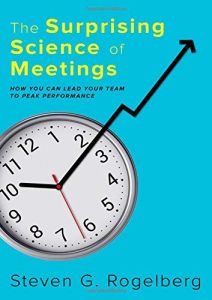
The Surprising Science of Meetings

How You Can Lead Your Team to Peak Performance

Oxford UP, 2019 more...

Buy the book


Editorial Rating

9

getAbstract Rating

  • Applicable
  • Well Structured
  • Concrete Examples

Recommendation

Many managers regard inefficient, unproductive or boring meetings as an unavoidable business flaw. Professor Steven G. Rogelberg challenges this assumption with ideas on how to stop wasting time and energy by facilitating better meetings. He bases his advice on research, best practices and surveys. Rather than cancelling meetings, he says, improve them by being mindful and skillful about their design and delivery. He suggests short “standing meetings,” which offer health benefits, satisfaction and efficiency. To improve your meeting culture, try his smart strategies. 

Summary

Acknowledge that meetings can cause a lot of frustration, and assess your meetings to seek improvements.

Everyone needs to meet for team discussions, interdepartment alignment and group decision making. But everyone needs to meet effectively. Meetings can cause frustration, especially when they waste time and energy due to a bad meeting culture.

Think of the opportunity costs: While you’re stuck with your colleagues in a meeting, you all could be spending time doing real work. When your company manages meetings effectively, meetings add to productivity and organizational cohesion. And when it doesn’t, they add to cost. In 2014, meetings cost the United States’ economy about $1.4 trillion – roughly 8% of the nation’s GDP that year.

Rather than getting rid of meetings, solve your problems with them by applying science.

Employees have no lack of cynicism when it comes to meetings. Yet getting rid of all meetings is not feasible. Without meetings, you would lose contact with your colleagues, disconnect from other departments and become single-minded about difficult problems. Rather than eliminating meetings...

About the Author

Steven G. Rogelberg is professor of organizational science, management and psychology at the University of North Carolina, Charlotte. He researches, teaches and consults with large organizations on meeting science. 


Comment on this summary

More on this topic

Related Skills

AI Transformation
Become More Adaptable
Build and Maintain Well-Being
Develop Innovative Products
Develop Team Members
Drive Team Performance
Entrepreneurship
Executive Leadership
Human Resources
Lead Strategically
Lead Yourself
Leverage AI in Your Daily Tasks
Live Well
Make Good Decisions
Manage Performance
Manage Teams and Departments
Management
Master Collaboration
Master Interpersonal Skills
Navigate Leadership Challenges
Optimize Workforce Performance
Personal Growth
Promote Diversity, Equity, and Inclusion
Shape Organizational Culture
Strengthen Your Digital Literacy
Workplace Skills
Enhance Employee Experience
Work Remotely
Delegate Effectively
Support Others
Manage Your Emotions
Foster a Culture of Innovation
Foster Collaboration
Innovation
Build Team Cohesion
Lead Inclusively
Leadership
Navigate Office Politics
Generate Ideas
Practice Humility
Recognize Social Cues
Communicate with Stakeholders
Understand Yourself
Foster Team Culture
Use AI for Meetings
Foster Open Communication
Navigate Difficult Conversations
Conduct Performance Reviews
Strengthen Team Collaboration
Become More Productive
Enhance Physical Workspace Design
Ensure Accountability in Teams
Promote Creativity
Cultivate Curiosity
Lead Remote or Hybrid Teams
Be Emotionally Intelligent
Manage Your Time
Take Group Decisions
Practice Mindfulness
Listen Well
Excel at Conversations
Embrace Divergent Thinking
Manage Your Leadership Impact
Be Creative
Collaborate Virtually
Present Virtually
Ask Questions
Build Psychological Safety
Motivate Your Team
Soft Skills
Facilitate Group Ideation
Communicate Effectively
Use Humor Effectively
Cultivate Positivity
Have Effective Meetings
Collaborate Creatively
Facilitate Discussions