
Join getAbstract to access the summary!
Join getAbstract to access the summary!
Charles Feltman
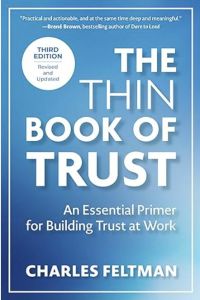
The Thin Book of Trust
An Essential Primer For Building Trust at Work
Berrett-Koehler, 2024
What's inside?
A leadership coach shows how to build and maintain trust in the workplace.


Summary availability: Worldwide
Recommendation
In this succinct, down-to-earth manual, leadership coach Charles Feltman frames trust in terms of learned competencies and skills. He defines trustworthiness based on how people behave in four crucial realms: caring, sincerity, reliability, and competence. He outlines steps for addressing each of these areas as you build trusting relationships. The 2024 third edition adds coverage of trust in hybrid and remote work, trust-building tools for teams, a resource list, and the downloadable Trust at Work Field Guide.
Summary
About the Author
Charles Feltman, founder and president of Insight Coaching, is an experienced executive, team, and leadership coach.
Learners who read this summary also read
Related Skills












Comment on this summary