Skip navigation
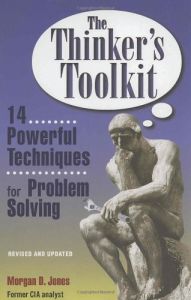
The Thinker’s Toolkit
Book

The Thinker’s Toolkit

14 Powerful Techniques for Problem Solving

Crown, 1998 更多详情

Buy the book


Editorial Rating

8

getAbstract Rating

  • Analytical
  • Applicable
  • Well Structured

Recommendation

People often evaluate solutions incorrectly when they attack a problem. Some mistakes spring from insufficient information, but many are due to the natural tendency to believe what they “prefer to be true.” To improve your ability to solve problems, use 14 analytical methods designed to counter cognitive errors. To derive maximum benefit from Morgan D. Jones’s manual, don't just read it; work with it. He provides effective tactics to help you build cognitive skills.

Summary

Most people make errors in decision-making due to flaws in their “analytic techniques” or to the innate proclivity of human beings to believe what they “prefer to be true.”

Most people make analytical mistakes due to the tendency to believe what they would like to be true. But if you know the barriers you face and the cognitive traps you can fall into, you can significantly improve your insight. When you set out to diagnose and solve a problem, knowing how to systematize or configure your diagnosis and choices can makes a big difference.

“Analysis” means breaking a difficult issue into its components and subcomponents. One way to structure an investigation is to sort the factors that affect your decision in an orderly way. Conventional methods work for everyday problems, but often they aren’t helpful when you’re facing the 10% of problems that involve significant issues or decisions. Most people want to make sensible choices in their personal and business lives. They may face complicated issues that defy simple resolution. Often they may want to sidestep the problem, even if temporarily. They accept incomplete remedies because they lack an organized method...

About the Author

Morgan D. Jones formerly headed the CIA’s analytic training branch. He taught analytic methods at Georgetown University and founded Analytic Prowess, which conducts workshops for government and private organizations. 


Comment on this summary

More on this topic

Related Skills

AI Transformation
Be Emotionally Intelligent
Become More Adaptable
Become More Productive
Communicate Effectively
Develop Innovative Products
Develop the Organization
Enhance Employee Experience
Entrepreneurship
Executive Leadership
Foster a Culture of Innovation
Foster Team Culture
Human Resources
Increase Your Cultural Awareness
Innovate Strategically
Lead Operational Planning
Lead Strategically
Lead Yourself
Leadership
Leverage AI for Product Development
Leverage AI in Your Daily Tasks
Manage Performance
Manage Risk
Management
Personal Growth
Plan and Strategize Your Sales
Promote Diversity, Equity, and Inclusion
Sales
Soft Skills
Strengthen Your Digital Literacy
Understand Innovation
Workplace Skills
Get Organized
Cultivate a Growth Mindset
Understand Social Behavior
Use AI for Generating Ideas
Facilitate Discussions
Facilitate Group Ideation
Understand Unconscious Bias
Ask Questions
Manage People and Talent
Develop Team Members
Manage Sales Teams
Leverage AI for Management
Understand Organizations
Solve Problems
Understand Creativity
Promote Creativity
Develop Self-Awareness
Drive Team Performance
Understand Organizational Behavior
Apply Design Thinking
Conduct Employee Surveys
Decide Under Uncertainty
Take Other Perspectives
Understand Leadership Approaches
Innovation
Cultivate Curiosity
Understand Personality Types
Improve Team Performance
Take Group Decisions
Think Scientifically
Use Scenario Planning
Leverage Ambidexterity
Analyze Data
Understand Human Behavior
Develop Your Thinking Skills
Master Prioritization
Understand Yourself
Collaborate Creatively
Strengthen Team Collaboration
Generate Ideas
Master Logical Reasoning
Make Data-Driven Decisions
Challenge Assumptions
Be Creative
Make Good Decisions
Think Critically
Understand Cognition
Understand Team Dynamics
Mitigate Cognitive Biases
Master Systems Thinking
Think Analytically
Embrace Divergent Thinking