



Right-click on the code to copy the image.
Note: On an ASP portal, the link behind the code is portal specific!
Recommendation
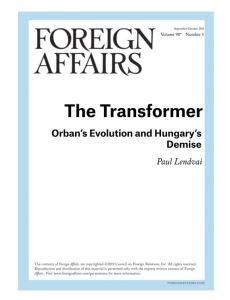
Hungary’s strongman Viktor Orban is known for his fiery populism and ruthless crackdowns on the nation’s judiciary, independent media and intellectuals. Yet 30 years ago, no one could have foreseen that a man who started his political career as a champion of democracy and liberal reforms would be touted as a dangerous authoritarian. Orban’s biographer Paul Lendvai details this political metamorphosis in a Foreign Affairs essay that will be of interest to anyone trying to make sense of the rise of right-wing populism in Europe.
Summary
About the Author
Paul Lendvai is a Hungarian-born journalist and the author of Orban: Hungary’s New Strongman.

Comment on this summary