
Skip navigation
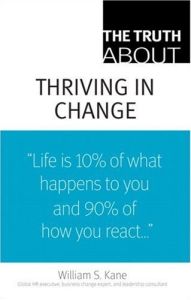
The Truth About Thriving in Change
Book

The Truth About Thriving in Change

FT Prentice Hall, 2008 more...

Buy the book


Editorial Rating

5

getAbstract Rating

  • Applicable

Recommendation

In business, change is constant. Yet many companies resist it or fail to prepare for it properly. To help remedy this problem, leadership consultant William S. Kane takes established “truths” about how to create meaningful corporate change and attempts to bolt them together in a leadership guide. How did he do? The author gets high marks for his extensive research and excellent sources, including numerous business bestsellers and high-profile contemporary studies of change management, corporate performance and productivity. Despite this hard work, the book tends to be very repetitive and breaks little new ground with its prescriptions: “Have a vision.” “Demonstrate commitment.” “Develop strategic objectives.” “Manage performance.” “Communicate clearly.” While such mileposts may be basic, getAbstract suggests that they will be quite useful to those who want a rundown on the tenets of change management.

Summary

A Checklist for Change

Modern business leaders must cope with uncertainty and rapid change. Is your organization prepared to adapt to meet the new external and internal demands that continually present themselves? It had better be. Otherwise, your competitors will zoom past your firm. Though achieving organizational change isn’t always easy, it can be exhilarating, depending on your individual perspective. And the payoffs can be huge – from increased profits and productivity to better employee engagement and learning, and beyond. So how should your company handle change? What should it do, and what should it avoid? And, as a leader within your organization, how should you deal with change? Start with this checklist for “leading and managing change”:

  • Fully commit to the change.
  • Pinpoint the reason for change by assessing the firm’s “strengths, weaknesses, opportunities and threats” (SWOT).
  • Answer these core questions: “What is the company’s purpose?” “Where is it headed?” “What must the organization achieve?” and “How will it attain its goals?”
  • Develop a “cultural and operating framework” that supports your company’s values.
  • ...

About the Author

William S. Kane is a speaker, leadership consultant and business change expert. He worked with famous basketball coach John Wooden to develop and present leadership training seminars.


Comment on this summary

More on this topic

Related Skills

Advance Your Career
AI Transformation
Be Emotionally Intelligent
Career
Develop Innovative Products
Develop the Organization
Digital Transformation
Drive Team Performance

Enable Digital Organization

Enhance Employee Experience
Entrepreneurship
Execute Digital Operations
Foster Team Culture
Human Resources
Innovation
Lead Ethically
Lead Operational Planning
Manage Teams and Departments
Marketing
Master Collaboration
Master Interpersonal Skills
Personal Growth
Strengthen Team Collaboration
Understand Innovation
Workplace Skills
Collaborate Across Functions
Drive Project Management
Succeed in a New Job
Translate Strategy into Action
Embrace Challenges
Enhance Team Agility
Navigate Leadership Challenges
Practice Transformational Leadership
Champion New Ideas
Lead Through Crises
Communicate with Stakeholders
Drive AI Transformation
Engage in Intrapreneurship
Foster a Culture of Innovation
Support Employees’ Well-being
Drive Continuous Improvement
Be Authentic
Lead Strategically
Manage Up
Communicate Inclusively
Drive Change Without Authority
Navigate Workplace Culture
Restructure Your Organization
Build Digital Culture
Manage Corporate Communications
Communicate Strategically
Navigate Uncertainty
Understand Organizational Culture
Engage in Job Crafting
Manage Your Leadership Impact
Become More Adaptable
Lead Yourself
Maintain Work-Life Balance
Overcome Challenges
Drive Organizational Performance
Manage Team Communication
Communicate Corporate Purpose
Cultivate Flexibility
Management
Manage Internal Communication
Understand Organizations
Foster Open Communication
Embrace Change
Soft Skills
Communicate Corporate Strategy
Implement Agility
Live Well
Shape Organizational Culture
Communicate Clearly
Practice Servant Leadership
Set Boundaries
Leadership
Place Talent Strategically
Develop Corporate Messaging
Develop Grit
Understand Leadership Approaches
Communicate Effectively
Manage Your Emotions
Build and Maintain Well-Being
Adapt Communication Style
Improve Your Mental Health
Manage People and Talent
Communicate Transparently
Executive Leadership
Lead through Change
Manage Stress
Understand Organizational Change
Build Your Resilience
Manage Change