Skip navigation
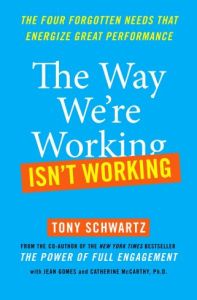
The Way We're Working Isn't Working
Book

The Way We're Working Isn't Working

The Four Forgotten Needs That Energize Great Performance

Free Press, 2010 more...

Buy the book


Editorial Rating

7

getAbstract Rating

  • Comprehensive
  • Analytical
  • Applicable

Recommendation

This is one of those rare books that details the wrong ways you’re working without making you feel that the situation is hopelessly complex or beyond repair. Tony Schwartz (writing with Jean Gomes and Catherine McCarthy) offers interesting, practical advice to employers and employees alike on how to banish that “gerbil on a treadmill” feeling forever. With case studies from such companies as Ford, Sony and Ernst & Young, as well as helpful charts, graphs and exercises, this highly readable manual will make you think twice about how you and your employees work. Although it mentions lots of insider human resources (HR) methodologies – such as the ones in Gallup’s employee engagement surveys – the book never bogs down in jargon. However, the author may need to revise and update it in a few years as the workplace becomes increasingly dependent upon technology. getAbstract suggests this book to frustrated leaders, HR practitioners, overwhelmed employees and anyone who wants more control over his or her working and personal life.

Summary

“More, Bigger, Faster”

Modern technology increases the workplace pressure to “do more and do it faster” by making you available to other people around the clock, whether you’re away from the office, at home or even on vacation. Technology is supposed to make your work easier, but, paradoxically, it makes working life harder, because it causes workers to lose focus. Additionally, the structure of the average workday doesn’t take advantage of your or your employees’ mental and physical rhythms or performing strengths.

“The way we’re working isn’t working” because employers assume that their staffers function the way machines do: in a flat, linear fashion for long stretches at a time. But human beings are not computers. People perform best by working intensely for a period, then resting, then working and resting again – establishing an even pace of moving between the two states. Yet companies often neglect workers’ natural pacing and personal needs, leaving managers and their staffers to persevere even though they are struggling. To help people excel, address their four core needs:

  1. “Sustainability: Body” – Recharging often to remain “healthy...

About the Authors

Tony Schwartz is founder and president of The Energy Project, which helps people achieve high performance. Jean Gomes is its chairman and Catherine McCarthy is its COO. Schwartz also wrote The Power of Full Engagement and What Really Matters. A former New York Times reporter and Newsweek editor, he is the co-author of The Art of the Deal with Donald Trump.


Comment on this summary

  • Avatar
  • Avatar
    A. 1 decade ago
    What me pleased was the idea of "Chief Energy Officers". Reality and Theory are like in other fields the real challenge for the thoughts supplied - workshops with robotic dictations and market expectations with quick changes built an increasing technical burden to the contrasted recommendations to be applied. This book will for sure help to refocus for the real needs of employees and their personal life. Applicability is the challenge - but humanity surely has to find new approaches to get balanced and creative, satisfied individuals. To be recommended - I will read it.

More on this topic

Related Skills

AI Transformation
Become More Adaptable
Drive Team Performance
Executive Leadership
Foster a Culture of Innovation
Foster Team Culture
Human Resources
Innovation
Lead Ethically
Lead Strategically
Leadership
Leverage AI in Your Daily Tasks
Manage Learning and Development
Manage Performance
Management
Master Collaboration
Personal Growth
Promote Diversity, Equity, and Inclusion
Soft Skills
Strengthen Team Collaboration
Understand Innovation
Develop Self-Mastery
Leverage Employee Resource Groups
Practice Self-Care
Understand Yourself
Cultivate Self-Discipline
Use AI for Personal Productivity
Live Intentionally
Understand Cognition
Promote Customer Centricity
Support Employees’ Mental Health
Build Psychological Safety
Promote Neuro-Inclusion
Understand Creativity
Lead Yourself
Manage Change
Offer Flexible Work Arrangements
Enhance Employee Experience
Overcome Challenges
Develop Self-Awareness
Cultivate Curiosity
Avoid Procrastination
Find Meaning
Motivate Your Team
Develop Grit
Build Useful Habits
Be Authentic
Understand Motivation
Work Remotely
Be Creative
Master Interpersonal Skills
Manage Employee Relations
Get Physically Fit
Show Empathy and Compassion
Understand Human Behavior
Support Employees’ Well-being
Manage Stress
Eat Healthily
Facilitate Group Ideation
Find Your Purpose
Motivate Yourself
Practice Mindfulness
Manage People and Talent
Set Boundaries
Enhance Your Focus
Sleep Well
Manage Your Time
Practice Servant Leadership
Build Your Resilience
Workplace Skills
Understand Emotions
Build and Maintain Well-Being
Develop Your Thinking Skills
Maintain Work-Life Balance
Improve Your Mental Health
Live Well
Become More Productive
Be Emotionally Intelligent
Manage Your Emotions