Skip navigation
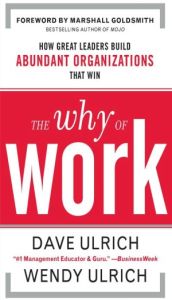
The Why of Work
Book

The Why of Work

How Great Leaders Build Abundant Organizations that Win

McGraw-Hill, 2010 more...

Buy the book


Editorial Rating

8

getAbstract Rating

  • Applicable

Recommendation

Dave and Wendy Ulrich’s book about abundance is itself an example of abundance. Dave, a business writer, and Wendy, a psychologist, sweep you up in a tide of leadership ideas, processes, quotations and stories that hammer home a thesis so right and true you might mistake it for common sense: Workers who care about their jobs and understand why they work will exceed your expectations and break the boundaries of their job descriptions. They will better serve customers who, in turn, will bind themselves to the thoughtful firm that produced such an enlightened staff. If this sounds like the yellow brick road, the authors cobble together ample gold paving stones to build a solid path toward fulfilling your firm’s potential. They explain how every person and organization can change for the good, while earning a profit. Along with positive psychology and happiness research, you will find useful grids, summaries and assessment tools to help you shift staid cultures and motivate stale staffers. Some of the advice is soft and general; the authors acknowledge that they skim the surface of various disciplines. Yet when the Ulrichs become specific about how to build relationships or cultivate creativity, they show you concretely how to nurture a firm where business results and human development work together. getAbstract recommends this book to executives, managers and human resources personnel who hope to serve their customers and the world through deeper service to their employees.

Summary

The Meaning of Work

Work is a way people earn money, but it’s also a potential launch pad for human development and the exploration of real meaning in life. Work takes up a good chunk of most people’s waking hours. It often defines them. This quest for definition gives leaders the opportunity to connect with their staffers and shape the underlying meaning of their jobs, so they can contribute more of who they are or want to be. However, finding meaning is also another way of finding profit. Meaningful work is inherently good for the people in your firm and it’s good for business.

In the workplace, meaning wrestles with tedium, and the outcome matters, particularly for the workers whose quality of life is at stake. Amid the mind-boggling complexity of the modern world, more people are struggling with personal and professional issues, ranging from depression to a lack of connection to their jobs to an off-putting, “me-first mindset.” As a result, “deficit thinking” – a negative sense of pervasive mistrust and self-protection – quickly and easily becomes the workplace’s prevalent mode. Staffers driven by such thinking give less effort on the job because they are filled...

About the Authors

Dave Ulrich, a professor at the Ross School of Business at the University of Michigan and a partner at the RBL Group, has written 23 books. Psychologist Wendy Ulrich founded the Sixteen Stones Center for Growth.


Comment on this summary

  • Avatar
  • Avatar
    C. K. 2 decades ago
    Competencies, skills and abilities need to be clearly understood, i.e. the why of work.
    The ability to define the why of work is crucial to detrmine the skills (short-time), competence (can be adapted) and ability (the competence that grow aith experience).
    • Avatar
      2 decades ago
      Hi Chan, great points! Here we learn the importance of leaders within an organization understanding the "why of work" for their employees. But we must wonder, to what extent are the employees responsible for also building abundant organizations. Does it narrow down to the quality of who you are hiring?

More on this topic

Related Skills

Be Creative
Build Confidence
Communicate Effectively
Convert Prospects
Develop the Organization
Digital Transformation
Enable Digital Organization
Execute Digital Operations
Generate and Qualify Leads
Human Resources
Innovate Strategically
Lead Ethically
Live Well
Manage Corporate Communications
Manage Learning and Development
Manage Performance
Management
Marketing
Master Collaboration
Promote Diversity, Equity, and Inclusion
Sales
Search for a Job
Strengthen Team Collaboration
Understand Innovation
Workplace Skills
Cultivate Self-Discipline
Understand Communication
Advance as a Woman Leader
Practice Transformational Leadership
Understand Creativity
Motivate Your Team
Shape Organizational Culture
Understand Social Behavior
Work Remotely
Manage Change
Be Coachable
Cultivate a Growth Mindset
Innovation
Lead Inclusively
Overcome Impostor Syndrome
Plan Your Career
Engage in Job Crafting
Facilitate Group Ideation
Lead Strategically
Understand Organizational Behavior
Develop Grit
Facilitate Discussions
Live Intentionally
Motivate Yourself
Advance Your Career
Ask Questions
Navigate Office Politics
Lead Through Crises
Practice Gratitude
Become an Ally to Minority Team Members
Build Digital Culture
Embrace Intelligent Failure
Manage Your Leadership Impact
Set Career Goals
Drive Team Performance
Lead through Change
Drive Organizational Performance
Foster a Culture of Innovation
Foster Open Communication
Implement Agility
Leadership
Promote Failure-tolerance
Understand Motivation
Soft Skills
Understand Human Behavior
Understand Organizational Change
Improve Your Mental Health
Deal with Difficult People
Promote Customer Centricity
Build Your Resilience
Leverage Employee Resource Groups
Build and Maintain Well-Being
Build Team Cohesion
Develop Your Thinking Skills
Leverage Ambidexterity
Build an Inclusive Culture
Overcome Challenges
Understand Organizations
Be Emotionally Intelligent
Build Prospect Rapport
Enhance Employee Experience
Executive Leadership
Leverage Your Strengths
Embrace Challenges
Practice Servant Leadership
Manage People and Talent
Become a Mentee
Gain People's Trust
Understand Organizational Culture
Support Employees’ Well-being
Dare to be Vulnerable
Understand Personality Types
Communicate Corporate Purpose
Foster Team Culture
Excel at Conversations
Career
Develop Self-Mastery
Manage Your Personal Reputation
Build Your Presence
Master Interpersonal Skills
Navigate Difficult Conversations
Create a Sense of Belonging
Develop Your Personal Brand
Navigate Leadership Challenges
Overcome Loneliness
Navigate Uncertainty
Cultivate Curiosity
Be Authentic
Practice Humility
Identify Your Strengths
Cultivate Flexibility
Assess Your Skillset
Find Your Purpose
Show Empathy and Compassion
Manage Employee Relations
Personal Growth
Build Psychological Safety
Develop Self-Awareness
Become More Adaptable
Cultivate Positivity
Build Strong Relationships
Embrace Change
Find Meaning
Lead Yourself
Understand Yourself