

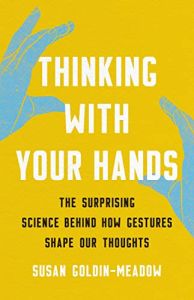
Book
Thinking with Your Hands
The Surprising Science Behind How Gestures Shape Our Thoughts



Right-click on the code to copy the image.
Note: On an ASP portal, the link behind the code is portal specific!
Recommendation
All people use gestures to communicate their thoughts and feelings. A deaf, nonverbal child with no prior exposure to language communicates via gestures. But language speakers also gesticulate, using body language to supplement their words. Even people who were born blind and have never seen gestures, gesture. In fact, gestures reflect and shape people’s thoughts, especially those they are unwilling or unable to codify in speech. In her erudite treatise, developmental psychologist Susan Goldin-Meadow reveals the subtlety and complexity, as well as the practical applications, of gesture.
Summary
About the Author
Susan Goldin-Meadow is the Beardsley Ruml Distinguished Service Professor in the department of psychology, the department of human development, and the committee on education at the University of Chicago. She wrote Language in Mind: Advances in the Study of Language and Thought.

Comment on this summary